
"Organic products can feed the world"
To produce the same amount of food, organic agriculture needs around 40 percent more space than conventional agriculture. In order to be able to feed the growing world population completely organically, up to 80 percent more space would be needed in the future. Huge forest areas would also have to be cleared in order to have enough arable land available.
Published: 23.02.2021, 00:00
In brief:
- In order for the world to be able to be fed exclusively on organically produced food, it would take dramatically more cultivation areas.
- The additional area would be at the expense of moors, forests and nature reserves. Biodiversity would be put under further pressure. In addition, in the context of climate change, more cultivation areas are not an option.
- In Addition: Putting energy, labor and raw materials into cultivation with little or no yield is not resource-efficient. Crop losses mean lower incomes for farmers and higher consumer prices, are unecological and are a burden on the climate.
By 2050, the world's population will grow to almost 10 billion people. This means: Demand for food is up 50 percent compared to 2013. This is what the UN Food Organization FAO says. Up to 81 percent more space would be needed to produce enough food from 100 percent biological production. This was calculated by the Research Institute for Biological Agriculture (Forschungsinstitut für biologischen Landbau, FiBL). In addition, fluctuations in yields in organic farming have a greater impact due to lower productivity. The yield stability of organic agriculture is lower. This has implications for food security.
Large yield losses
The reason for the higher land consumption in organic agriculture is the lower yields. Greenpeace assumes in the «course book for the turn to agriculture 2050" that the yields in agriculture in Germany would fall by an average of 40 percent if the entire conversion to organic farming was completed. In the case of wheat – Switzerland's most commonly grown crop – the decrease in yield is almost 60 percent. In 2013, in a study commissioned by Agrar, an Industrial Association, agricultural scientists at the Humboldt University in Berlin and agripol calculated that in Germany, if the country fully switched to organic farming, 12.1 million tons less wheat would be produced per year. This corresponds to the amount needed, per year, to feed 184 million people.
Blindspot article
Sources
Related articles
A Contribution Spanning Generations
Food security begins long before the harvest. It begins with varieties that deliver yields, resist diseases and perform reliably under changing environmental conditions.
A Hint to Politicians, Delivered by Test Tube
Switzerland's top science prize goes to a researcher who helped develop the "gene scissors", a technology that has decisively advanced agriculture. While science has long since opened up new possibilities and the EU is moving ahead on regulation, Switzerland continues to dawdle.

Full Shelves – Of course! How Secure Is Our Supply Really?
Security of supply sounds like a shared goal. However, as soon as it comes to the path to get there, conflicts arise: between market and state, ecology and production, as well as self-sufficiency and international connectivity. The Agricultural Policy Podcast and swiss-food.ch explore the key dependencies and areas of tension surrounding supply security in a five-part series. The highlight will be a live podcast in front of an audience on November 5, 2026, at the Äusserer Stand (Hofcafé) in Bern.
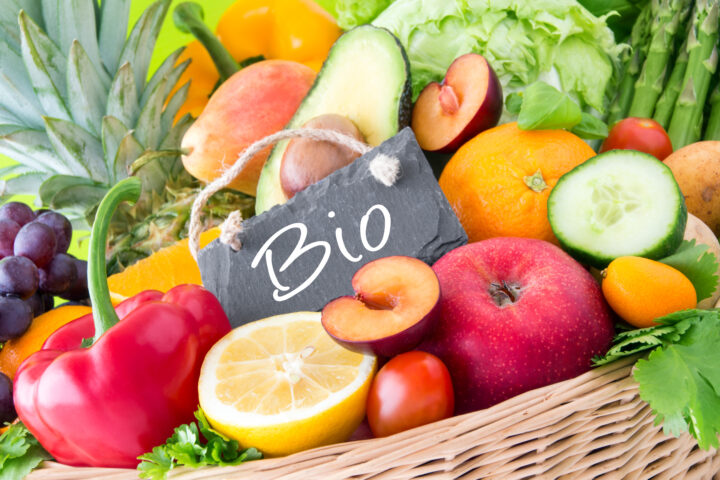
Is Organic More Sustainable?
Organic food is considered a prime example of sustainability – but in reality, it often ends up in the waste bin faster than conventional products. The omission of artificial preservatives and modern plant protection drastically shortens shelf life and leads to more food waste.