

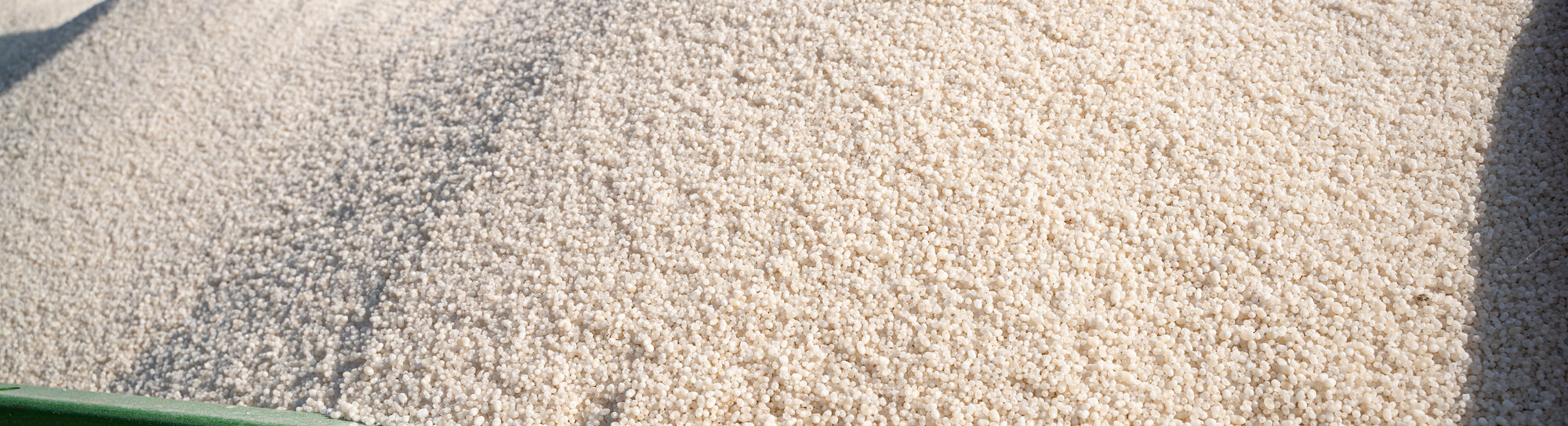
Artificial fertilizer is becoming scarce
The Russian war on Ukraine is having a devastating impact on global agriculture. The two countries produce large quantities of wheat for the world market. Russia is also one of the most important producers of fertilizers. These are now threatening to become scarce. European countries want to compensate for the threat of scarcity with more slurry. The possible negative effects of a lack of synthetic fertilizers can be seen in the example of Sri Lanka.
Published: 20.04.2022, 15:43
The "Welt am Sonntag" newspaper warns of a global shortage of fertilizers. After all, Since the beginning of the war, the export of potash, a raw material of artificial fertilizers, from Russia has come to a complete halt. The impact on global agriculture is considerable, as Russia accounts for 30 percent of global fertilizer production. António Guterres, Secretary-General of the United Nations, warns of a "hurricane of hunger". A look at price developments also gives cause for concern: A ton of nitrogen fertilizer, at $1700, is more expensive than ever. For many years, the price fluctuated between 200 and 300 dollars per ton. Prices for potash fertilizers have also risen similarly.
"Agricultural policy is security policy"
These developments are also of great concern to European politicians. The German Minister of Agriculture, Cem Özdemir, sees the creation of a fertilizer reserve – also at European level – as one of the most urgent objectives. He is also gaining approval on this point from economic actors: "We need a master plan. This includes a national fertilizer reserve and a European or even global solution," says Matthias Berninger, Public Affairs and Sustainability Manager at Bayer. Agricultural expert Christian Janze from the consulting firm Ernst & Young also sees the situation in a similar way. In his opinion, the political dimension of the fertilizer has been neglected for too long: "Agricultural policy is security policy – at least as much as energy policy is," says Janze. According to "Welt am Sonntag", the traffic light coalition is relying on more manure from domestic suppliers, which is supposed to compensate for the shortage of artificial fertilizers on world markets. The aim is to make the purchase of artificial fertilizers unnecessary. This would relieve the burden on livestock farmers, who have found it increasingly difficult to dispose of their manure in recent years. More manure, however, is in contradiction to the politically desired reduction in livestock per farm. The discussion on how to solve this dilemma is currently also taking place in Switzerland.
Artificial fertilizer is hard to replace
Around 40 percent of all foodstuffs are based on the Haber-Bosch process for the synthetic production of ammonia. Ammonia is the basic material for the production of nitrogen compounds and thus one of the most important compounds for the production of artificial fertilizers. In Sri Lanka, the use and import of synthetic fertilizers and plant protection products was banned in spring 2021. The government wanted to make farming 100 percent pesticide-free overnight. The disastrous consequences were quick to emerge. As "swissinfo" reports, around 94 percent of rice farmers and 89 percent of tea and rubber farmers used synthetic fertilizers at that time. Farmers' resistance as a result of low yields and rising food prices forced the government to allow synthetic fertilizers and crop protection products again after only six months.
"Welcome culture for new breeding technologies"
The fact is that crop protection and fertilizers are essential for the production of sufficient food. New innovative technologies are needed to ensure that synthetic fertilizers can be used more efficiently in the future. Syngenta is currently testing a biological product that will slow down the process of nutrient leaching from the soil, thereby reducing the need for fertilizer. "We want all farmers to be more sustainable, regardless of their production methods," says Petra Laux, Syngenta's Sustainability Director for the Crop Protection Division. And Shachi Gurumayum, a former Syngenta employee who is now responsible for the business development of AgBiTech, a Texas-based organic pesticide distributor, believes that, given the risk-averse mentality of farmers, sustainable and profitable farming has more chance of becoming established than organic farming. Risk aversion does not come by accident: In many regions of the world, farmers can only grow and harvest once a year – and crop failures are not insured. Shachi Gurumayum therefore says: "The question we should ask ourselves is how we can move from a model that has transformed agriculture and provided food security to a model that uses safer products but maintains productivity," he says.
Another opportunity is offered by new breeding technologies such as CRISPR/Cas9. They can be used to grow plants that can store nitrogen better and therefore require less water and fertilizer. Bayer's Matthias Berninger calls for a “welcome culture for new breeding methods” in the “Welt am Sonntag”. It is clear: Simple solutions or a stop-go policy do not solve the complex challenges faced by farmers.
Related articles
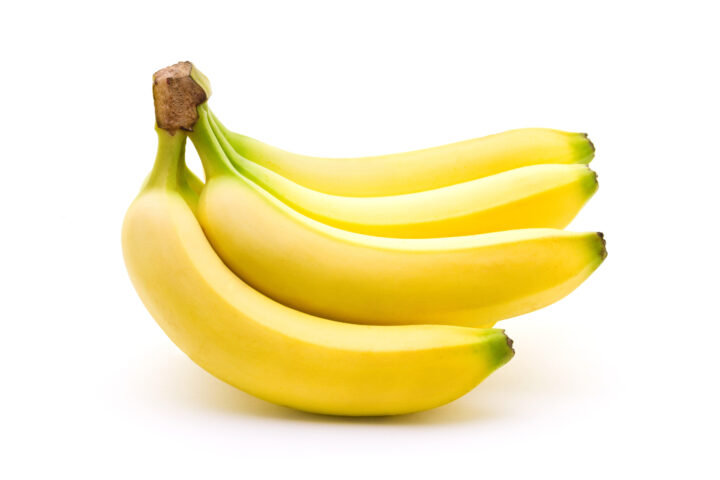
Anti-Food Waste Banana
British biotech company Tropic has developed a banana using CRISPR/Cas gene editing that no longer turns brown. In the US, it is already on the market, while in England, it has passed the decisive regulatory hurdle. The same technology could also help save the world's most popular banana from extinction.
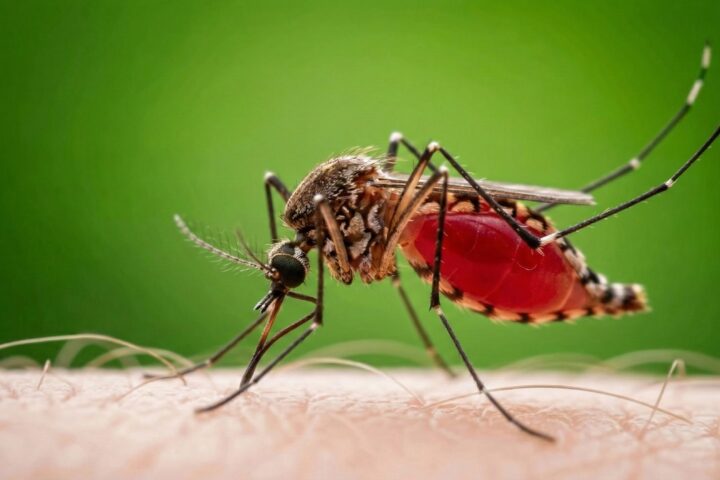
Asian Tiger Mosquito: Federal Government Implements Action Plan – But Insecticides Remain Taboo
Invasive species such as the Asian tiger mosquito are increasingly spreading across Switzerland. The federal government is sounding the alarm and wants to put a stop to the mosquito with a national action plan. However, the most effective measure is being left out: insecticides.

Record Heat 2026: Why Agriculture Needs Resilient Crop Varieties
Heat, drought, and hail took a heavy toll on Swiss farmers in 2026. In an interview with the NZZ, Adrian Aebi, head of Switzerland's largest crop insurer, warns: "If we carry on like this, agriculture will bleed dry." Looking to the future, there is an urgent need for resilient crop varieties that can withstand heat and dry conditions.
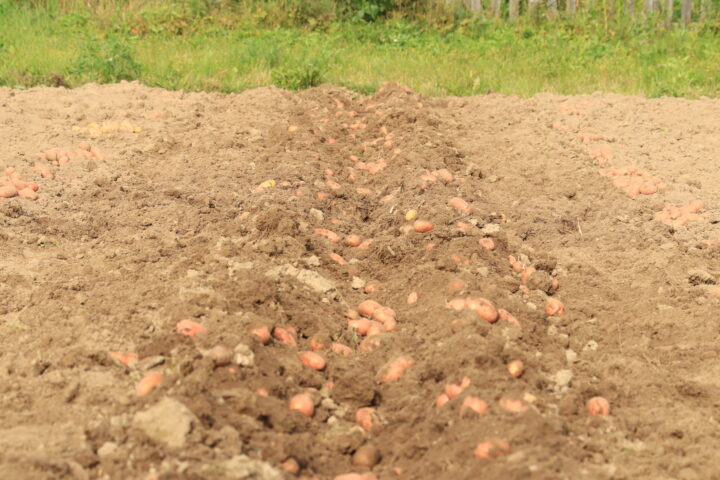
Record low potato harvest: Why is the Federal Council standing still?
The hot summer of 2026 caused the lowest potato harvest in Switzerland since records began a century ago. To secure domestic supply and build climate resilience, the agricultural sector is calling for swift access to new breeding technologies, which are already being authorized in the European Union. However, the Federal Council has delayed the corresponding draft legislation until 2027.