


Carte Blanche: Excessive Anti-Alcohol Strategy
Column by Philipp Schwander in BILANZ: For some time now, the WHO and other organizations have been running an aggressive campaign against alcohol. The goal: Vision Zero. In the process, statistics are often manipulated to serve the narrative. Time for a critical perspective.
Published: 29.04.2025, 13:25
Hand on heart: Wouldn't you be confused if large warning signs with dramatic images of seriously injured people were placed at ski lifts or on mountain hiking trails to highlight the dangers of sporting activities? Something along the lines of: "Sport can cause serious injuries or even kill you." Just as absurd as such a warning sign at a ski lift is what certain organizations—first and foremost the World Health Organization (WHO)—are currently planning in their fight against moderate alcohol consumption. Don’t believe me? Let me explain further.
The likelihood that a working person in Switzerland will suffer a leisure-related accident in a given year is between 11 and 13 percent, with 3 to 4.5 percent of those being serious accidents that impose a significant financial and emotional burden on society. Now take a look at recent media headlines on alcohol: they induce sheer panic. A favorite reference is the Lancet study from 2020, which claims that even a single alcoholic drink per day (such as a glass of wine) could be dangerous and increase the relative risk of alcohol-related illnesses by around 0.5 percent. Unimaginable what might happen if, as a wine lover, I allowed myself four glasses a day.
However, relative and absolute risk are two completely different things. A close reading of the study reveals the following: out of 100,000 non-drinkers, 914 people experienced a health problem in one year. Among 100,000 people who drank a glass of wine daily, the number was four higher. A truly negligible difference, likely within the statistical margin of error. In fact, the actual risk in this often-cited study increases by only 0.004 percent. Exactly. Let that sink in: 0.004 percent—or 1 in 25,000. (By the way, the probability of being struck by lightning in one’s lifetime is between 1 in 15,000 and 1 in 30,000.) Put differently: it is roughly 3,000 times riskier to experience a problem during a leisure activity than to enjoy a daily glass of wine. With two glasses of beer or wine per day, the theoretical probability increases to a staggering 0.063 percent.
One trick used to eliminate the beneficial effects of moderate alcohol consumption on coronary arteries is to include developing or emerging countries in the studies. In a developing country with a high proportion of young people, one is unlikely to find positive cardiovascular effects from alcohol consumption—people there are simply too young to develop such conditions. Instead, they often die prematurely due to poor hygiene, the low quality of alcoholic beverages, or as a result of serious accidents and violence. The Lancet study and many others now treat all countries as a single unit, regardless of their enormous demographic, cultural, and socioeconomic differences.
In this mix of interfering variables and unequal study designs, we end up with the adventurous conclusion that even a single drink is harmful to everyone. Scientifically, such a conflation of vastly different populations and living conditions is indefensible.
Conclusion: Alcohol can be harmful or even deadly when abused—but the same applies to sports. People can also be killed with a kitchen knife or a car. Wanting to ban these items because of that is just as absurd as the current excessive anti-alcohol strategy.
Philipp Schwander is a Master of Wine, wine expert and entrepreneur. He is the first Swiss person to pass the world's most difficult wine exam, the Master of Wine. He has been working in the wine trade for over 35 years. In 2003, he founded his own company, Selection Schwander. He stands for characterful, high-quality wines at fair prices and sees himself as an advocate for wine lovers on a budget. Schwander is an honorary member of the Austrian Wine Academy and writes regularly for various Swiss newspapers and magazines.
This article was originally published in BILANZ.
Photo: selection-schwander.ch
Kindly note:
We, a non-native editorial team value clear and faultless communication. At times we have to prioritize speed over perfection, utilizing tools, that are still learning.
We are deepL sorry for any observed stylistic or spelling errors.
Plant breeding on the threshold of its next leap in innovation

Dr. Carl-Stephan Schäfer
Managing Director, German Plant Breeders' Association (BDP)
Bruno Studer: When will drought-tolerant CRISPR crops arrive on Swiss fields?

Bruno Studer
Professor for Molecular Plant Breeding, ETH Zurich
Brexit has given British farmers more ways to adapt to climate change

Jonathan Brown
Head of Europe at agricultural technology business Syngenta
Security Risk on the Plate: "We Are Extremely Vulnerable"

Hans Jörg Rüegsegger
National Councillor and Farmer

The Federal Council is carelessly squandering Switzerland’s competitive advantages

Ruedi Noser
Former member of the Council of States for the Canton of Zurich (FDP)
When it comes to chemicals in medicine and agriculture, ‘natural’ is often less safe than synthetic
Simon Maechling
Science communicator and PhD in organic chemistry
Why has organic and sustainable farming veered so far away from the scientific evidence?

Henry I. Miller
Physician and molecular biologist

Reason Over Ideology: The International Union for Conservation of Nature (IUCN) Rejects a Blanket Ban on Genetically Modified Organisms – A Victory for Science

Stephanie Lahrtz
Science Editor, NZZ
Gene editing is also revolutionizing biological plant protection

Urs Niggli
Agricultural scientist and president of Agroecology Science
Content in German
New genomic techniques in plant breeding: sustainability needs innovation

Philipp Aerni
Professor of Economics & Expert in Corporate Responsibility and Sustainability
Carte Blanche: Excessive Anti-Alcohol Strategy
Philipp Schwander
Master of Wine, wine expert and entrepreneur
Agriculture needs a shared vision

Dr. Christian Stockmar
Chairman of the Austrian Crop Protection Association
'Pure hubris'

Patrick Dümmler
Head of Sustainability and Economic Policy at the Swiss Trade Association
We are bringing up the rear in Europe when it comes to plant protection

David Brugger
Head of Plant Production, Swiss Farmers’ Union


Politics seems resistant to facts

Beat Keller
Beat Keller ist Professor für Molekulare Pflanzenbiologie an der Universität Zürich
«Plant breeding calls for liberal rules»

Jürg Niklaus
Jürg Niklaus has a doctorate in law and is an advocate of plant breeding.
More pesticides, more genetic engineering: How we are overcoming hunger.
Markus Somm
Journalist, publicist, publisher and historian
«The fear of genetically modified plants is unwarranted»
Anke Fossgreen
Head of Knowledge Team Tamedia
«Politicians must avoid pushing prices up even more»

Babette Sigg Frank
President of the Swiss Consumer Forum (KF)
Seizing the opportunity of green biotechnology

Roman Mazzotta
Country President Syngenta Switzerland

«One-third organic farming does not solve the problem»
Olaf Deininger
Development Editor-in-Chief Agrar-Medien

«Most fears about pesticides are misplaced»

Michelle Miller
Columnist at Genetic Literacy Project and AGDaily

«Who is afraid of the evil GMOs?»

Jürg Vollmer
Editor-in-Chief of «die grüne» magazine
Content in German
«What plant breeding brings us»

Achim Walter
Professor of Crop Science, ETH Zurich
Content in German
«Research and work place needs impetus»

Jan Lucht
Head of Biotechnology at Scienceindustries
Content in German
«Agriculture plays a major role»

Jan Grenz
Lecturer in Sustainability, School of Agricultural, Forest and Food Sciences HAFL
«Understanding nature’s mechanisms better»
Urs Niggli
Agricultural scientist and president of Agroecology Science

«Lay people completely disregard the dose»

Michael Siegrist
Professor of Consumer Behaviour, ETH Zurich
Content in German
«Is organic really healthier?»

Anna Bozzi
Head of Nutrition and Agriculture at scienceindustries
Content in German
«Genetic engineering and environmental protection go hand in hand»
Dr. Teresa Koller
Researcher at the Institute of Plant and Microbiology at the University of Zurich
«The «Greta» generation will rigorously dispel paradigms.»
Bruno Studer
Professor for Molecular Plant Breeding, ETH Zurich
Content in German
«Overcoming the urban-rural divide with constructive agricultural policy»
Jürg Vollmer
Editor-in-Chief of «die grüne» magazine
Content in German
«We protect what we use»

Regina Ammann
Head of Sustainability & Public Affairs, Syngenta Switzerland
Related articles
A Contribution Spanning Generations
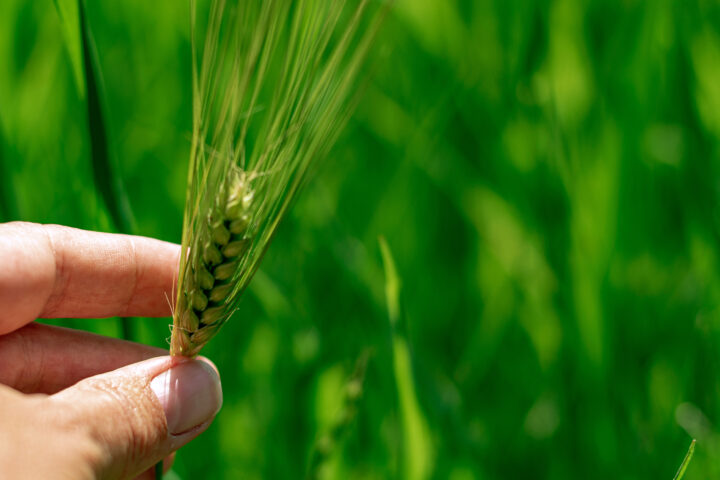
Food security begins long before the harvest. It begins with varieties that deliver yields, resist diseases and perform reliably under changing environmental conditions.
Agriculture and trade secure our food supply
The No to the Food Initiative is clear. It is an opportunity to free supply policy from wishful thinking. A sense of reality has returned to the political debate. Switzerland needs an agriculture sector that is able to produce food, and reliable trading partners for what it cannot produce itself.