
More organic does not mean more biodiversity
It is widely believed that the promotion of the organic farming sector has a positive impact on biodiversity. But that is wrong. There are more species living on organic land – that is true. However, the amount of land used is significantly greater than in conventional agriculture. Biodiversity areas are being pushed back. All the benefits for biodiversity disappear.
Published: 15.09.2021, 14:58
According to a team of researchers at the University of Göttingen, the key to more biodiversity lies in a landscape mosaic of natural habitats and small and diverse areas of cultivation, as reported by "Landfreund". Whether it is organic or conventional plays no role: "Although the areas managed with eco-certification have a third more species, they do not achieve the yield level of conventional cultivation, so more area is needed for the same yield," says lead author Prof. Teja Tcharntke of the University of Göttingen.
Organic needs more space
To produce the same crop, organic farming needs much more land than conventional agriculture. The positive effects vanish again. And: Pesticides that have negative effects on living organisms are also used in the organic farming industry. Copper is widely used in organic farming for the control of fungal diseases. In the soil, it accumulates and has a toxic effect on many soil organisms – for example on worms. "Organic farming is not always carried out in idyllic family farms. Organic monocultures are often similar in size to conventional farms, and vegetables are often grown under glass at the expense of biodiversity," says Tcharntke in "Landfreund." In the Mediterranean region, entire landscapes for vegetable cultivation would be covered with plastic sheeting and thus destroyed – with a sharply increasing proportion of eco-certification.
Blindspot article
Smaller fields and variety
The variety of crops has a much greater influence on biodiversity. According to the study author, small fields with long edges and close-to-nature habitats had a stronger impact on biodiversity than eco-certification. They say that such areas could be equally feasible in both conventional and organic farming. A landscape with fields of the size of one hectare instead of six hectares can be home to six times more plant and insect species. At the same time, the number of species can be doubled with variety in cultivation. Biological pest control and the pollination performance of insects can also be improved in this way.
Good to know
Swiss agricultural policy is doing an above-average amount in terms of biodiversity compared to other countries. In barely any other country are the legal regulations more stringent than in Switzerland. Our agricultural area of around 1 million hectares covers more than 190,000 hectares of biodiverse conservation space. This represents 19 percent of the total area and represents a top international figure. Breeding birds are a good indicator of the state of biodiversity. According to pocket statistics for the environment 2020 (p. 33), the trend of bird species regularly breeding in Switzerland has been balanced over the last almost 30 years.
Networking of habitats
Biodiversity thrives on the networking of habitats. Wildflowers can be planted in each balcony box and each garden owner can contribute by creating habitats for insects and small animals, for example by means of planting shrubs and hedges, laying out piles of leaves and branches, and the late and staggered mowing of flower meadows. Ideally, the measures are adapted to the location: Vegetation and insects can be quite different just a short distance away. Help for location-appropriate wild plants is provided by the information platforms floretia.ch and www.futureplanter.ch
Sources
Related articles
Anti-Food Waste Banana
British biotech company Tropic has developed a banana using CRISPR/Cas gene editing that no longer turns brown. In the US, it is already on the market, while in England, it has passed the decisive regulatory hurdle. The same technology could also help save the world's most popular banana from extinction.
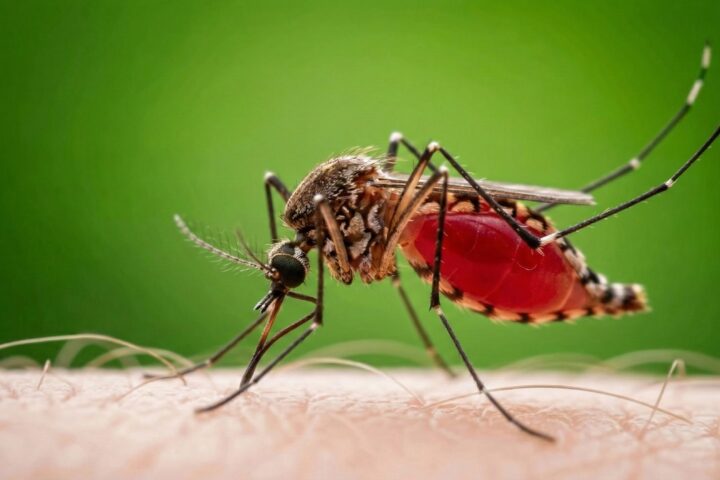
Asian Tiger Mosquito: Federal Government Implements Action Plan – But Insecticides Remain Taboo
Invasive species such as the Asian tiger mosquito are increasingly spreading across Switzerland. The federal government is sounding the alarm and wants to put a stop to the mosquito with a national action plan. However, the most effective measure is being left out: insecticides.

Record Heat 2026: Why Agriculture Needs Resilient Crop Varieties
Heat, drought, and hail took a heavy toll on Swiss farmers in 2026. In an interview with the NZZ, Adrian Aebi, head of Switzerland's largest crop insurer, warns: "If we carry on like this, agriculture will bleed dry." Looking to the future, there is an urgent need for resilient crop varieties that can withstand heat and dry conditions.
Record low potato harvest: Why is the Federal Council standing still?
The hot summer of 2026 caused the lowest potato harvest in Switzerland since records began a century ago. To secure domestic supply and build climate resilience, the agricultural sector is calling for swift access to new breeding technologies, which are already being authorized in the European Union. However, the Federal Council has delayed the corresponding draft legislation until 2027.