

The Great Suffering of Farmers
Fire blight, Japanese beetles, or grapevine yellows – farmers in Valais, too, are increasingly feeling helpless in the face of the threats posed by nature. More and more often, they lack the means to effectively protect their crops. This makes it all the more important for the Federal Council to place a pragmatic balancing of interests at the forefront when setting threshold values.
Published: 26.02.2026, 20:18
In an article in 24 Heures, Georg Bregy, Deputy Head of the Agricultural Service of the Canton of Valais, states clearly: “Pressure from pests is increasing, and uncertainties are considerable. We lack the resources to combat them.”
Helpless in the Fight Against Devastating Diseases
One farmer who has lost such a battle is Joël Bessard. On his property in the Charrat (VS) region, several pear trees were infected with fire blight—a highly contagious disease that affects trees and plants, causing their blossoms to wither. The diagnosis was made on a Friday. The consequence followed immediately: by Monday, the trees had to be cut down. The Bessard case is just one of many examples illustrating how difficult it has become for farmers to protect their crops.
Yet solutions exist: after years of research and under strict regulations, scientists at ETH Zurich and Agroscope have bred apple trees resistant to fire blight. However, Switzerland has maintained a ban on genetic engineering for 20 years. Apple breeders have therefore long advocated lifting the ban, also to better combat fire blight.
The current situation is delicate, Bregy emphasizes: in addition to fire blight, flavescence dorée is causing devastating damage in vineyards. By 2025, the affected area has increased by almost 38 percent, now covering 1,320 hectares or around 15,000 plots. The disease is transmitted by a leafhopper, and insecticides are used to combat it—even in organic farming. The product applied is pyrethrin, a sister substance to the synthetically produced and often criticized pyrethroids, extracted from chrysanthemums grown in monocultures.
The Japanese Beetle Threatens More Than Football Pitches
Diseases are not the only danger lurking in the fields. Increasingly, farmers are also concerned about animal pests, such as the Japanese beetle. It attacks not only vines and fruit trees, but also berry crops, corn, soybeans, and around 400 other plant species. According to Agroscope, this pest could in the future cause crop losses amounting to several dozen or even several hundred million Swiss francs, as reported by 24 Heures.
And the problem is likely to worsen: increasingly mild winters are exacerbating the situation. According to Danilo Bächler, Head of Plant Protection at the Wallierhof Training Center, warmer temperatures allow more insect generations to hatch each year. The risk of invasive species and insect-transmitted plant diseases is also rising, as reported by Schweiz am Wochenende. Without extended frost periods, infestations can begin earlier.
A Careful Balancing of Interests Between Food Production and Environmental Protection Is Essential
These developments are not good news for farmers—especially as fewer and fewer effective countermeasures are available to them. It is therefore crucial that the responsible authorities pursue a pragmatic approach that takes into account the realities of agricultural operations. Recently, four plant protection products were provisionally not assigned specific maximum residue limits because farmers simply lack effective alternatives.
Ultimately, there is no way around a careful balancing of interests that considers all parties involved—as the Federal Department of the Environment, Transport, Energy and Communications (DETEC) also noted in response to criticism of Federal Councillor Rösti’s approach. This balancing includes scientific, practical, and political considerations. It is in the interest of farmers—but also in the interest of all those who, for example, call for locally produced rapeseed instead of palm oil.
Sources
Kindly note:
We, a non-native editorial team value clear and faultless communication. At times we have to prioritize speed over perfection, utilizing tools, that are still learning.
We are deepL sorry for any observed stylistic or spelling errors.
Related articles
Why a lack of resources is to blame for the low yields in agroecology
Calls for transforming food systems have grown over the past several years. International governance organizations, such as the Food and Agriculture Organization (FAO), have issued many of these calls. Other calls have come from activist organizations, too numerous to list. A common theme from both the FAO and activists is that the current system is ‘broken’ and requires a complete rethink and overhaul.
Pesticide cuts
In Switzerland, a growing number of pesticides are being banned by the authorities. At the same time, there are almost no new ones entering the market. The regulatory authorities are severely overstretched. Things cannot go on like this. Every product that disappears from the market increases the risk of pests developing resistance and of crops failing.
Faster Approval of Crop Protection Products Long Overdue
Switzerland diligently bans active substances that have also been withdrawn from the market in the EU. Conversely, it is dragging its feet: modern products that are approved in neighboring countries remain blocked. With the adoption of the amendment to the Agriculture Act, the National Council has now taken an important step toward faster approval of plant protection products.

Anti-Food Waste Banana
British biotech company Tropic has developed a banana using CRISPR/Cas gene editing that no longer turns brown. In the US, it is already on the market, while in England, it has passed the decisive regulatory hurdle. The same technology could also help save the world's most popular banana from extinction.
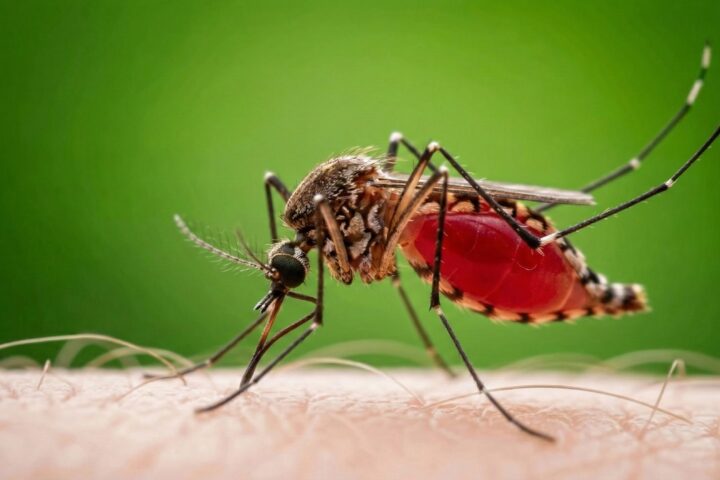
Asian Tiger Mosquito: Federal Government Implements Action Plan – But Insecticides Remain Taboo
Invasive species such as the Asian tiger mosquito are increasingly spreading across Switzerland. The federal government is sounding the alarm and wants to put a stop to the mosquito with a national action plan. However, the most effective measure is being left out: insecticides.

Record Heat 2026: Why Agriculture Needs Resilient Crop Varieties
Heat, drought, and hail took a heavy toll on Swiss farmers in 2026. In an interview with the NZZ, Adrian Aebi, head of Switzerland's largest crop insurer, warns: "If we carry on like this, agriculture will bleed dry." Looking to the future, there is an urgent need for resilient crop varieties that can withstand heat and dry conditions.
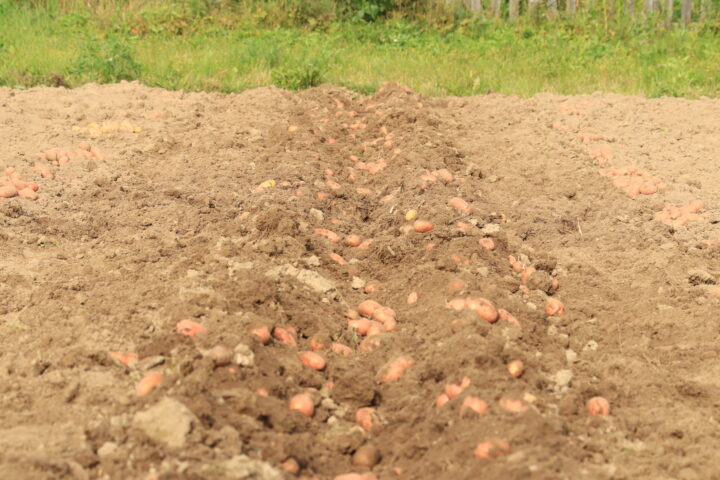
Record low potato harvest: Why is the Federal Council standing still?
The hot summer of 2026 caused the lowest potato harvest in Switzerland since records began a century ago. To secure domestic supply and build climate resilience, the agricultural sector is calling for swift access to new breeding technologies, which are already being authorized in the European Union. However, the Federal Council has delayed the corresponding draft legislation until 2027.