

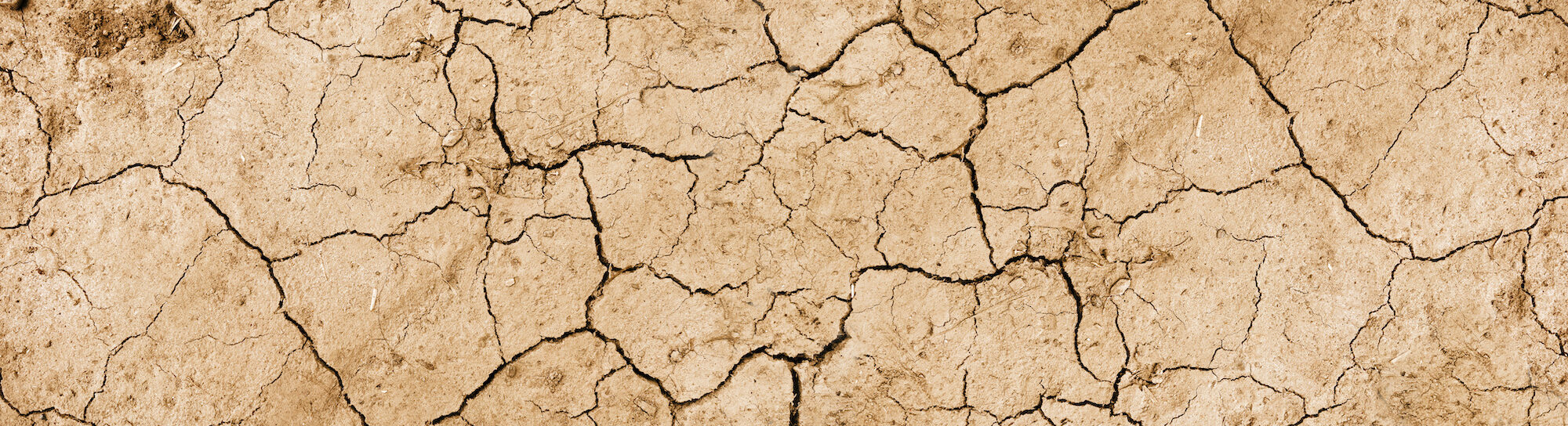
A new lease on life for unusable farmland
Fertile farmland is one of the most valuable resources in the world. Such land is scarce, however, and is likely to become even scarcer due to the rising global demand for food. This is bad news for the environment and for biodiversity, particularly in light of growing pressure from deforestation. It is vital that degraded agricultural land is restored and made fertile once more. The technology already exists, but financial stimuli are needed to make it happen.
Tuesday, January 11, 2022
The United Nations projects that the global population will reach 10 billion by 2050, which is around 2 billion more people than today. This poses huge challenges for agriculture: Food production must increase significantly, while fertile agricultural land is becoming an increasingly scarce commodity. According to Fortune, the world has rendered more than a third of its arable land unusable in the last 40 years. In many cases, the soil has been depleted by too many decades of poor practices, like overgrazing by livestock, misuse of chemicals and fertilizers, or planting the same crops season after season.
Clearing cheaper than restoration
The degradation of arable land is leading to serious ecological problems as forests are cleared to create more farmland. This, in turn, results in a loss of biodiversity and important carbon sinks. Restoring degraded land represents a better option for both the environment and for wildlife. The knowledge and technologies are already available, but because clearing forests is often cheaper than recultivating degraded land, farmers do not have sufficient incentives.
Providing incentives for farmers
The Syngenta Group and the Nature Conservancy, a global conservation organization, have set the goal of restoring one million hectares of degraded pastureland in Brazil, working together with farmers there. The project aims to encourage more efficient and sustainable cattle ranching on existing pasture, as well as growing soybeans and other crops on degraded pastures that can be restored. To date, farms with a total of 31,400 hectares of land have committed to the project. Embrapa, a Brazilian public agricultural research institute, and Itaú BBA, one of the largest banks in Latin America, are also participating in the project. The cooperation ensures an attractive return on investment and offers farmers the necessary incentives to stop them clearing more forest.
Sources
Related articles
Myths about food production
Having the “right” diet is playing an increasingly more important role in the lives of a great many people. A healthy lifestyle has become a status symbol. Healthy foods and sustainable production methods have been the subject of many extremely emotional debates. A wide range of outdated ideas and myths have taken root in the minds of a large number of consumers. Below, we will take a look at some myths and their deconstruction.
'Smallholder farmers produce 70% of the world’s food'
It sounds impressive and has been repeated for years. In 2026, the claim is once again being promoted by Fastenaktion: 'Smallholder farmers form the backbone of global food production.'
'Plant genetic diversity is disappearing'
It sounds alarming, has been repeated for years, and in 2026 was again claimed by the Fastenaktion organization: 'According to the Food and Agriculture Organization (FAO), more than 75 percent of plant genetic diversity has been lost over the past hundred years.'

Genetic Engineering in Everyday Swiss Life – “There’s a Gene in Everything!”
The genetic engineering moratorium in place since 2005 gives the impression that Switzerland is largely free of genetic engineering. However, a closer look shows that genetic engineering has long since become part of our everyday lives – we just usually don’t notice it.