

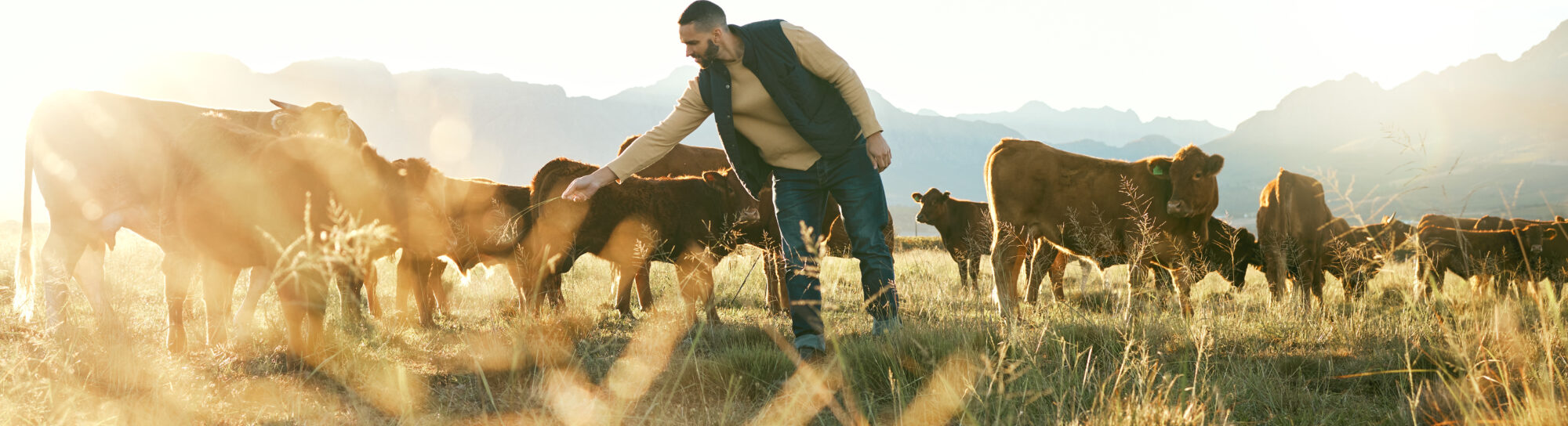
'Smallholder farmers produce 70% of the world’s food'
It sounds impressive and has been repeated for years. In 2026, the claim is once again being promoted by Fastenaktion: 'Smallholder farmers form the backbone of global food production.'
Published: 10.03.2026, 16:33
Key points at a glance
-
The statement is incorrect. It confuses smallholders with family farms.
-
Smallholder agriculture without modern varieties and modern crop protection cannot feed a growing global population.
-
Low-input farming systems lead to declining productivity.
-
In reality, productivity must increase while agricultural land use must decrease.
It is often claimed that smallholder farmers produce 70 percent of the world’s food while using only 30 percent of land and water resources. Smallholders are defined as farmers cultivating less than two hectares of land. They indeed account for around 84 percent of all farms worldwide, but they use only about 12 percent of global cropland and, according to FAO (2025), provide only around 16 percent of global food energy, 12 percent of plant proteins and 9 percent of fats.
They are frequently confused with family farms. Yet family farms can also be large-scale operations. Another important point is that low-input smallholder agriculture, without fertilizers, modern crop varieties and other production systems such as irrigation and crop protection, cannot feed the world’s growing population.
According to the OECD, achieving the goal of 'Zero Hunger' while keeping agricultural emissions constant would require global crop productivity to increase by 24 percent over the next ten years. This represents twice the growth rate achieved during the last decade. If yields do not increase significantly, nearly 600 million additional hectares of agricultural land would be required by 2050—an area roughly twice the size of India. This would inevitably lead to massive deforestation and biodiversity loss.
Blindspot article
To protect the climate and biodiversity, we must actually farm less land, which means producing significantly more on the land already in use. Rejecting highly productive agriculture as merely 'industrial harvesting' is therefore unrealistic given expected population growth—from 8.2 billion people today to 9.7 billion by 2050.
The role of smallholders is therefore ambivalent. While they remain crucial for local food security in many regions, they will hardly be able to deliver the required 24 percent productivity increase on their own. Solutions will only be possible if four key elements become available in regions dominated by smallholder agriculture. First, farmers need improved seeds based on hybrid breeding and modern biotechnology. High-yielding varieties have historically been the most important driver of higher and more stable yields. Second, greater access to fertilizers is necessary. In Africa, farmers apply only about 20 kg of nitrogen per hectare, compared with a global average of 146 kg per hectare. Third, irrigation must be expanded. Only 6 percent of African farmland is irrigated, a major reason for low yields. Fourth, farmers need better advisory services and digital tools. These provide recommendations for optimal fertilizer use, targeted pest control, weather forecasts and market prices—tools that help smallholders plan better and secure their harvests.
Finally, these improvements also allow underprivileged smallholder families to farm their land more efficiently. This means their children can go to school instead of working in the fields.
Author of the article: Ludger Weß, PhD in biochemistry and science journalist. As a profound expert in agricultural research, he is committed to a fact-based debate on new breeding technologies.
Kindly note:
We, a non-native editorial team value clear and faultless communication. At times we have to prioritize speed over perfection, utilizing tools, that are still learning.
We are deepL sorry for any observed stylistic or spelling errors.
Related articles
Why cutting out synthetic pesticides will reduce food production
The UK’s action plan to reduce pesticide use could backfire, warns agronomist Greg Dawson: overly strict regulations may make domestic farming unprofitable – and increase the United Kingdom’s dependence on imports.
Global facts on world food and agriculture
Only thanks to technological progress and modern crop protection will we be able in the future to conserve our resources while feeding a growing population in a healthy and affordable way.
Ensuring Food Security Through Innovation
Agriculture stands at the centre of a global field of tension shaped by climate change, geopolitical crises and growing demand for food. Insights from the World Economic Forum in Davos show that the industry’s response lies in the intelligent combination of digital precision and biological progress.
A Contribution Spanning Generations
Food security begins long before the harvest. It begins with varieties that deliver yields, resist diseases and perform reliably under changing environmental conditions.
A Hint to Politicians, Delivered by Test Tube
Switzerland's top science prize goes to a researcher who helped develop the "gene scissors", a technology that has decisively advanced agriculture. While science has long since opened up new possibilities and the EU is moving ahead on regulation, Switzerland continues to dawdle.

Full Shelves – Of course! How Secure Is Our Supply Really?
Security of supply sounds like a shared goal. However, as soon as it comes to the path to get there, conflicts arise: between market and state, ecology and production, as well as self-sufficiency and international connectivity. The Agricultural Policy Podcast and swiss-food.ch explore the key dependencies and areas of tension surrounding supply security in a five-part series. The highlight will be a live podcast in front of an audience on November 5, 2026, at the Äusserer Stand (Hofcafé) in Bern.
Is Organic More Sustainable?
Organic food is considered a prime example of sustainability – but in reality, it often ends up in the waste bin faster than conventional products. The omission of artificial preservatives and modern plant protection drastically shortens shelf life and leads to more food waste.