

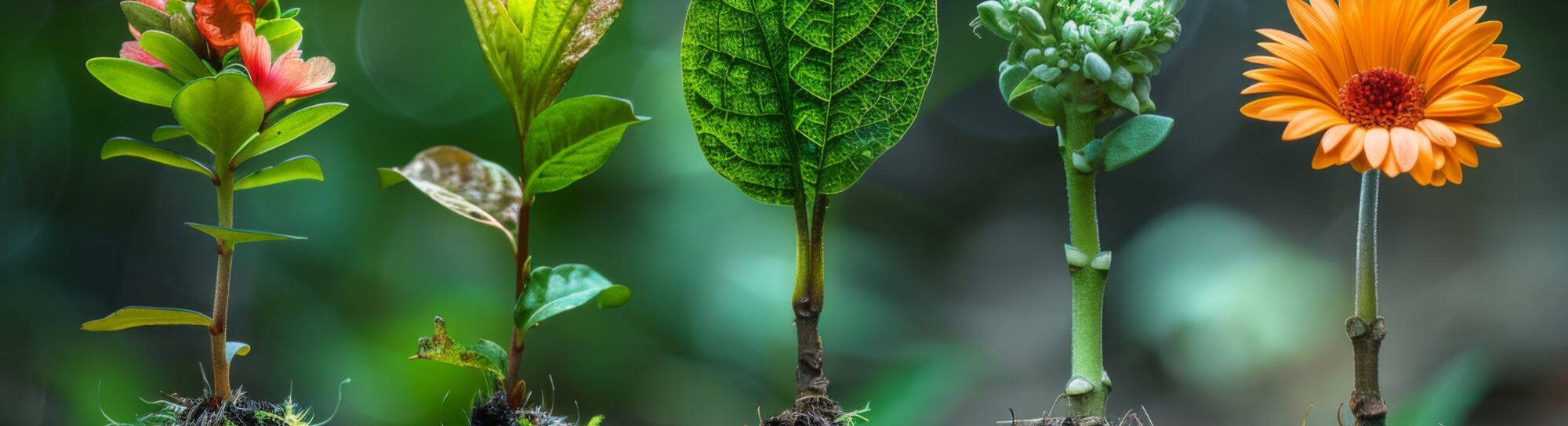
'Plant genetic diversity is disappearing'
It sounds alarming, has been repeated for years, and in 2026 was again claimed by the Fastenaktion organization: 'According to the Food and Agriculture Organization (FAO), more than 75 percent of plant genetic diversity has been lost over the past hundred years.'
Published: 10.03.2026, 13:17
The key points at a glance
-
There is no evidence for this alarming figure. It is true that it appears in several FAO publications, but it is not based on any statistics or scientific study.
-
The claim that almost 90 percent of traditional rice varieties in India have disappeared since the 1960s is also unsupported by any evidence.
-
Globally, crop variety diversity is increasing rather than declining.
This claim has long puzzled scientists. In 2021, plant researchers from 17 international research institutions set out to trace the origin of this mysterious number. They published their findings in a scientific article. Their investigation showed that the figure first appeared in a 1993 FAO brochure titled 'Harvesting Nature’s Diversity.' In the foreword (and only there) it states: 'Since the beginning of this century, about 75 percent of the genetic diversity of agricultural crops has been lost.' However, the claim is not repeated anywhere in the brochure itself, and no reference is given to any study or FAO department.
The author of the brochure was Hope Shand, an activist from the North American NGO Rural Advancement Foundation International (RAFI) (since 2001 known as the ETC Group). At that time RAFI, led by Pat Mooney, Cary Fowler and Shand, was campaigning against modern technologies in agriculture. The organization opposed genetic engineering, synthetic crop protection products, patents, and similar developments. The group also coined the term 'biopiracy' in 1995.
The plant scientists assume that the number originally came from the RAFI book 'The Threatened Gene: Food, Politics, and the Loss of Genetic Diversity' published in 1990. There, again in the foreword, the following sentence appears: 'By the mid-1970s, three quarters of Europe’s traditional vegetable varieties were close to extinction.' Once again, no source is cited.
Blindspot article
Apparently Hope Shand simply adopted this number for the FAO brochure and presented it as a global phenomenon. Since then, it has circulated in FAO publications. For example, it was repeated in the 1997 FAO brochure 'Women: The Key to Food Security' the 2004 training manual 'Building on Gender, Agrobiodiversity and Local Knowledge' In both cases, again without reference to any study. To this day, therefore, there is no evidence for this figure, which was written in 1993 by an activist in the foreword of a brochure for World Food Day.
Nevertheless, numerous environmental organizations continue to cite the figure, and the media rarely question its origin. Over more than three decades, an unsupported claim in the foreword of a brochure has turned into an established 'fact'.
Worse still, as in the children’s game of 'Chinese whispers', the statement evolved. What began as: 'Three quarters of Europe’s traditional vegetable varieties were close to extinction' became: '75 percent of all agricultural species and varieties have disappeared' and is now often repeated as: 'More than 75 percent of plant genetic diversity has been lost.'
Another fact is that traditional varieties do not disappear simply because they are no longer cultivated. For example, the Indian National Bureau of Plant Genetic Resources (NBPGR) maintains well over 100,000 rice varieties, including wild rice and many traditional varieties. The ICAR-National Rice Research Institute (NRRI) in Cuttack, Odisha, has collected and preserved around 30,000 indigenous rice varieties. In reality, varietal diversity is increasing rather than declining. A 2010 meta-analysis found no significant long-term reduction in the regional diversity of crop varieties.
Author of the article: Ludger Weß, PhD in biochemistry and science journalist. As a profound expert in agricultural research, he is committed to a fact-based debate on new breeding technologies.
Kindly note:
We, a non-native editorial team value clear and faultless communication. At times we have to prioritize speed over perfection, utilizing tools, that are still learning.
We are deepL sorry for any observed stylistic or spelling errors.
Related articles
Lack of diversity becomes an existential problem
The dwindling genetic diversity in fields is becoming an increasing problem. Unfortunately, this problem is growing steadily, partly because politicians in Switzerland and the EU are viewing the issue through ideological lenses instead of listening to science.
Why Strict GMO Regulation Stifles Innovation
New breeding techniques are considered key to developing resilient crops, stable yields and reducing the need for plant protection products. ETH professor Bruno Studer warns that overregulating these technologies strengthens precisely those large corporations that critics seek to curb, while excluding smaller breeders from the market.

How NZT makes popular varieties more resilient
New breeding technologies offer solutions – but they are simply being ignored in the current debate. Anyone who complains about the lack of flavour in strawberries must also be prepared to accept modern methods such as genome editing.
A Contribution Spanning Generations
Food security begins long before the harvest. It begins with varieties that deliver yields, resist diseases and perform reliably under changing environmental conditions.

A Hint to Politicians, Delivered by Test Tube
Switzerland's top science prize goes to a researcher who helped develop the "gene scissors", a technology that has decisively advanced agriculture. While science has long since opened up new possibilities and the EU is moving ahead on regulation, Switzerland continues to dawdle.

Full Shelves – Of course! How Secure Is Our Supply Really?
Security of supply sounds like a shared goal. However, as soon as it comes to the path to get there, conflicts arise: between market and state, ecology and production, as well as self-sufficiency and international connectivity. The Agricultural Policy Podcast and swiss-food.ch explore the key dependencies and areas of tension surrounding supply security in a five-part series. The highlight will be a live podcast in front of an audience on November 5, 2026, at the Äusserer Stand (Hofcafé) in Bern.
Is Organic More Sustainable?
Organic food is considered a prime example of sustainability – but in reality, it often ends up in the waste bin faster than conventional products. The omission of artificial preservatives and modern plant protection drastically shortens shelf life and leads to more food waste.