
Ensuring Food Security Through Innovation
Agriculture stands at the centre of a global field of tension shaped by climate change, geopolitical crises and growing demand for food. Insights from the World Economic Forum in Davos show that the industry’s response lies in the intelligent combination of digital precision and biological progress.
Published: 03.02.2026, 11:36
Anyone looking at global markets today is confronted with a new reality. The era in which trade relations functioned purely on the basis of rules is increasingly giving way to a power-based order, making supply chains more vulnerable. For agriculture, this means it must become more resilient. The focus is no longer solely on increasing yields, but on securing production under volatile conditions. Climate change in particular is putting traditional farming methods under pressure. Without technological adaptation, significant production losses – for example in wheat – are looming, affecting not only Europe but also parts of Africa. Europe is therefore called upon to draw on its technological strengths in order not to lose ground in global competition.
Artificial intelligence as an agricultural adviser
In Davos, one term dominated the discussions: artificial intelligence. Beyond the hype, however, concrete applications are emerging in the agricultural sector under the concept of “agricultural intelligence”. The aim is not to replace farmers with robots, but to support them with deep agronomic expertise that is massively accelerated through data analysis. This is urgently needed, as the world’s population continues to grow while fewer and fewer people are willing to work in agriculture. Only through machines can resource efficiency be increased and the food supply secured. At the same time, digital tools are making agriculture more attractive again for younger, technology-oriented generations.
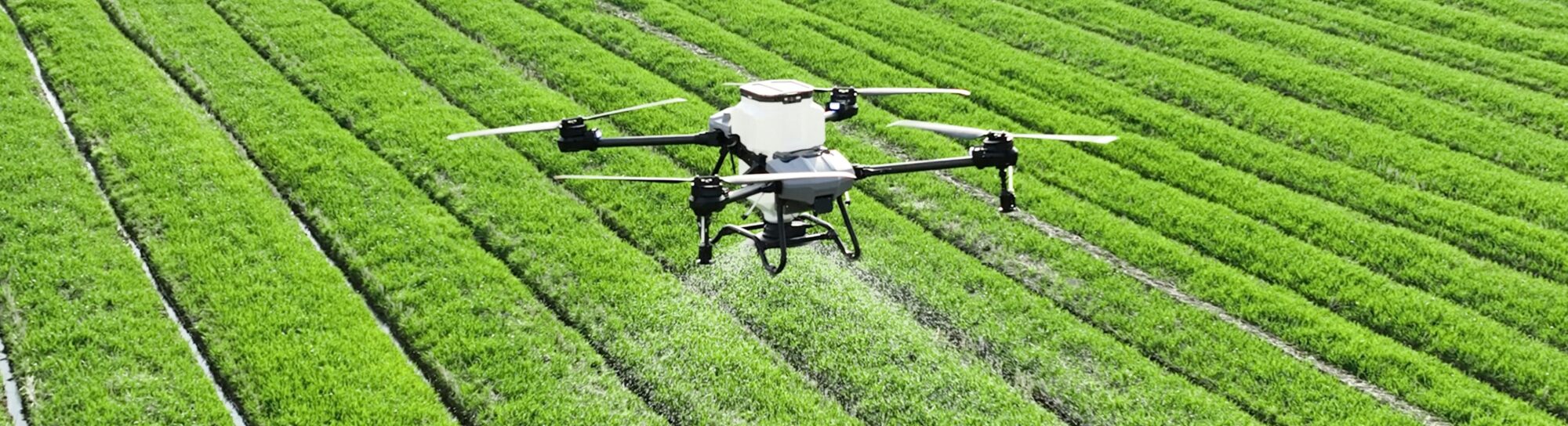
Modern AI tools help simplify complex decisions in the field. They analyse weather data, soil conditions and plant health in real time. The goal is precision agriculture that uses inputs more efficiently, reconciling ecology and economics. The industry is working intensively to ensure that these technologies can be used without requiring farmers to be IT specialists. Partnerships between agricultural companies and software giants are accelerating this trend, enabling digital solutions to be scaled across the entire value chain.
Hope in biotechnology
However, technology is not limited to the digital realm. To increase the climate resilience of crops, new breeding methods are once again moving into focus. Compared to the early 2000s, the public debate around technologies such as genome editing has become noticeably more pragmatic. Concerns about stable food prices and food security now outweigh ideological disputes for many consumers.
Experts warn, however, that if regulatory hurdles in Europe remain so high that new breeding methods are not economically viable, this will seriously endanger the competitiveness of European agriculture. Innovation requires reliable framework conditions. Only if Europe allows technologies that make crops more resistant to heat and drought can adaptation to climate change succeed.
The message from Davos is clear: the tools to sustainably ensure food security are available – from AI-based data analysis to modern plant breeding. It is now up to politics and society to adopt a holistic perspective and allow these tools to be put into practice.
From industrial to intelligent agriculture
In 2023, three experts from the agricultural machinery industry, vegetable farming and agricultural journalism discussed at the Swiss Food Talk how digitalisation is transforming food production. They agreed that agriculture is at a turning point – moving from an industrial to an intelligent system. Data and algorithms are becoming increasingly important and also contribute to comprehensive sustainability.
Kindly note:
We, a non-native editorial team value clear and faultless communication. At times we have to prioritize speed over perfection, utilizing tools, that are still learning.
We are deepL sorry for any observed stylistic or spelling errors.
Related articles
How German Experts View New Breeding Techniques
In hardly any other country is the idyllic image of organic farming cultivated in the public sphere as carefully as in Germany. Naturalness and rural authenticity are powerful mental refuges for many Germans. Against this backdrop, it is hardly surprising that resistance to new breeding techniques is strong – and that ignorance about the realities of organic farming sometimes appears almost deliberate.

Genetic scissors for the future – soon in Switzerland too?
Genome editing is seen as a promising way to make agriculture more sustainable and climate-resilient. But Switzerland is hesitant to approve it. A popular initiative even wants to ban it. But what can CRISPR really do?
Why we need high-tech for tomorrow's agriculture
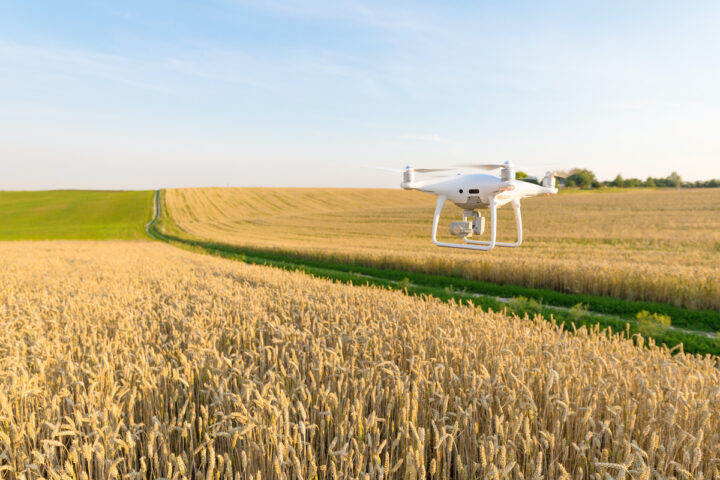
From genome editing to precision field spraying – innovations can strengthen the agriculture of tomorrow. They help to ensure that agricultural land can be used better. Crops are protected more efficiently. According to a survey by gfs.bern, the Swiss are very open to the use of modern technologies. This also applies to new breeding methods such as genome editing.
A Contribution Spanning Generations
Food security begins long before the harvest. It begins with varieties that deliver yields, resist diseases and perform reliably under changing environmental conditions.
A Hint to Politicians, Delivered by Test Tube
Switzerland's top science prize goes to a researcher who helped develop the "gene scissors", a technology that has decisively advanced agriculture. While science has long since opened up new possibilities and the EU is moving ahead on regulation, Switzerland continues to dawdle.

Full Shelves – Of course! How Secure Is Our Supply Really?
Security of supply sounds like a shared goal. However, as soon as it comes to the path to get there, conflicts arise: between market and state, ecology and production, as well as self-sufficiency and international connectivity. The Agricultural Policy Podcast and swiss-food.ch explore the key dependencies and areas of tension surrounding supply security in a five-part series. The highlight will be a live podcast in front of an audience on November 5, 2026, at the Äusserer Stand (Hofcafé) in Bern.
Is Organic More Sustainable?
Organic food is considered a prime example of sustainability – but in reality, it often ends up in the waste bin faster than conventional products. The omission of artificial preservatives and modern plant protection drastically shortens shelf life and leads to more food waste.