

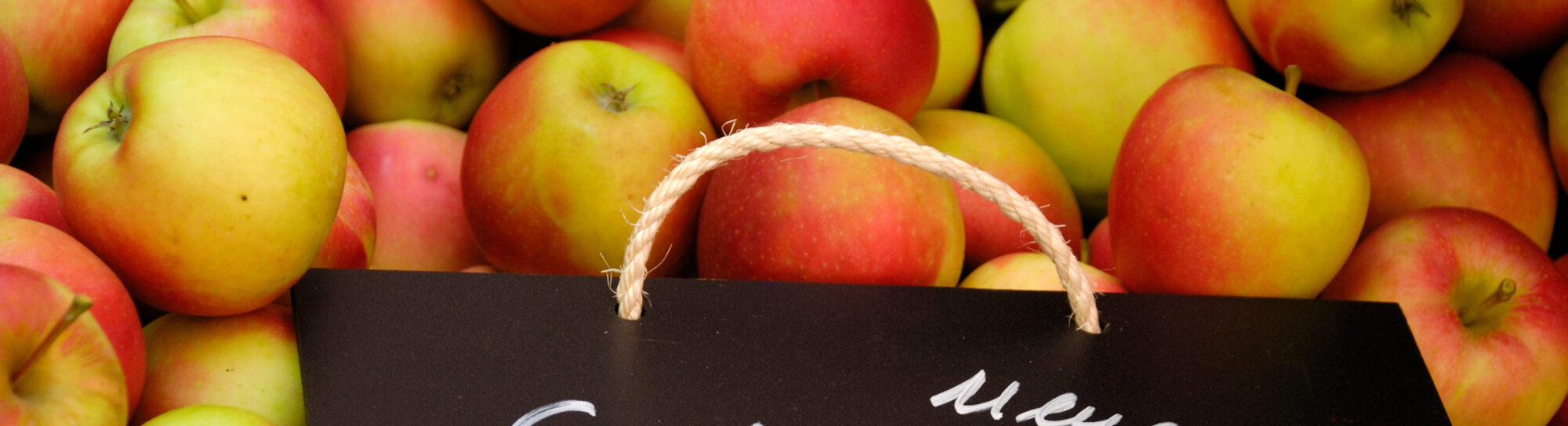
Organic farmer calls for genome editing for fruit growing
The high number of plant protection treatments is a major challenge for organic farmers. One of them is apple grower Marco Messerli from Kirchdorf BE. He has had to treat susceptible apple varieties with organic pesticides a total of 48 times. Too much, he thinks, and is now calling for the authorisation of new breeding methods. Experts agree with him.
Monday, February 12, 2024
Organic is better. At least that's what most people think. But not everything that is organic shines. A lot of pesticides are used in organic fruit growing - and not in short supply, as an article in the «BauernZeitung» shows.
For example, organic farmer Marco Messerli had to treat susceptible apple varieties with organic pesticides no less than 48 times. The Bernese farmer announced this at the Central Switzerland Plant Protection and Fruit Growing Conference organised by the Central Switzerland Fruit Growers' Association (AZO) and did not shy away from naming the problems in organic fruit growing in his presentation.
That's why organic farmers spray more often
«Yes, it's true that organic farmers spray more often and sometimes even at night,» Messerli is quoted as saying in the BauernZeitung newspaper. Especially when heavy rainfall has washed down the protective coating, spraying at night has become necessary. «I can't afford scab infections for quality reasons. That's why it's crucial to renew the protective coating within hours.» In addition, on some days he even had to spray two products - one fungicide and one insecticide treatment.
Messerli is therefore calling for the breeding of new robust varieties to be driven forward and for innovative breeding methods such as Crispr/Cas9 gene scissors to be considered. «We are in the year 2024. If you really want to produce organic apples sustainably, you also have to allow new breeding methods,» says the young fruit grower.
One thing is clear: Messerli's reports make people sit up and take notice. However, the conflicting goals are by no means insurmountable. New breeding methods such as the Crispr/Cas9 gene scissors can certainly help. With minimal intervention, the technology makes it possible to introduce desired resistances into existing, popular apple varieties and in turn eliminate undesired characteristics that favour diseases.
Even bioscientists see advantages in genetic engineering
According to the Swiss television science programme "Einstein", there is no way around the new methods if popular apple varieties such as Golden Delicious, Braeburn and Gala are to be cultivated in Switzerland in the medium term.The latter variety in particular is extremely susceptible to scab.
Nobel Prize winner Christiane Nüsslein-Volhard has the same opinion. Varieties that are familiar to consumers can be efficiently optimised by means of genome editing: «Varieties that are already well established can simply be improved by a gene mutation that has proven to be advantageous in other species», says Nüsslein-Volhard. This is why the Nobel Prize winner is in favour of using the Crispr/Cas9 gene scissors not only in conventional plant breeding, but also in organic farming.
Genetic engineering is frowned upon in the organic world, but genome editing is gentler and more targeted, especially in comparison to untargeted mutation breeding, which is also widespread in organic breeding and selects the strongest plants using radioactive irradiation or chemical treatment. This is why Urs Niggli from Switzerland, who is one of the world's most renowned bioscientists, also sees advantages in the technology. «It would be unattractive if the conventional farmer had a potato variety that could do without pesticides - and the organic farmer had a potato variety that he had to spray with copper,» the NZZ newspaper quoted Niggli as saying, citing the daily newspaper taz.
Kindly note:
We, a non-native editorial team value clear and faultless communication. At times we have to prioritize speed over perfection, utilizing tools, that are still learning.
We are deepL sorry for any observed stylistic or spelling errors.
Related articles
New breeding methods – here to stay
The Swiss Parliament has decided to update the genetic engineering moratorium that has been in place since 2005. The step was overdue. On the occasion of a webinar organized by swiss-food.ch, experts from science and agriculture spoke about the benefits of new biotechnological breeding methods. It became clear: the risks are low, the opportunities are great.
Ten applications of new breeding technologies for Switzerland
The summer of 2021 has shown how damaging prolonged rain can be for crops. With climate change, the likelihood of extreme weather events will increase. Farmers therefore need improved plant varieties that can withstand heat but also a lot of moisture.
Broad alliance for modern breeding methods
The signal effect could not be greater. The label organization IP-Suisse, the fruit, vegetable and potato producers, the agricultural cooperative Fenaco, the large retailers Coop and Migros and the consumer forum have recently joined forces under the name "Varieties for tomorrow".
Sales bans due to PFAS: Should we be worried?
After spectacular sales bans on fish and meat due to PFAS contamination, consumers are asking themselves: How dangerous are these substances really – and what can still be placed in the shopping basket without concern?
How German Experts View New Breeding Techniques
In hardly any other country is the idyllic image of organic farming cultivated in the public sphere as carefully as in Germany. Naturalness and rural authenticity are powerful mental refuges for many Germans. Against this backdrop, it is hardly surprising that resistance to new breeding techniques is strong – and that ignorance about the realities of organic farming sometimes appears almost deliberate.
Why consumers accept gene-edited foods on their plates
Acceptance of gene-edited foods increases when the tangible benefits for consumers are easy to understand. A recent study by the Center for Food Integrity (CFI), conducted in collaboration with FMI – The Food Industry Association, shows that consumers evaluate technologies such as genome editing positively when they recognize clear advantages for health, the environment, or food security.
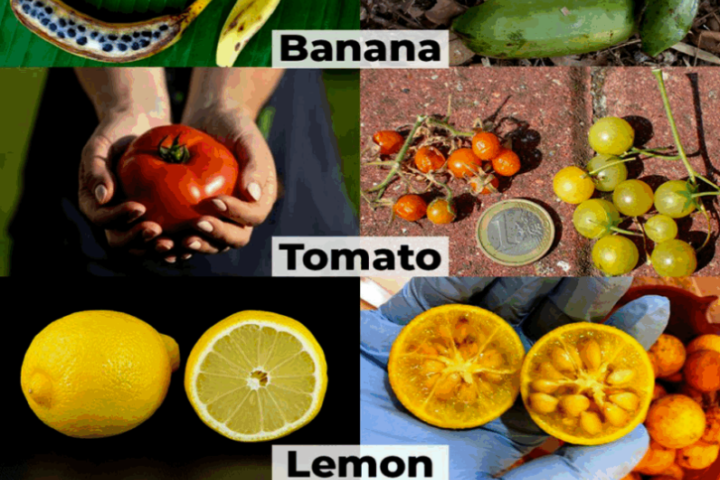
Beautiful and delicious mutants on your plate: The misunderstood world of crop improvement
When most of us hear the word mutation, the images that come to mind are not positive. We think of radioactive monsters, comic book villains, or genetic diseases like sickle-cell anemia. In popular culture, “mutants” are often synonymous with danger. Possibly the most famous are Marvel’s X-Men, who have enjoyed four big-screen incarnations and an enduring place among sci-fi movie aficionados.