
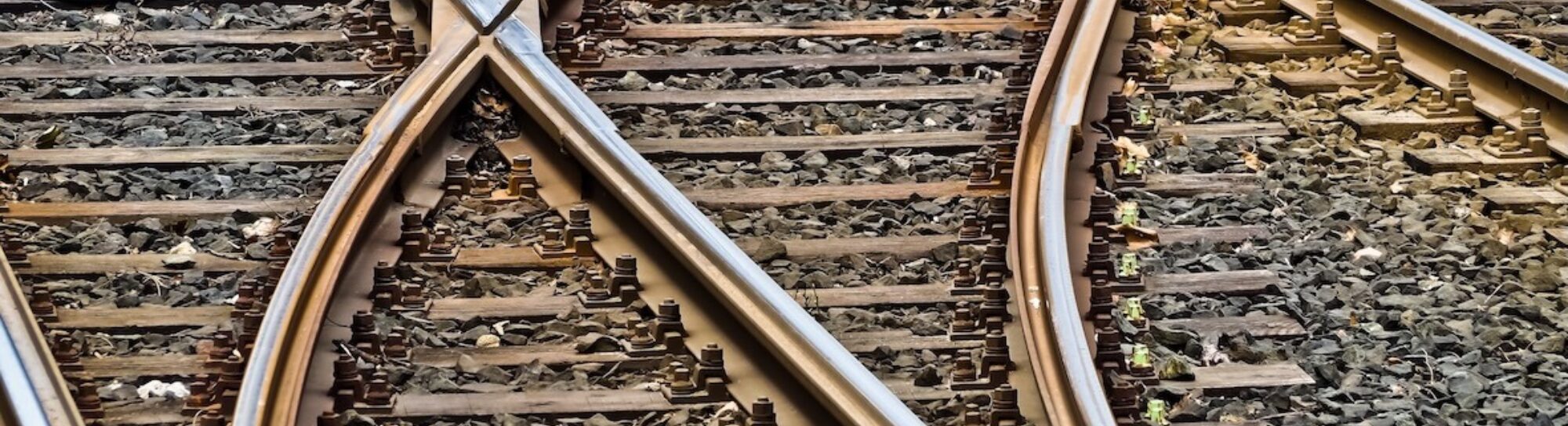
Glyphosate returns to Germany’s railway tracks
From spring 2027, Deutsche Bahn plans to use the herbicide glyphosate again, because the alternatives are not effective enough and cost too much. It is an example of what happens when a product is banned prematurely, before a viable substitute is available.
Published: 22.10.2026, 10:27 | Updated: 22.10.2026, 00:00
In brief
- Because the alternatives proved ineffective and costs rose sharply, Deutsche Bahn will use glyphosate again from spring 2027.
- In 2015, the IARC classified glyphosate as “probably carcinogenic”, while authorities such as ECHA, EFSA and the EPA see no sufficient data basis for this.
- The SBB has also moved away from a complete phase-out. This shows that a product should only be banned once practical alternatives are available.
It was actually foreseeable. Since 2023, Deutsche Bahn has kept tracks, switches and signals clear of vegetation without glyphosate. Instead, it relied on mowing machines and on pelargonic acid, which is considered environmentally friendly. Now the railway is pulling the emergency brake and will rely on glyphosate again from spring 2027. Speaking to the German Press Agency (dpa), a spokeswoman for the infrastructure subsidiary DB InfraGo described the effect of pelargonic acid as “insufficient”. InfraGo has submitted applications to the Federal Railway Authority (Eisenbahn-Bundesamt). Each year, the authority approves the use of plant protection products on tracks as an exception. Glyphosate would currently be legally permitted on around one third of the network.
A costly abstention
Deutsche Bahn is legally obliged to keep its infrastructure operationally safe. Overgrown vegetation can obstruct the view of signals and block emergency escape routes. The Federal Railway Authority had already criticised the increasing vegetation in 2025. According to the railway, mechanical cutting is not sufficient, requires a lot of staff and blocks the lines. The budget for vegetation control on the tracks rose from around 9 million euros in 2020 to about 60 million euros last year. That is almost seven times as much.
Hazard is not the same as risk
So why the abstention? It was triggered by the 2015 classification by the WHO’s International Agency for Research on Cancer (IARC). It described glyphosate as “probably carcinogenic”. Red meat falls into the same category. Processed meat such as sausages is classified one level higher by the IARC.
In 2022, the European Chemicals Agency (ECHA) stated that the data were insufficient to classify glyphosate as carcinogenic, mutagenic or toxic to reproduction. The EU food safety authority EFSA, the German Federal Institute for Risk Assessment and the US Environmental Protection Agency (EPA) reached the same conclusion. Based on these assessments, the EU has approved glyphosate until the end of 2033.
And in Switzerland?
In 2019, the Swiss Federal Railways (SBB) also announced that it would stop using glyphosate entirely from 2025. Its hot-water vehicle was effective, but too complex logistically, and it was put up for sale in 2022. Nevertheless, according to a report in “Agrarforschung Schweiz”, the SBB intends to limit herbicides to an absolute minimum. In 2019, it used 1.9 tonnes of herbicides. In 2024, the figure was down to 0.6 tonnes. Since 2025, the SBB no longer reports its herbicide use in its sustainability report. DB InfraGo, however, points out that the railways of Switzerland, the Netherlands and Poland also use glyphosate for vegetation control. It can therefore be assumed that glyphosate continues to be used on tracks in Switzerland as well.
As in the EU, glyphosate remains approved in Switzerland. After all, its benefits are undisputed: agriculture uses it for no-till farming, which protects soils from erosion. But anyone who opposes the use of herbicides anywhere should bear in mind that glyphosate in water bodies does not only come from fields or railway tracks; it can also form in wastewater treatment plants from a detergent additive. The sources are therefore broad, but so are the benefits.
Both Deutsche Bahn and the SBB set themselves the goal of phasing it out. One is now doing a U-turn, the other has moved away from a complete abstention. Anyone who bans a proven product before more economical, more ecologically beneficial and, above all, practical alternatives are available pays the price, in terms of both cost and safety. This also applies to voluntary abstentions that are mainly intended to go down well. What is needed is a careful impact assessment and the inclusion of scientific findings.
Sources
GMX.ch, 19 October 2026. Deutsche Bahn turns to glyphosate again against overgrowth on its tracks.
Watson, 12 October 2022. SBB is selling its hot-water vehicle – mixed results.
Agroscope/HEPIA, 12 May 2025. Targeted Greening to Control Track-Side Vegetation.
SBB Sustainability Report 2023 (In German only)
SBB Sustainability Report 2025 (In German only)
Federal Register of Plant Protection Products: active substance glyphosate
Related articles
Mystery of Glyphosate’s Origins
For a long time, the answer seemed clear: agriculture was to blame. But new research turns this assumption on its head. A trail of clues leads from fields and garden fences deep into the wastewater system—and ends with a surprise.
EU authorises glyphosate for another 10 years
The EU Commission has decided to endorse the assessment of the European Food Safety Authority, which found no critical problem areas regarding the effects of glyphosate on the environment and human and animal health. The EU Commission's science-based decision to extend the authorisation for a further 10 years is also a rejection of the scare campaigns by Greenpeace and Co.
Glyphosate offers many advantages
Glyphosate is the best-studied herbicide in the world. It is mainly used in agriculture to help farmers efficiently and cost-effectively remove unwanted vegetation from fields before sowing.
Precision Instead of Bans: What the “Pflopf” Project Shows
A six-year research project conducted in three cantons shows that precision technology can reduce the use of pesticides by a quarter without compromising yield or quality.
The threat posed by Asian hornets continues to grow
The Asian hornet has been posing a threat to native honey bees for several years. The situation is becoming increasingly serious. Reports speak of four times more nests than in the previous year. This pest threatens biodiversity. Politicians are also alarmed.
Why cutting out synthetic pesticides will reduce food production
The UK’s action plan to reduce pesticide use could backfire, warns agronomist Greg Dawson: overly strict regulations may make domestic farming unprofitable – and increase the United Kingdom’s dependence on imports.

Approval studies for plant protection products are science-based
The approval of plant protection products in Switzerland is subject to strict legal requirements. Ultimately, this approval process is based on scientifically sound studies. These studies are financed by manufacturers, but they must comply with clearly defined governmental requirements and controls. The aim is to ensure reliability and independence.