

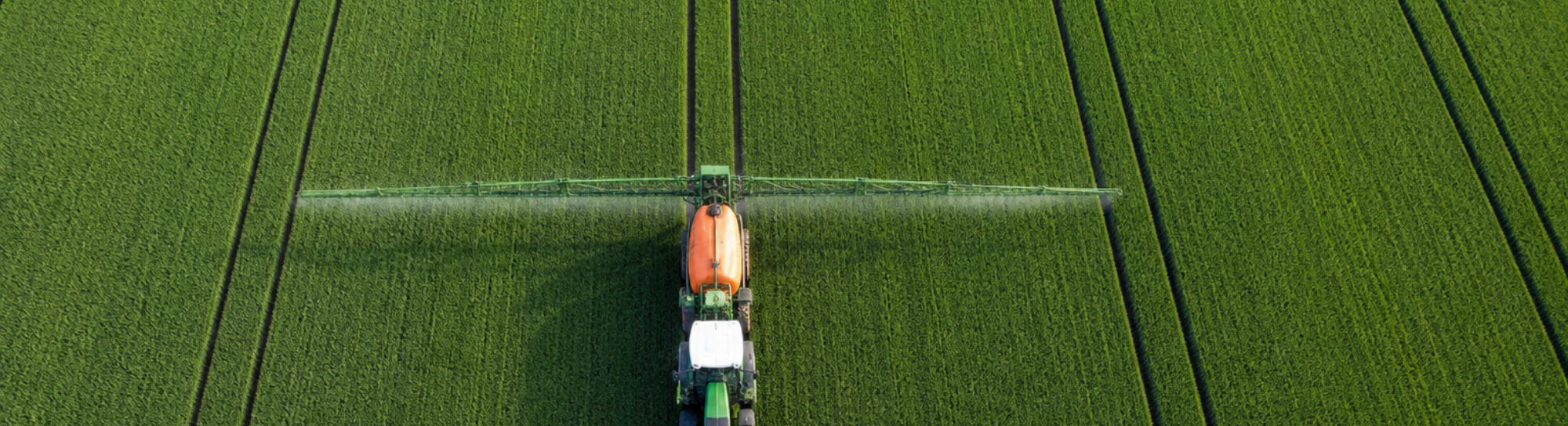
Precision Instead of Bans: What the “Pflopf” Project Shows
A six-year research project conducted in three cantons shows that precision technology can reduce the use of pesticides by a quarter without compromising yield or quality.
Published: 23.08.2026, 22:35
Key Takeaways
- A six-year research project involving 58 farms in the cantons of Aargau, Thurgau, and Zurich achieved an average 25% reduction in pesticide use.
- The combination of camera-guided hoeing equipment and spot spraying cuts chemical use by up to 80% in individual vegetable crops.
- Satellite-based steering systems operate with an accuracy of 2.5 centimeters, preventing double applications.
- The Federal Office for Agriculture plans to support agricultural contractors in the future through production system payments as part of AP 2030+.
- Starting January 1, 2026, a digital professional permit (FaBe) is required for purchasing and applying plant protection products.
Agriculture is in the midst of a transition from industrial to smart farming. What sounds like a catchy advertising slogan is, in many areas, a reality. Thanks to the latest technology, the cultivation and rearing of entire crops can be optimized like never before. This digital precision is an opportunity for everyone—for farms, for the environment, and for food security. Switzerland, too, is embracing this latest development in agriculture.
“Pflopf” Project: 25 Percent Less Pesticide Use Through Precision
For six years, 58 farms in the cantons of Aargau, Thurgau, and Zurich tested whether the use of pesticides could be significantly reduced through the use of digital tools, and the result of the “Pflopf” resource project (Pest Control Optimization with Precision Farming) is clear: Through targeted technological measures, the amount of crop protection products used on the participating plots was reduced by an average of 25 percent.
How is that possible? For example, contractor Thomas Haller from Birrhard, Aargau, has been using a crop protection sprayer with individual nozzle shut-off since 2021, thereby achieving significant savings in product usage depending on the shape of the plot. Vegetable grower Thomas Käser from Birmenstorf AG combines a camera-controlled hoeing machine with spot spraying, reducing pesticide use by up to 80 percent for certain crops. Both have also been relying on satellite-based guidance systems for over a decade; these operate with an accuracy of 2.5 centimeters, thereby preventing duplicate applications, for example.
The “Pflopf” project draws a clear conclusion from this: Plant protection remains essential for securing yields and producing high-quality food. So the question is not “if,” but “how”—and that is precisely where the new technologies come in. Precision solutions should and can replace bans: Instead of entire classes of active ingredients being removed from the market across the board, technology allows for minimizing exposure while protecting crops.
Cooperation Models and Economies of Scale in Switzerland and Abroad
The new technologies are powerful, but at times still expensive and demanding to maintain. Precision machinery only pays for itself once a certain level of area productivity is reached. However, as farms in Switzerland are getting larger and field work is increasingly outsourced to contractors, digital technologies are gaining in importance, as reported, for example, by "Schweizer Bauer". One thing is clear, however: collaboration will likely be necessary—among farmers or through contractors who pool the necessary expertise and machinery. In this way, the technology can gain a foothold on large farms and help significantly reduce the use of pesticides.
The Federal Office for Agriculture has recognized this and plans to support contractors in the future through production system contributions as part of the AP 2030+ program.
Cooperative models, however, tend to be the exception in Swiss agriculture. That such models work beyond the mere application of technology is evident in Germany, where farmers are increasingly sharing fields, machinery, and risk, thereby benefiting from economies of scale.
This is particularly evident in the Netherlands: Thanks to a consistent focus on research, innovation, and the targeted use of modern technology, the country has succeeded in producing enormous quantities of high-quality agricultural products on a limited amount of land. The Dutch model is rightly regarded as a role model for agriculture that is both productive and resource-efficient. This example can provide valuable insights, particularly in light of the Swiss debate on economies of scale and the use of technology.
Data Literacy and AgTech Innovations: The Keys to the Future
Precision agriculture relies on data: Satellite images help make field information more widely available, as another article in "Schweizer Bauer" shows. Syngenta demonstrates just how far this can go: Together with the Western Swiss startup Gamaya, an EPFL spin-off, the company has developed a digital tool that detects nematode infestations in the soil using satellite imagery—originally for Brazilian soybean farms, where this pest can cause yield losses of up to 30 percent in some cases. It is an example of how collaborations between agricultural corporations and AgTech startups are producing new, data-driven solutions.
Bayer is also working on solutions that directly connect data and digital technologies with more precise application. An example of this is the MagicSprayer, a concept for an ultra-high-precision spot-spraying technology. A powerful algorithm enables pinpoint application on areas measuring at least 4 × 4 centimeters. Instead of treating an entire field uniformly, crop protection products can be applied specifically where they are actually needed.
Agricultural journalist Olaf Deininger described precisely this pattern at the swiss-food Talk in April 2023: We are in the midst of a transition from industrial to smart agriculture, where data and algorithms enable precise interventions rather than a one-size-fits-all approach. Organic farming pioneer Urs Niggli struck the same note in his opinion piece in the NZZ in August 2026: Deep tech will make agriculture more sustainable through innovation.
The Federal Council also emphasizes that innovation and competitiveness go hand in hand in its recently published report on “Strategy 2050” for the agriculture and food industry: One of the seven objectives is that the Swiss agriculture and food industry should be open to new technologies and take a leading role internationally in environmentally friendly and resource-efficient processes.
The Contribution of the Research-Based Crop Protection Industry to Success
It is also often overlooked that precision application would not be possible without the innovations of research-based crop protection companies: These companies not only discover or design effective molecules or nature-inspired biologics, but also formulate them in a way that makes precise application possible in the first place. The formulation—that is, the composition of the product as used by the farmer—is essential for resource-efficient application, ensuring that the active ingredient reaches its intended target without clogging the nozzles. “Seed treatment” is another form of precision application applied directly to the seeds before planting in the field; it coats the seedling and thus protects it during the first critical weeks.
No Professional License for Plant Protection
From a regulatory standpoint, too, expertise will take precedence over bans in the future: Starting January 1, 2026, the purchase and use of plant protection products will require a valid, digital professional license (FaBe), which will be issued for five years and must be renewed after that period by completing eight hours of continuing education. Starting in 2027, retailers will only be allowed to sell plant protection products upon presentation of a valid FaBe. Registration takes place through the federal government’s official portal.
Contractors were ahead of the legislature: Their association introduced a voluntary plant protection certification several years ago, which members use to keep their professional expertise up to date. Stricter training, precision technology, and improved crop varieties thanks to new breeding methods all work together: The situation in plant protection is improving through professionalization and innovation—not through bans.
Keywords: Crop protection · Precision farming · Marsh · Agriculture · Digitalization · Agricultural contractor · AgTech · Professional permit
Sources
Contract farmers play a key role in reducing pesticide use
Solutions Through Precision, Not Bans - Der Schweizer Bauer
Drones, Software, and AI Are Taking Over Farms - Der Schweizer Bauer
Farmers Share Fields, Machinery, and Risk
The World’s Most Innovative Agriculture - Der Schweizer Bauer
Access to Satellite Images Helps Agriculture - Der Schweizer Bauer
swiss-food.ch – From Data to Harvests – How Digitalization Is Improving Agriculture
This Is What Agriculture Should Look Like in 2050 – Der Schweizer Bauer
Pest Control Specialist License
Pest Control Certificate – Swiss Association of Agricultural Contractors
About swiss-food.ch
swiss-food.ch is an information platform run by the research-based food and agricultural technology sector, bundling fact-based content on nutrition, agriculture, crop protection, and biotechnology. The articles are editorially prepared, and the sources used are linked within the text. The platform is supported by Syngenta and Bayer.
Kindly note:
We, a non-native editorial team value clear and faultless communication. At times we have to prioritize speed over perfection, utilizing tools, that are still learning.
We are deepL sorry for any observed stylistic or spelling errors.
Related articles

36 times the yield per square metre – thanks to indoor farming
Berlin-based start-up OrbiFarm is revolutionising the production of plant proteins and medicinal plants with indoor farming. The potential is enormous: yields are up to 36 times higher than in traditional agriculture – and that's without soil, weather or long transport routes.
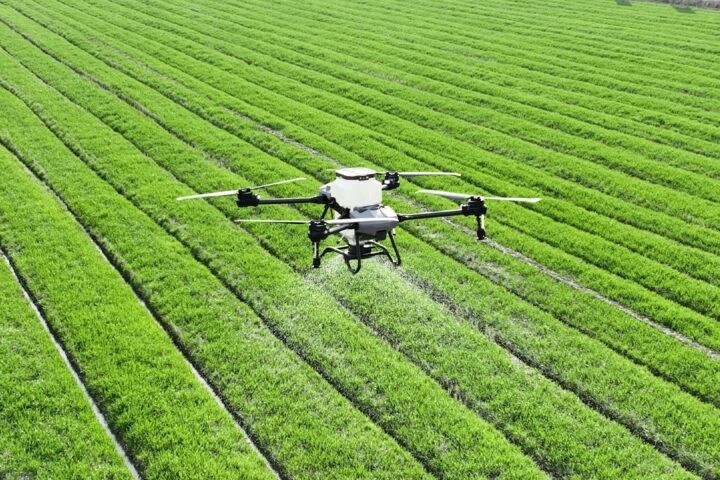
Ensuring Food Security Through Innovation
Agriculture stands at the centre of a global field of tension shaped by climate change, geopolitical crises and growing demand for food. Insights from the World Economic Forum in Davos show that the industry’s response lies in the intelligent combination of digital precision and biological progress.

Glyphosate returns to Germany’s railway tracks
From spring 2027, Deutsche Bahn plans to use the herbicide glyphosate again, because the alternatives are not effective enough and cost too much. It is an example of what happens when a product is banned prematurely, before a viable substitute is available.
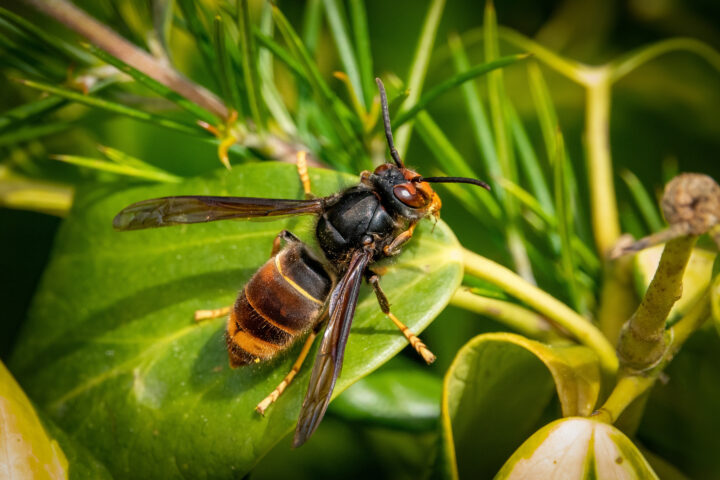
The threat posed by Asian hornets continues to grow
The Asian hornet has been posing a threat to native honey bees for several years. The situation is becoming increasingly serious. Reports speak of four times more nests than in the previous year. This pest threatens biodiversity. Politicians are also alarmed.
Why cutting out synthetic pesticides will reduce food production
The UK’s action plan to reduce pesticide use could backfire, warns agronomist Greg Dawson: overly strict regulations may make domestic farming unprofitable – and increase the United Kingdom’s dependence on imports.
Approval studies for plant protection products are science-based
The approval of plant protection products in Switzerland is subject to strict legal requirements. Ultimately, this approval process is based on scientifically sound studies. These studies are financed by manufacturers, but they must comply with clearly defined governmental requirements and controls. The aim is to ensure reliability and independence.