

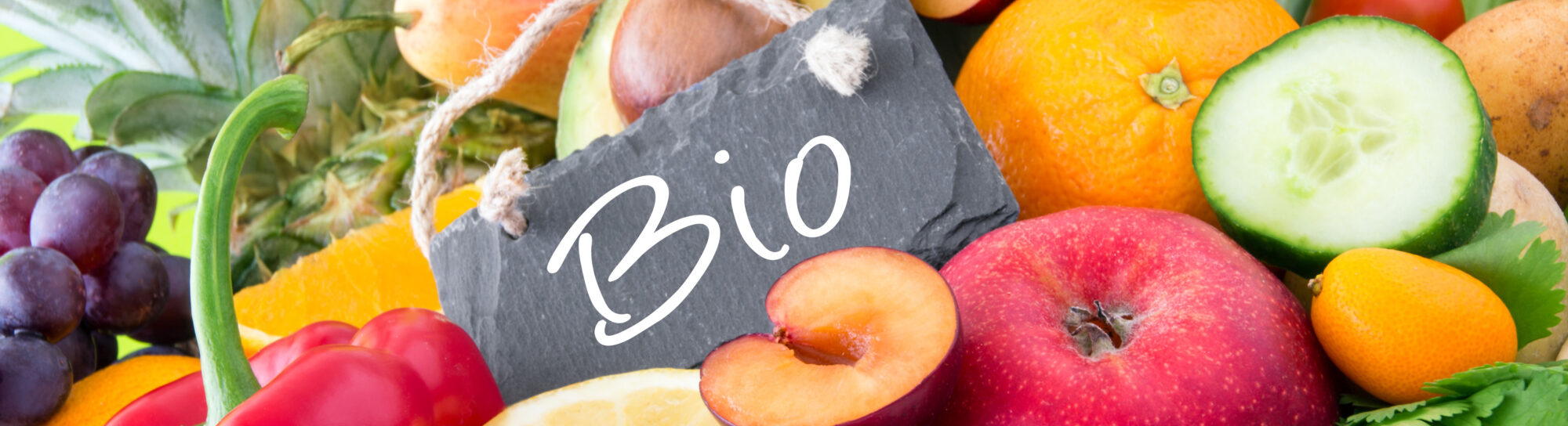
I No Longer Eat Organic
Organic is an ideology fed primarily by beliefs while ignoring facts. Organic marketing relies on eliminating competition through campaigns and bans.
Thursday, July 9, 2026
It is a credit to the environmental movement that air, water, and soil are less polluted today than they were three or four decades ago, that problematic toxins have been taken out of circulation, and that approval regulations for new chemicals—whether for medicine, food, agriculture, or other products—have been significantly improved. Organic farming grew large in the shadow of these changes.
It claims to produce healthier and tastier products using an economic approach that conserves resources and benefits the environment. Organic agriculture is said to be capable of feeding the world's population and, in the face of climate change, species depletion, and similar catastrophes, is presented as not only sensible but morally imperative. From this, organic farming lobbyists derive a mandate: the abolition of conventional agriculture.
This convinces many people, but are the claims true? The first part examines these claims, while part two looks at the ideology.
Healthier and with More Flavor?
Countless studies and meta-analyses have now shown that measurable differences in ingredients can only be found in very few products—differences that play no role whatsoever in the health and nutrition of consumers. Even Greenpeace, considered by most people to be the gold standard in ecology, states: “Conventional fruit is no less healthy for the human organism than organic fruit and vegetables. We never say that organic is healthier.”
Blind tastings regularly demonstrate that even die-hard organic buyers are unable to distinguish conventionally grown products from organic products by taste or appearance. Yet, the claim continues to be made with absolute conviction. In truth, organic is only recognized by taste if the taster already knows it is labeled as organic.
Anyone who points out that organic products are not "sprayed" knows nothing about the agents used in organic farming (article of Johannes Kaufmann). Rotenone, extracted from toxic plants, causes Parkinson's disease; the fungal toxin spinosad, the hormone-disrupting insecticide azadirachtin, and the neurotoxin pyrethrum kill bees. Furthermore, the toxins contained in pyrethrum extract are carcinogenic and damage human nerves. The most frequently used pesticide – spores of the B. thuringiensis bacterium, which is closely related to the anthrax pathogen – can cause lung infections. The heavy metal copper in the so-called "Bordeaux mixture" is highly problematic for soil and water, and causes liver cancer in users. Worse still, it promotes the spread of heavy metal resistance genes in fungi and bacteria. These are the same genes that mediate resistance to antibiotics. Copper is just as responsible for the spread of resistant pathogens as the much-criticized use of antibiotics in (organic) livestock farming.
Furthermore, consumers are endangered by toxic plants that are not consistently combated in organic farming due to ideological reasons ("preserving biodiversity") or a lack of suitable methods. As a result of this practice, toxic seeds and plant parts end up in organic products. This primarily affects infants and toddlers because many parents choose organic products out of fear of health damage from synthetic pesticides. In the last two years alone, organic grain porridges, organic millet balls, organic corn grits, and organic polenta had to be repeatedly recalled because they contained alarming amounts of toxic tropane alkaloids. Poisoning from ergot alkaloids is also occurring again. Consumers who buy grain and flour from local small-scale suppliers or directly from the farm are particularly at risk here.
Not even the claim of the "naturalness" of organic products is true. As in conventional agriculture, organic fruit is cloned, genetic material is exchanged during grafting, organic corn bears no remote resemblance to the original wild plant (teosinte), and organic wheat is an artificial plant derived from presumably three distinct species. Dozens of organic vegetable varieties have also been bred by scrambling the genetic material of the parent plants using chemicals or radiation.
Resource-Efficient?
The productivity of organic farming is significantly lower. Comparing the output of an organic farm under real-world conditions with that of a conventionally managed farm, the productivity gap in the USA, for example, is 39% for rice, 35% for grain corn, 31% for soybeans, and 29% for winter wheat (based on USDA data, 2014). If all crops in the USA had been grown organically in 2014, an additional 44 million hectares of arable land would have been required. For comparison, Germany's entire agricultural sector currently manages 17 million hectares.
The situation is no better in other countries. A 2012 meta-study by researchers at McGill University in Canada and the University of Minnesota found that organic farming productivity in industrialized countries is on average 20% lower than that of conventional farming; in developing countries, it lags by 43%.
In its latest brochure, Greenpeace assumes that the yield loss in Germany would average 40% if the entire agricultural sector switched to organic farming. "Average" means that there are also years—like the summer of 2016—where practically no organic wine and hardly any organic potatoes or cucumbers can be harvested, or where organic wheat is of such poor quality that it cannot be used for breadmaking.
If the cultivation breaks prescribed in organic farming (12-month wildflower or rotational fallow) are also taken into account, this gap widens even further.
The consequences of the frequently demanded ban on pesticides in subtropical regions can be observed in Sri Lanka: at the end of 2013, the Ministry of Agriculture banned the sale and use of carbaryl, chlorpyrifos, carbofuran, glyphosate, and propanil. In 2016, corn production dropped by 20% compared to 2015, mung beans by 31%, and millet by as much as 55%.
The Planters' Association of Ceylon reports that tea cultivation is now at risk. Fields have become so overgrown with weeds that it is sometimes impossible for tea pluckers to move between individual sections of the plantations. Maintaining and harvesting tea bushes is becoming increasingly difficult and sometimes life-threatening, as the undergrowth attracts venomous snakes.
Organic therefore means a waste of resources, and what is more, it accepts that plants that could be saved are destroyed by pests. In other words: if global food production were switched to organic, the cultivated area would have to be significantly expanded to avoid famines. This would mean deep interventions in the landscape: deforestation, draining of wetlands, irrigation of arid regions... We would need a second planet to feed the entire world population with organic food.
Giving up meat (who would enforce that globally?) would not change much. Many pastures are only partially or not at all suitable for growing crops. And where is the animal manure supposed to come from, the use of which is prescribed in organic farming? Furthermore, the much-maligned cultivation of soybeans would hardly decrease if livestock breeding were abandoned, because soybeans are grown for their oil content. Soybean oil is used for food and the production of biodiesel. The residue left after pressing the soybean oil, the so-called soybean cake, which accounts for around 80% of the mass, is fed to livestock because of its high protein content.
Benefits for the Environment and Climate?
Ecological advantages can only be proven per unit of area for some products; when related to the actual product, the differences level out or reverse due to the large productivity gaps.
In addition, organic farming also utilizes extremely environmentally damaging production methods, such as copper-containing sprays that poison soil and water.
When it comes to biodiversity, organic farming does not perform as well as is always claimed. It promotes common species, especially weeds (including many toxic plants), but not the much more important target and indicator species. The conservation of the latter is promoted by ecological measures in which conventional farms also actively participate.
If one looks at the emissions of ammonia and nitrous oxides, as well as nitrogen leaching per unit of product generated, organic farming actually performs worse than conventional agriculture. This is the clear result of a 2012 meta-study. Organic farming requires less energy to produce the same quantity but requires more land, increasing the risk of over-fertilization and soil acidification.
The ban on cultivating plants bred using genetic engineering, which is repeatedly demanded by the organic sector, would lead to a significant increase in global food prices and increase agricultural $CO_2$ emissions by the equivalent of nearly 1 billion tons per year (which is 15 times what German agriculture emits annually).
Author of the article: Ludger Weß, biochemist with a PhD and science journalist. As an expert on agricultural research, he is committed to a fact-based debate on our food, agricultural production, and new breeding technologies. This article was originally published on salonkolumnisten.com.
Kindly note:
We, a non-native editorial team value clear and faultless communication. At times we have to prioritize speed over perfection, utilizing tools, that are still learning.
We are deepL sorry for any observed stylistic or spelling errors.
Related articles
ARTE documentary: Genetic engineering in organic farming?
The ARTE documentary “Genetic engineering in organic farming?” examines key controversial questions of modern agriculture: Is the general exclusion of new breeding technologies still up to date? Can the resistance of organic farming be justified scientifically?
"Natural is healthy, chemicals are toxic."
Everything that occurs in nature is healthy and synthetically produced substances, i.e. "chemical" substances, are toxic. This myth is fundamentally wrong: There are many highly toxic substances in nature, and at the same time there are many synthetic substances that are absolutely harmless.
Global facts on world food and agriculture
Only thanks to technological progress and modern crop protection will we be able in the future to conserve our resources while feeding a growing population in a healthy and affordable way.
"Natural is healthy, chemicals are toxic."
Everything that occurs in nature is healthy and synthetically produced substances, i.e. "chemical" substances, are toxic. This myth is fundamentally wrong: There are many highly toxic substances in nature, and at the same time there are many synthetic substances that are absolutely harmless.

Future Foods: Sustainable, but also economically viable?
In the face of climate change, increasing pest pressure and a growing global population, agriculture is confronted with enormous challenges. To ensure long-term food security, new crops are gaining attention. A recent study highlights the potential of 30 “Future Foods” for Switzerland. However, success requires more than good intentions.
Myths about food production
Having the “right” diet is playing an increasingly more important role in the lives of a great many people. A healthy lifestyle has become a status symbol. Healthy foods and sustainable production methods have been the subject of many extremely emotional debates. A wide range of outdated ideas and myths have taken root in the minds of a large number of consumers. Below, we will take a look at some myths and their deconstruction.
'Smallholder farmers produce 70% of the world’s food'
It sounds impressive and has been repeated for years. In 2026, the claim is once again being promoted by Fastenaktion: 'Smallholder farmers form the backbone of global food production.'