


Future Foods: Sustainable, but also economically viable?
In the face of climate change, increasing pest pressure and a growing global population, agriculture is confronted with enormous challenges. To ensure long-term food security, new crops are gaining attention. A recent study highlights the potential of 30 “Future Foods” for Switzerland. However, success requires more than good intentions.
Published: 08.06.2026, 13:16 | Updated: 10.06.2026, 16:51
The Institute of Environment and Natural Resources (IUNR) at ZHAW, commissioned by WWF, identified 30 foods considered particularly promising for the future. These so-called “Future Foods” are resource-efficient to grow, promote agrobiodiversity and help agriculture become more resilient to climate risks. They also offer nutritional benefits, being rich in protein, fibre, vitamins and minerals.
Experts assessed criteria such as cultivation potential in Switzerland, environmental factors and market viability. The result is a diverse mix of oilseeds, cereals, legumes, vegetables, nuts and cultivated mushrooms.
Four promising examples
Parsnip
This frost-hardy root vegetable was a staple food in Central Europe until the 18th century. It is considered extremely easy to grow and delivers high yields per hectare, making it environmentally valuable. In recent decades, parsnip cultivation has regained popularity in Switzerland.
Lupin
As a domestic source of protein, lupin can fix nitrogen in the soil and mobilise phosphorus, significantly reducing the need for fertilisers. It is also drought-tolerant and serves as a valuable raw material for high-quality meat alternatives. Sweet lupin was even named “Superfood of the Year 2026”. However, due to relatively low yields, it requires a comparatively large cultivation area.
Hemp
This traditional crop improves soil structure through its deep roots and produces very low greenhouse gas emissions. Its seeds are also an excellent source of nutrients and protein. In recent years, public awareness and acceptance of hemp as a food product have increased in Switzerland.
Chickpea
This heat-loving crop is extremely popular with consumers, and demand in Switzerland currently exceeds supply. Rich in protein and essential minerals, it is ideal for trendy dishes such as hummus and falafel. However, the risk of crop failure under adverse weather conditions remains very high.
Reality: Between aspiration and yield
The example of chickpeas illustrates the gap between theory and practice. The cultivation of plant-based superfoods still receives insufficient support in Switzerland. David Brugger of the Swiss Farmers’ Union warns that the cultivation of plant-based food crops has been declining for more than a decade. What is not produced domestically is replaced by cheaper imports.
Retailers are also under pressure and, despite higher margins on organic products, often rely on cheaper imported goods. The precarious situation is illustrated by René Ritter, a farmer from the Basel-Landschaft region. During three years of chickpea cultivation, he experienced two total crop failures. Instead of harvesting tonnes of chickpeas, he ended up with little more than a wheelbarrow full. This example highlights a key point: without effective crop protection, domestic protein production has no future.
Despite significant progress, sweet lupin cultivation remains challenging. Diseases such as anthracnose can cause major yield losses or even complete crop failure. Additional challenges include late weed infestation, fluctuating yields typically ranging from 2 to 4 tonnes per hectare, and often limited profitability.
Another major challenge lies in the plant’s bitter compounds, more specifically alkaloids. These nitrogen-containing natural substances serve as a defence mechanism against pests. However, they are toxic to both humans and animals. Thanks to plant breeding, modern sweet lupins contain significantly lower alkaloid levels than their wild relatives. Nevertheless, they are not entirely risk-free. Environmental stress, disease or site-specific conditions can cause alkaloid concentrations to rise again. In practice, entire harvest batches sometimes have to be downgraded as a result.
This reality clearly demonstrates that even a superfood is not a miracle crop and that cultivating it involves risks for farmers.
The debate surrounding Future Foods shows that a sustainable food system can only be achieved if sustainability is considered in its full sense: encompassing temporal, ecological, economic and social dimensions. The same principle applies to resource efficiency, which calls for the careful and sustainable use of all resources. These include not only natural resources, but also finances, energy, labour and land use – in other words, key elements of economic viability.
Sources
Kindly note:
We, a non-native editorial team value clear and faultless communication. At times we have to prioritize speed over perfection, utilizing tools, that are still learning.
We are deepL sorry for any observed stylistic or spelling errors.
Related articles
“Future Food”: From development to shopping basket
Protein is a key component in a healthy, balanced diet. However, the majority of protein consumed by humans derives from animals and is extremely resource-intensive to produce. What might alternatives look like? And what needs to happen to enable alternative protein products to end up in consumers’ baskets? At the Swiss-Food Talk, three experts considered the issues.
Will the food of the future be grown in a laboratory?
The global food system is currently responsible for approximately one third of all greenhouse gas emissions. Animal products, which require a large amount of land to produce, are one of the major contributors. For this reason, a number of start-ups are working eagerly on alternative protein products that require fewer resources and no animals, and are produced using industrial processes. After all, to feed more than nine billion people, all options and technologies have to be considered.

Cultural heritage from the laboratory – is it time to rethink?
Would you drink laboratory-made coffee? A beverage that actually has nothing to do with coffee beans. Perhaps you would try it once? Or would you switch completely? These questions could soon be on your mind.
A Contribution Spanning Generations
Food security begins long before the harvest. It begins with varieties that deliver yields, resist diseases and perform reliably under changing environmental conditions.

A Hint to Politicians, Delivered by Test Tube
Switzerland's top science prize goes to a researcher who helped develop the "gene scissors", a technology that has decisively advanced agriculture. While science has long since opened up new possibilities and the EU is moving ahead on regulation, Switzerland continues to dawdle.

Full Shelves – Of course! How Secure Is Our Supply Really?
Security of supply sounds like a shared goal. However, as soon as it comes to the path to get there, conflicts arise: between market and state, ecology and production, as well as self-sufficiency and international connectivity. The Agricultural Policy Podcast and swiss-food.ch explore the key dependencies and areas of tension surrounding supply security in a five-part series. The highlight will be a live podcast in front of an audience on November 5, 2026, at the Äusserer Stand (Hofcafé) in Bern.
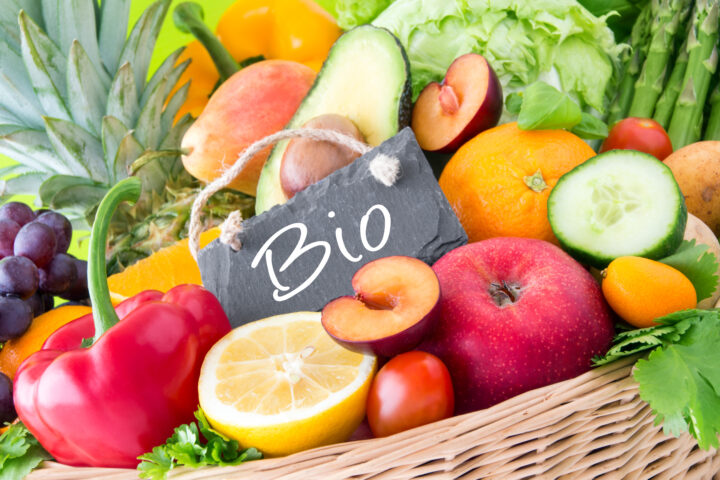
Is Organic More Sustainable?
Organic food is considered a prime example of sustainability – but in reality, it often ends up in the waste bin faster than conventional products. The omission of artificial preservatives and modern plant protection drastically shortens shelf life and leads to more food waste.