

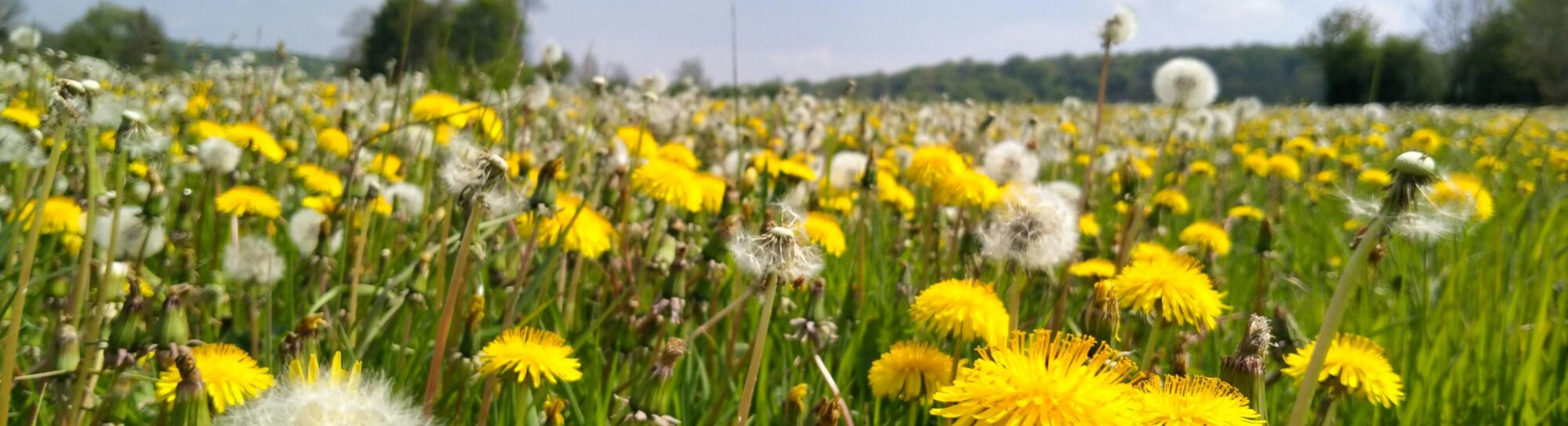
Condoms made from dandelions? Thanks to genome editing, it could become possible!
Bright yellow and widespread, dandelions shape our meadows. While some see them as troublesome weeds, researchers are discovering a sustainable industrial resource in the plant. Thanks to modern genome editing, the humble dandelion could soon provide rubber for condoms, gloves and tyres – right on our doorstep.
Published: 12.05.2026, 16:03
The dandelion is a true survivor. In agriculture, however, it remains controversial. Farmer Daniel Tschannen, who runs an arable and forage farm in Illighausen, views the plant critically. Speaking to the «Tagblatt», he explains: “If there are many dandelions in the meadow, I have less feed for my animals because the plant crumbles apart.” Since dandelions are highly persistent and displace other plant species, they can threaten biodiversity on productive farmland.
For insects, however, the situation looks very different. For bees and bumblebees, dandelions are a blessing. Thanks to their abundant pollen and long flowering period, they serve as one of the most important early food sources of the year.
The root as a rubber supplier
Behind the yellow flower lies another remarkable potential: the white latex in the roots contains valuable natural rubber. Researchers have been trying to harness this resource for more than 100 years. Until now, almost all natural rubber worldwide has come from the rubber tree (Hevea brasiliensis), native to the Amazon and Guiana regions of Brazil. Today, cultivation mainly takes place in Southeast Asia (Malaysia, Thailand and Indonesia), where the latex is extracted by tapping the bark.
Dependence on these distant sources is risky: climate change and disease threaten tropical plantations. This is where the dandelion comes into play. If we can produce this “alternative” rubber locally, we increase supply security and improve sustainability – a classic case of nearshoring, meaning production close to the target market.
Biotechnology has long been part of everyday life
Until now, the problem was that conventional dandelions produced too little rubber to be economically viable. New technologies are now changing this. As reported by «The Times», the British company QuberTech plans to use genome editing (such as the CRISPR/Cas gene-editing tool) to selectively switch genes on or off. The goal: larger roots and ten times higher rubber yields. The plant’s latex-rich roots could be used to produce alternatives for wetsuits, gloves or condoms.
Unlike traditional genetic engineering, this application of genome editing does not introduce foreign genes. It merely accelerates the natural breeding process within the plant’s own genome. This could make it possible to grow dandelions efficiently in greenhouses – perhaps even on industrial brownfields, without using valuable agricultural land.
It is time to move beyond outdated myths. Biotechnological processes are no longer science fiction, but already part of our everyday lives. Whether in the production of medicines (such as insulin), cosmetic products or many foods: modern biotechnology helps us use resources more efficiently and protect the environment every day.
What we need natural rubber for
Because of its elasticity, natural rubber is indispensable in many areas:
- Medicine: medical gloves, insulin seals and tubing.
- Protection: condoms and latex gloves.
- Mobility: tyres for cars, aircraft and trucks.
- Lifestyle: sneaker soles and sustainable fashion.
- Cosmetics: ingredients for skincare products and adhesives for bandages.
Kindly note:
We, a non-native editorial team value clear and faultless communication. At times we have to prioritize speed over perfection, utilizing tools, that are still learning.
We are deepL sorry for any observed stylistic or spelling errors.
Related articles
Genome Editing: Standards are being relaxed all over the world
Great Britain has already decided on its first steps, Switzerland has too: The handling of simple genome-edited plants is being made easier.
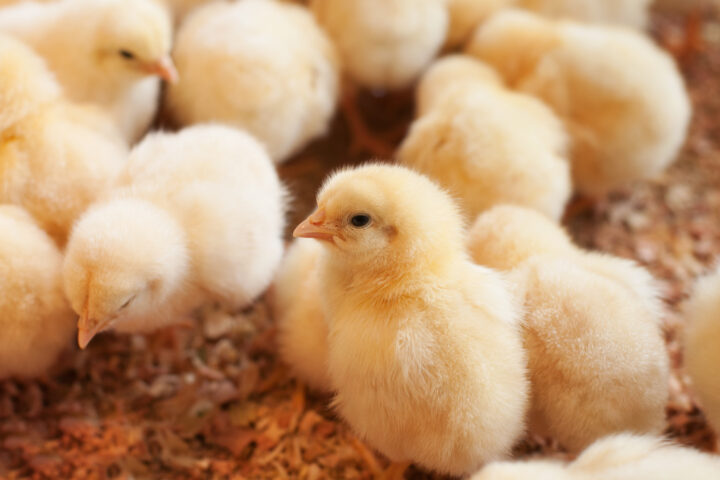
Genome editing for animal welfare
British researchers were able to use genome editing to create single-sex litters in mice. In the future, the same technique could also be used to specifically breed only female chicks. This would prevent the killing of male chicks. But to do this, genome editing would also have to be permitted in animal breeding.
Genome research for sustainable crop protection
A research consortium of industry and public researchers in England has published a genome database of the most common insect pests in the United Kingdom. The open-source database has been set up to help with the development of targeted and environmentally friendly pesticides.

'The EU is moving forward – Switzerland must not lose touch'
The EU has largely approved genomic plant breeding. Four plant researchers from the University of Zurich, ETH, and Agroscope contextualize the EU decision from June 17, 2026.

Neither Left nor Right: Forward!
In climate, energy, and agricultural policy, beliefs often take precedence over facts. The American think tank The Breakthrough Institute demonstrates a different approach: embracing disagreement, evaluating technologies with an open mind, and viewing productivity as an ally of environmental protection.

Why consumers accept gene-edited foods on their plates
Acceptance of gene-edited foods increases when their tangible benefits are clear to consumers. Studies show that visible advantages for health, the environment or food security are key to public support.
What’s Really in Your Shopping Basket
Genetic engineering in our shopping basket? Yes – and much more often than we think. Whether it’s pasta, bread or vegetables: many of the everyday products we consume come from mutation breeding, which involves altering the genome and is considered safe. It’s high time to debunk the common myths.