


What’s Really in Your Shopping Basket
Genetic engineering in our shopping basket? Yes – and much more often than we think. Whether it’s pasta, bread or vegetables: many of the everyday products we consume come from mutation breeding, which involves altering the genome and is considered safe. It’s high time to dispel some common myths.
Published: 04.12.2025, 14:11 | Updated: 21.09.2026, 17:10
In brief
- Historical practice: Many everyday foods such as pasta, bread, or carrots originate from decades of breeding using mutagenesis.
- Physical radiation: Mutagenesis began nearly 100 years ago with the use of X-rays and gamma rays to induce random mutations.
- Chemical processes: In the 1950s, chemical agents were introduced to generate genetic changes even more efficiently.
- Legal classification: According to Prof. Beat Keller (University of Zurich) and the European Court of Justice, plants bred through conventional mutagenesis also fall under the definition of genetic engineering.
- Organic farming: Many of the crop varieties developed back then are still cultivated today – including in organic farming.
Whether pasta, bread, or carrots – genetic engineering is in far more products than we generally assume. It has long since arrived even on organic shelves. High time to remove a few rotten eggs from the shopping basket. Caution: consume at your own risk – the content of the video may contain traces of genetic engineering.
Many of our foods are the result of decades of plant breeding. Bigger, tastier, longer shelf life, less susceptible to disease, and more resilient to heat and moisture – the demands placed on our crops are high. It’s no surprise that breeding methods have continually evolved.
A true quantum leap came with mutagenesis, which began almost 100 years ago when X-rays and gamma rays were first used to induce untargeted, random mutations in barley and maize. In the 1950s, chemical mutagens were added, enabling an even more efficient creation of mutations. During the 1960s and 1970s, mutagenesis became widespread worldwide, and many of the varieties still cultivated today originated from this phase of mutagenic breeding – this applies to organic varieties as well.
So next time you go shopping, chances are high that you’ll be putting vegetables or wheat products into your basket that were bred using classical mutagenesis – and thus products that, according to Prof. Beat Keller, one of the most renowned experts in wheat breeding, also fall under the definition of genetic engineering. But see for yourself:
Interview with Prof. Beat Keller, Molecular Biologist at the University of Zurich
Blindspot article
About swiss-food.ch
swiss-food.ch is an information platform run by the research-based food and agricultural technology sector, bundling fact-based content on nutrition, agriculture, crop protection, and biotechnology. The articles are editorially prepared, and the sources used are linked within the text. The platform is supported by Syngenta and Bayer.
Keywords: Genetic engineering · Mutagenesis · Plant breeding · Organic farming · Wheat breeding · Beat Keller · Nutrition · Agriculture
Is genetic engineering present in organic products?
Yes, many crop varieties grown in organic farming originate from technical mutagenesis, which according to breeding experts and applicable case law is classified as a form of genetic engineering.
What is mutagenesis in plant breeding?
Mutagenesis refers to inducing genetic changes in plants through irradiation with X-rays and gamma rays or through the use of chemical agents.
How long has mutagenesis been used in agriculture?
The use of radiation to induce mutations began nearly 100 years ago; chemical mutation triggers were introduced in the 1950s.
Does mutagenesis fall under the term genetic engineering?
According to the scientific classification by molecular biologist Prof. Beat Keller (University of Zurich) and the European Court of Justice, conventional mutagenesis also falls under the definition of genetic engineering.
Why were mutagenesis techniques developed?
To systematically advance crops, making them higher-yielding, tastier, longer-lasting, and more resilient against diseases, heat, and moisture.
Which plants were bred using mutagenesis?
Barley and maize, as well as many common wheat and vegetable varieties today, were created through mutagenic breeding.
Sources
https://www.transgen.de/lexikon/1727.mutagenese.html
Eco Spezial: Genetic Engineering? Yes, of course. (07.08.2025 – ORF ON)
https://swiss-food.ch/artikel/gentechnik-schon-lange-auf-schweizer-tellern
https://swiss-food.ch/artikel/landwirtschaft-zwischen-wissenschaft-und-marketing
https://swiss-food.ch/glossar/genom-editierung
Gentechnik-Kennzeichnung erhalten: Unternehmen schreiben Brandbrief an EU-Parlamentarier
Organic farming will never be truly sustainable until it embraces gene editing
Kindly note:
We, a non-native editorial team value clear and faultless communication. At times we have to prioritize speed over perfection, utilizing tools, that are still learning.
We are deepL sorry for any observed stylistic or spelling errors.
Related articles

Genetic engineering? Yes, of course.
As a consumer, you often don't know: products advertised as GMO-free have long contained genetic engineering. This is a thorn in the side of opponents of genetic engineering. But it is easier to keep quiet about the ‘scandal’ – because something we have been eating for a long time no longer scares us.

Vegan alternatives thanks to genetic engineering
How can we feed a growing global population in a sustainable way? The answer increasingly lies in laboratories and genetic engineering. Whether it's lab-grown milk, vegan squid or farmed salmon – genetic engineering is everywhere. It's high time to dispel the old myths.

‘No genetic engineering’ is simply not an option!
For years, politicians and environmental organisations have been stirring up unnecessary fears about a technology that has been helping to conserve resources and protect the environment for decades, while improving the quality and tolerability of food and cosmetics. It is time to put an end to this consumer deception.

'The EU is moving forward – Switzerland must not lose touch'
The EU has largely approved genomic plant breeding. Four plant researchers from the University of Zurich, ETH, and Agroscope contextualize the EU decision from June 17, 2026.

Neither Left nor Right: Forward!
In climate, energy, and agricultural policy, beliefs often take precedence over facts. The American think tank The Breakthrough Institute demonstrates a different approach: embracing disagreement, evaluating technologies with an open mind, and viewing productivity as an ally of environmental protection.
Why consumers accept gene-edited foods on their plates
Acceptance of gene-edited foods increases when their tangible benefits are clear to consumers. Studies show that visible advantages for health, the environment or food security are key to public support.
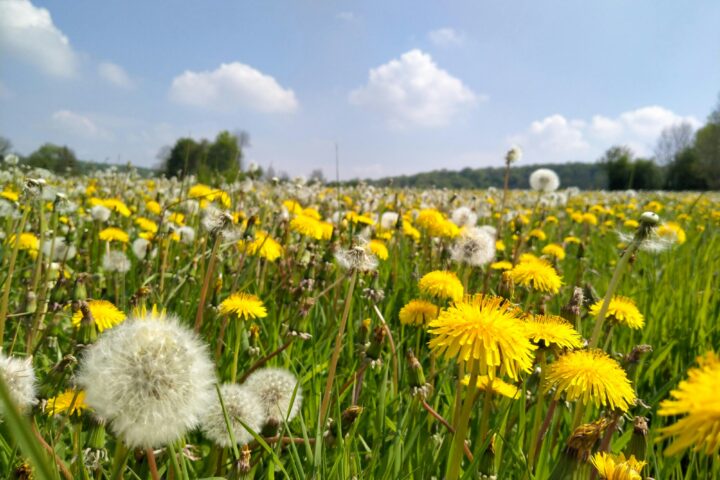
Condoms made from dandelions? Thanks to genome editing, it could become possible!
Bright yellow and widespread, dandelions shape our meadows. While some see them as troublesome weeds, researchers are discovering a sustainable industrial resource in the plant. Thanks to modern genome editing, the humble dandelion could soon provide rubber for condoms, gloves and tyres – right on our doorstep.