

Full Shelves – Of course! How Secure Is Our Supply Really?
Security of supply sounds like a shared goal. However, as soon as it comes to the path to get there, conflicts arise: between market and state, ecology and production, as well as self-sufficiency and international connectivity. The Agricultural Policy Podcast and swiss-food.ch explore the key dependencies and areas of tension surrounding supply security in a five-part series. The highlight will be a live podcast in front of an audience on November 5, 2026, at the Äusserer Stand (Hofcafé) in Bern.
Published: 28.09.2026, 10:06
In brief
- Full supermarket shelves mask a complex supply system that relies on many different factors.
- Extreme weather events and geopolitical tensions are putting increasing pressure on global and national supply chains.
- Security of supply is caught in a trade-off between the need for state intervention and free markets, ecological requirements and domestic production, as well as autarky and international integration.
- In a five-part series, the Agricultural Policy Podcast and swiss-food highlight historical developments and future questions regarding Swiss supply security. The climax of the series is a public live podcast on November 5, 2026, in Bern.
Full shelves seem self-evident. But behind them lies a complex supply system that depends on many factors. Added to this are extreme weather events and geopolitical tensions, which put supply chains under pressure.
The concept of security of supply is characterized by key dependencies and areas of tension. As soon as it comes to the way forward, conflicts begin: How heavily should Switzerland rely on imports? What role do mandatory stocks and strategic reserves play? How can a reliable supply be combined with the claim to produce as naturally as possible, and what price are we willing to pay for it?
Across five exciting episodes, experts from science, industry, government, and agriculture discuss what security of supply really means today, in the past – and, above all, in the future.
The Podcast Series
Episode 1: The Historical Perspective – What Security of Supply Meant in Different Era
To kick off the series, agricultural historian Dr. Peter Moser talks about the historical dimension of supply security. He demonstrates how crises shape expectations of state-guaranteed food security – and why the agricultural sector in industrial societies has primarily evolved 'in the wake of consumption.' Peter Moser is an agricultural historian and co-director of the Archives of Agricultural History.
Listen to Episode 1 with Dr. Peter Moser here (translated with AI)
Episode 2: Security of Supply – What Is at Stake (October 7, 2026)
In the second episode, Conradin Bolliger of the réservesuisse cooperative explains how complex it is to supply a modern society and which dependencies in supply chains could become critical.
Listen to episode 2 with Conradin Bolliger (translated with AI)
Episode 3: Higher Yields, Less Land – How Greater Self-Sufficiency Could Succeed (October 17, 2026)
Episode 4: Old-Fashioned Supply Security – Autarky or Integration? (October 31, 2026)
The grand finale of the podcast series will be a live panel discussion in front of an audience on November 5, 2026, in Bern:
Full Shelves – Of course! How Secure Is Our Supply Really?
In the live podcast, contrasting perspectives on security of supply will clash. Panelists:
- Rebecca Knoth-Letsch, Managing Director of Vision Landwirtschaft
- Daniel Imhof, Head of Agriculture at Nestlé Switzerland
- Martin Rufer, Director of the Swiss Farmers' Union
Moderation: Andreas Wyss, host of the Agricultural Policy Podcast
Date: Thursday, November 5, 2026
Doors open: from 6:00 PM
Podcast recording: 7:00 PM
Location: Äusserer Stand (Hofcafé), Zeughausgasse 17, 3011 Bern
Apéro riche before and after the podcast recording
The Agrarpolitik podcast is available on all major platforms. Here you can listen to the latest episodes.
Kindly note:
We, a non-native editorial team value clear and faultless communication. At times we have to prioritize speed over perfection, utilizing tools, that are still learning.
We are deepL sorry for any observed stylistic or spelling errors.
Related articles
Domestic production as a blind spot
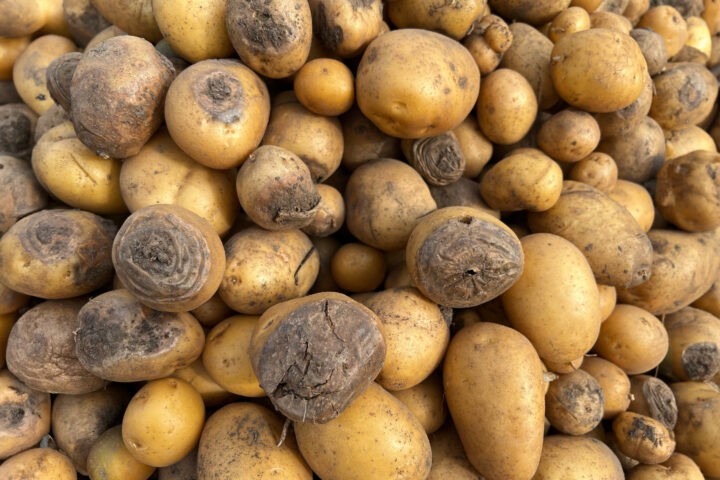
Switzerland's food security is increasingly under pressure: last year's disastrous wheat and potato harvests have led to an increasing dependence on imports. However, the report by the Federal Office for National Economic Supply (FONES) is largely silent on the precarious state of the domestic agricultural sector. The IG BauernUnternehmen (Farmers' Company) has therefore sharply criticised the federal government.

«The protection of cultures is no longer guaranteed»
Swiss agriculture is in a tight spot when it comes to crop protection. At the Swiss-Food Talk on July 1, 2025, three producer representatives described how bans, the lack of alternatives, and lengthy approval procedures are putting pressure on their crops.

Security Risk on the Plate: "We Are Extremely Vulnerable"
Hans Jörg Rüegsegger (SVP) has been a member of the National Council representing the Canton of Bern since 2023. A certified master farmer and agricultural technician (Agro-Techniker HF), he manages a farm in the Emmental valley specialising in dairy farming and arable crop production. As the former President of the Bernese Farmers' Association, he has first-hand knowledge of the entire value chain in Swiss agriculture.
A Contribution Spanning Generations
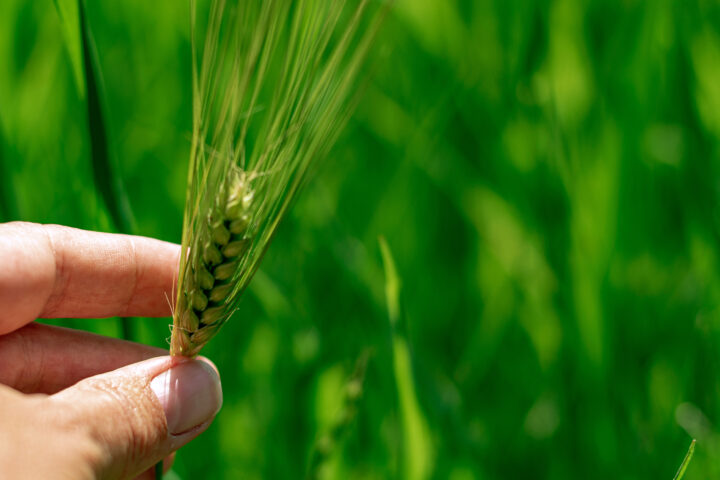
Food security begins long before the harvest. It begins with varieties that deliver yields, resist diseases and perform reliably under changing environmental conditions.

A Hint to Politicians, Delivered by Test Tube
Switzerland's top science prize goes to a researcher who helped develop the "gene scissors", a technology that has decisively advanced agriculture. While science has long since opened up new possibilities and the EU is moving ahead on regulation, Switzerland continues to dawdle.
Is Organic More Sustainable?
Organic food is considered a prime example of sustainability – but in reality, it often ends up in the waste bin faster than conventional products. The omission of artificial preservatives and modern plant protection drastically shortens shelf life and leads to more food waste.
"Natural is healthy, chemicals are toxic."
Everything that occurs in nature is healthy and synthetically produced substances, i.e. "chemical" substances, are toxic. This myth is fundamentally wrong: There are many highly toxic substances in nature, and at the same time there are many synthetic substances that are absolutely harmless.