


A Contribution Spanning Generations
Food security begins long before the harvest. It begins with varieties that deliver yields, resist diseases and perform reliably under changing environmental conditions.
Published: 08.10.2026, 11:21 | Updated: 08.10.2026, 13:14
Climate change, geopolitical tensions and fragile supply chains are therefore bringing plant breeding, and the seed and planting material that comes with it, back into focus. They stand at the start of agricultural production – and thus also at the start of a secure food supply. Biotechnological methods are increasingly complementing classical crossbreeding.
For generations, plant breeding in Germany has helped to secure yields, improve quality and adapt agriculture to new challenges. Its history is marked by scientific breakthroughs and entrepreneurial initiative, but also by war, division and changes of political system. Above all, however, it is a story of continuous development and improvement. Many of its successes are now taken so much for granted that it is hardly visible how much breeding work lies behind them.
A fresh start under difficult conditions
After the end of the war, the focus was initially on feeding the population. For many breeders, 1945 also meant an economic and personal new beginning. Businesses in East Prussia, Pomerania, Brandenburg and Silesia were lost, along with land, buildings and technical equipment. Some breeders managed to save at least part of their breeding material and bring it to the West. What outwardly amounted to just a few sacks or bags of seed could contain the result of decades of crossing and selection work – and thus the basis for a new business. In the West, new breeding sites emerged under difficult conditions. Land, machinery and capital were in short supply, but breeding material, experience and entrepreneurial drive made reconstruction possible. Not all companies survived. Some were abandoned or taken over, others cooperated with one another. In this way, a diverse structure of larger companies and numerous small and medium-sized breeding businesses gradually developed.
In the East, development took a different path. As early as 1946, the Soviet Military Administration ordered the re-establishment of seed breeding for agricultural crops. In what later became the GDR, plant breeding was increasingly organised along the lines of a planned economy. Breeders worked in collectives, coordinated crossing plans and carried out joint trials. The range was broad: in addition to cereals and potatoes, work was done on vegetables, medicinal and culinary herbs, fruit, edible mushrooms and crops such as sea buckthorn and soya.
In the Federal Republic, too, breeding was increasingly underpinned institutionally and legally. In 1953, the Federal Plant Variety Office (Bundessortenamt) was given responsibility for variety registration and plant variety protection. Internationally, the UPOV Convention of 1961 created a framework for protecting new plant varieties. In Germany, seed marketing and plant variety protection were regulated separately from 1968. It was also during this phase that the sector's joint representation took shape. To this day, the Federal Association of German Plant Breeders (BDP) represents plant breeding companies and seed traders in Germany.
Institutions alone, however, were not what drove progress. In the breeding gardens, greenhouses and trial fields, it became clear how much new varieties could change agriculture.
Two German systems – and a new common beginning
Until the end of the 1980s, plant breeding and plant research in the two German states developed under very different economic and political conditions. While private-sector breeding companies in the Federal Republic expanded their programmes and became increasingly specialised, breeding in the GDR was organised by the state. Both systems had capable breeders and research institutions, but relied on different structures and priorities.
Wheat
In wheat, high grain yield and good baking quality were long difficult to combine. Higher yields often came at the expense of quality. Intensive breeding work led to high-yielding varieties with high baking quality in the 1970s. New laboratory and analytical methods later made it easier to select suitable plants, but even today success is not decided in the laboratory alone. A new variety must prove itself in the field under different conditions while also meeting the requirements of mills and bakeries. It is precisely this combination of yield, stability and quality that has helped shape the reputation of German quality wheat varieties.
Maize
Over thousands of years, cultivated maize developed from the wild grass teosinte through selection. In Central Europe, however, the warmth-loving plant long remained confined to favourable locations. Hybrid breeding provided a decisive boost. In 1965, the first maize hybrid was registered in the Federal Republic. Rising yields and improved cold tolerance increasingly made cultivation possible in more northerly regions as well. Today, maize is one of the defining arable crops – an example of how breeding can change not only a plant's performance but also the limits of where it can be grown.
Oilseed rape
Breeding fundamentally changed how oilseed rape is used. For a long time, rapeseed oil served mainly as lamp oil or a technical lubricant. Because of its high levels of erucic acid and glucosinolates, it was only of limited suitability for human consumption. From the 1960s onwards, breeders succeeded in greatly reducing both substances. So-called double-zero (00) rapeseed turned the crop into a high-quality food and feed plant. In the mid-1990s, the first rapeseed hybrids marked a further step in innovation, further improving yield, plant health and oil content.
Sugar beet
With sugar beet, once sugar content had been increased at the beginning of the 20th century, the focus turned to a very practical problem. The seed clusters customary at the time contained several germs. After emergence, the plants therefore had to be laboriously thinned out by hand. In the 1940s, beets were found in which only one seedling emerged from each fruit unit. This trait was exploited in breeding. In 1966, the first monogerm hybrid variety came onto the market in Germany. A single breeding trait thus fundamentally changed production methods and considerably reduced the amount of labour required.
Potato
In potatoes, the focus was on fending off a dangerous pest. Since the beginning of the 20th century, nematodes introduced from South America had threatened crops. Yield losses of up to 80 percent were possible. In 1948, a wild potato with natural resistance was discovered. Breeders crossed this trait into cultivated potatoes. But that did not end the work: undesirable traits of the wild form then had to be bred out again over many generations. Commercially relevant nematode-resistant varieties have been available since the 1970s.
With the fall of the Wall and reunification, another profound upheaval began. Some companies that had moved to the West after 1945 returned to their former sites or set up new breeding stations in the East. At the same time, the East German research landscape had to be reorganised.
Much could be preserved and developed further. Today's Leibniz Institute of Plant Genetics and Crop Plant Research in Gatersleben continued its work as an internationally important gene bank. Other GDR plant research institutions were incorporated into new structures, from which the Julius Kühn Institute, among others, later emerged. At the same time, the transformation had its downsides: individual breeding programmes and, in particular, achievements of East German vegetable breeding were lost.
The upheaval coincided with a period in which breeding methods were also changing significantly. Molecular markers and biotechnological methods increasingly complemented classical crossing, selection and field testing. Plants could be examined for specific traits earlier and more precisely. For companies, this meant new opportunities, but also growing investment in research, technology and qualified staff. At the same time, plant breeding became more prominent in public debate. Questions about genetic engineering, crop protection, biodiversity and, later, climate change altered expectations of agriculture and breeding. Alongside yield and quality, new or more heavily weighted goals emerged: resistance to diseases and pests, tolerance of drought, heat or cold, and more efficient use of water and nutrients.
From crossing to data and precision
Modern plant breeding has thus moved a long way from its beginnings – and yet it still follows the same basic principle. Breeders use genetic diversity, combine traits and, over several generations, select the plants that come closest to a defined breeding goal. What has changed is the speed, the precision and the amount of information available.
In the past, it was mainly observation, experience and years of field testing that decided which plant varieties were taken forward. Today, genomic data, modern phenotyping and extensive information on environmental conditions are added to the mix. Biotechnology and digital methods are increasingly helping to identify correlations and select promising crosses earlier. This does not replace the field. On the contrary: only there does it become clear whether a plant, under real conditions, actually delivers what genetic analyses and models lead us to expect.
The new breeding methods mark an important stage of development. New genomic techniques (NGTs), with methods such as CRISPR/Cas, can change individual traits in a targeted way. This can speed up breeding processes and open up new possibilities, for example in resistance to plant diseases. However, the new methods do not replace classical breeding: even a plant that has been modified in a targeted way must be combined with other traits, tested and trialled under different environmental conditions. In view of climate change in particular, this combination is becoming more important. In future, a variety will not have to perform at a single ideal location, but cope as stably as possible with very different conditions. Heatwaves, drought, heavy rainfall or new pathogens can change the requirements placed on a crop within just a few years. Plant breeding is therefore increasingly aiming at a moving target.
Then there is the time factor. It often takes many years to get from the first cross to a new variety. Decisions taken in a breeding programme today therefore help determine which varieties will be available to agriculture in the 2030s. Breeding is thus long-term by its very nature – and at the same time geared towards future challenges.
Innovation rooted in tradition
The history of plant breeding in Germany shows how closely scientific progress and agricultural practice are linked. A fodder beet became a high-performing sugar crop. Maize opened up cooler regions. Potatoes gained protection against a dangerous pest through the use of genetic diversity. Wheat combined high yield with baking quality. Oilseed rape was transformed from a technical oil into a high-quality food and feed plant. Vegetables became more resilient and available over longer periods.
Such successes rarely come about in a single great leap. They are usually the result of years, often decades, of work: crossing, testing, discarding, recombining and testing again. Herein lies one of the special features of plant breeding. Innovation ultimately shows itself in a new variety – the path to get there remains largely invisible to the public.
Plant breeding in Germany has lived through different political systems, wars, division and reunification, as well as scientific revolutions and profound changes in agriculture. One constant is the combination of practical breeding, scientific knowledge and long-term entrepreneurial commitment. Today, the methods are more precise, the volumes of data larger and the requirements more complex. Alongside yield and quality, the focus is on resilience, resource efficiency and the ability to adapt agriculture to a changing climate. But the core remains the same as at the start of systematic plant breeding: to develop plants further so that they better meet people's needs and the conditions of their environment. Every new variety is thus an innovation and a piece of applied provision for the future.
This article was first published on 25 September 2026 in the anniversary issue of the Agrarzeitung. The author is Ulrike Amoruso-Eickhorn, a political scientist and Deputy Managing Director and Head of Communications and Strategy at the Federal Association of German Plant Breeders (BDP). The original article can be found here.
Kindly note:
We, a non-native editorial team value clear and faultless communication. At times we have to prioritize speed over perfection, utilizing tools, that are still learning.
We are deepL sorry for any observed stylistic or spelling errors.
Related articles
Why Strict GMO Regulation Stifles Innovation
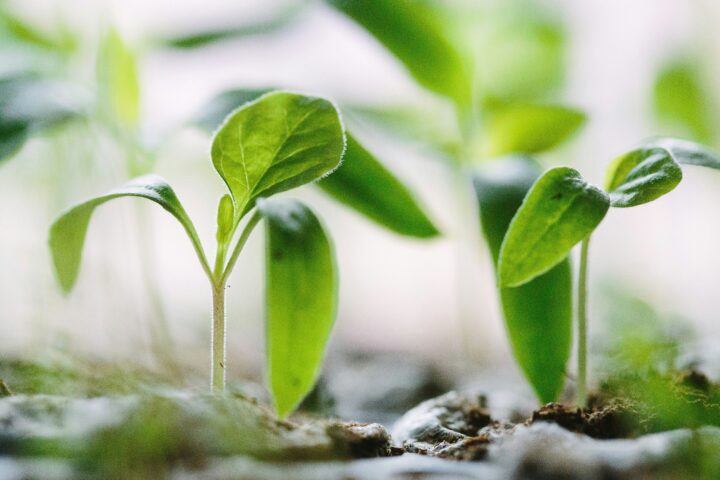
New breeding techniques are considered key to developing resilient crops, stable yields and reducing the need for plant protection products. ETH professor Bruno Studer warns that overregulating these technologies strengthens precisely those large corporations that critics seek to curb, while excluding smaller breeders from the market.
Ensuring Food Security Through Innovation
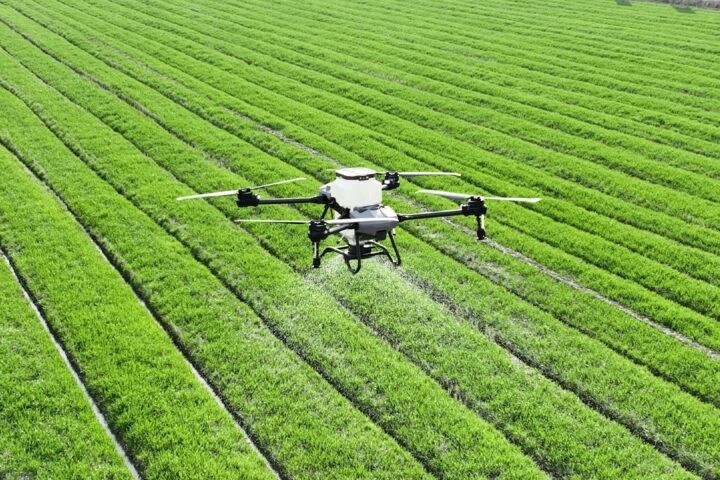
Agriculture stands at the centre of a global field of tension shaped by climate change, geopolitical crises and growing demand for food. Insights from the World Economic Forum in Davos show that the industry’s response lies in the intelligent combination of digital precision and biological progress.
A Hint to Politicians, Delivered by Test Tube
Switzerland's top science prize goes to a researcher who helped develop the "gene scissors", a technology that has decisively advanced agriculture. While science has long since opened up new possibilities and the EU is moving ahead on regulation, Switzerland continues to dawdle.

Full Shelves – Of course! How Secure Is Our Supply Really?
Security of supply sounds like a shared goal. However, as soon as it comes to the path to get there, conflicts arise: between market and state, ecology and production, as well as self-sufficiency and international connectivity. The Agricultural Policy Podcast and swiss-food.ch explore the key dependencies and areas of tension surrounding supply security in a five-part series. The highlight will be a live podcast in front of an audience on November 5, 2026, at the Äusserer Stand (Hofcafé) in Bern.
Is Organic More Sustainable?
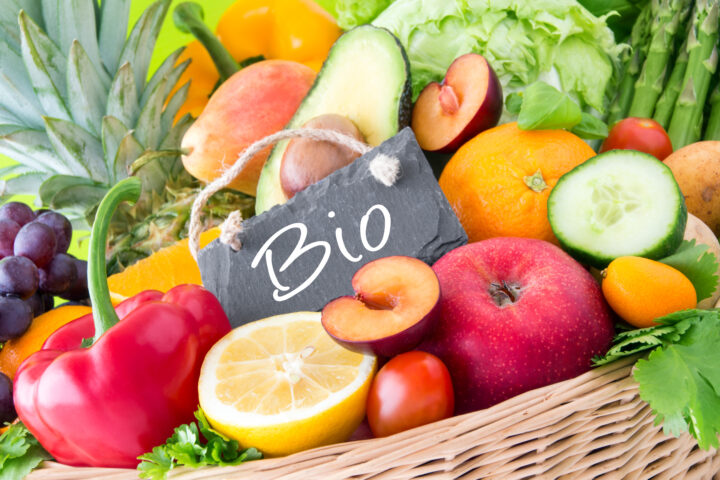
Organic food is considered a prime example of sustainability – but in reality, it often ends up in the waste bin faster than conventional products. The omission of artificial preservatives and modern plant protection drastically shortens shelf life and leads to more food waste.
"Natural is healthy, chemicals are toxic."
Everything that occurs in nature is healthy and synthetically produced substances, i.e. "chemical" substances, are toxic. This myth is fundamentally wrong: There are many highly toxic substances in nature, and at the same time there are many synthetic substances that are absolutely harmless.