


Cultural heritage from the laboratory – is it time to rethink?
Would you drink laboratory-made coffee? A beverage that actually has nothing to do with coffee beans. Perhaps you would try it once? Or would you switch completely? These questions could soon be on your mind.
Published: 23.06.2025, 11:13
The situation is clear: global coffee consumption continues to rise, while climate change is making coffee cultivation increasingly challenging. In addition, the coffee industry is facing a number of interrelated challenges. This complexity and the pursuit of greater sustainability require cooperation between all stakeholders across the global coffee value chain. Sustainable coffee cultivation involves a holistic approach that takes environmental, economic and social aspects into account. This includes protecting soil, water resources and forests, as well as fair working conditions and economic stability for coffee farmers. In addition, there are research efforts to breed more resilient coffee trees and develop sustainable pesticides and biostimulants that help plants cope better with so-called abiotic stress. But the question remains whether the growing demand for coffee can be met – especially as traditional tea-drinking countries are consuming more and more coffee. Alternative options are also needed.
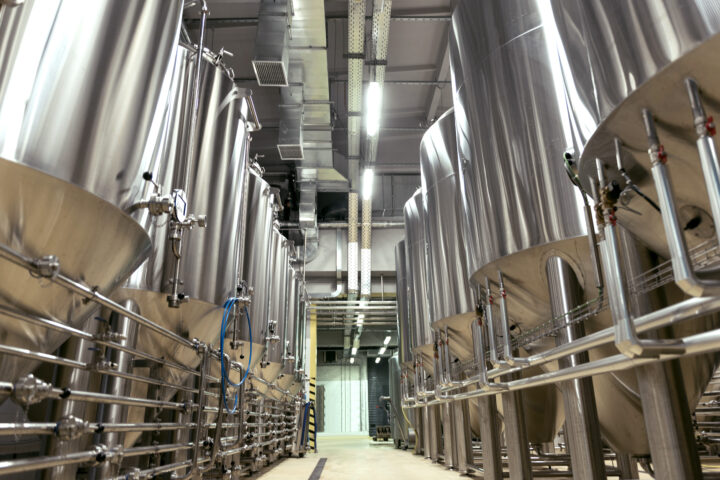
This is where the research of Chahan Yeretzian from the Zurich University of Applied Sciences (ZHAW) in Wädenswil comes in. He says: ‘What we produce in the laboratory is already very close to natural coffee in terms of taste, but I'm not entirely satisfied yet,’ he says in an article in the NZZ am Sonntag newspaper. There is still a little too much bitterness, a little too little acidity and too much astringency, i.e. a furry feeling on the tongue. But they are already very close to the taste experience of traditional coffee. And all this without resorting to a single coffee bean. The product Yeretzian is researching at the ZHAW was developed entirely in the laboratory, in a bioreactor. Without being disturbed by freak weather conditions, the raw material matures in stainless steel tanks, as is familiar from beer brewing.
To achieve this, scientists cultivate specific plant cells in nutrient solutions in order to produce specific flavourings for the typical coffee taste. By controlling growth conditions and adding special substances, the production of desired ingredients and flavours is optimised. For example, they add substances that trigger defence mechanisms similar to those a plant would use against pest infestation. This process, known as ‘elicitation,’ increases the caffeine content that the plant produces in its leaves as a natural insecticide. After drying and roasting the cell mass, a powder is produced that can be brewed and tested like conventional coffee.
Who should drink lab-grown coffee?
Yeretzian estimates that coffee produced in this way will be available at current coffee prices in four years. The first products could be on the market in two years, provided they are approved by the authorities. Products from bioreactors are still subject to strict regulations. The numerous institutes and start-ups working on laboratory-grown coffee seem to confirm Yeretzian's vision that technical and taste-related hurdles will soon be overcome.
The bigger challenge, of course, is how consumers will respond to coffee from a reactor. After all, this is a so-called ‘highly processed food’, and these are often disparaged. Initial figures are available from Scandinavia: according to surveys, young, tech-savvy people can well imagine consuming Coffee 2.0. But of course, the step from ‘being able to imagine’ to becoming a regular consumer is a pretty big one. And yet there could be a market for artificial coffee. With the rising prices of coffee beans, there could be a gap for mass consumption. There is likely to be demand for inexpensive or standardised coffee, especially in emerging economies or countries with a preference for coffee blends that are exotic from a European perspective. Just like other products, such as dairy products, which are produced using precision fermentation.
We could soon have real alternatives to the classic coffee bean in our cups. Coffee aficionados will continue to swear by the original – with all its nuances and traditions. But for some, coffee from the laboratory could become the new standard.
Whether it's lab-grown coffee, plant-based meat or cultured milk, modern food technologies are often met with scepticism. A common criticism is that they are ‘too artificial’ or ‘highly processed’. But the term ‘highly processed’ is not a judgement on quality – and certainly not a synonym for unhealthy. What matters is not how something is made, but what is in it – and in what quantities. Many so-called additives fulfil important functions: they extend shelf life, protect against germs or enrich food with nutrients. Even highly processed products can be part of a balanced diet – provided they are consumed in moderation, like all foods. Innovation in food production is not the opposite of health or sustainability – it is often a way to achieve them.
Sources
Kindly note:
We, a non-native editorial team value clear and faultless communication. At times we have to prioritize speed over perfection, utilizing tools, that are still learning.
We are deepL sorry for any observed stylistic or spelling errors.
Related articles
Sustainable food from the bioreactor
Feed more people and waste less raw materials – we are achieving this goal thanks to "sustainability from the laboratory," Tilo Hühn is convinced. Together with a team of 80 at the Zurich University of Applied Sciences (ZHAW), the food architect is researching sustainable nutrition solutions.
Will the food of the future be grown in a laboratory?
The global food system is currently responsible for approximately one third of all greenhouse gas emissions. Animal products, which require a large amount of land to produce, are one of the major contributors. For this reason, a number of start-ups are working eagerly on alternative protein products that require fewer resources and no animals, and are produced using industrial processes. After all, to feed more than nine billion people, all options and technologies have to be considered.
Climate change threatens the future of coffee
By 2050, 50 percent of the areas used for coffee cultivation could disappear. The two largest coffee producers, Brazil and Vietnam, would be particularly affected.
Anti-Food Waste Banana
British biotech company Tropic has developed a banana using CRISPR/Cas gene editing that no longer turns brown. In the US, it is already on the market, while in England, it has passed the decisive regulatory hurdle. The same technology could also help save the world's most popular banana from extinction.
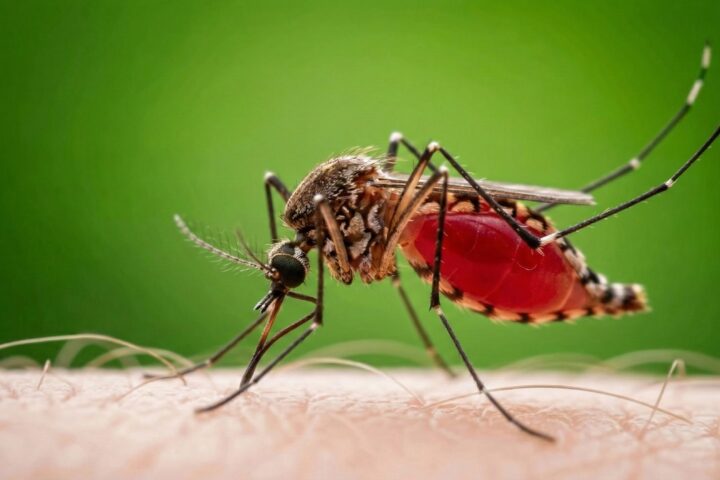
Asian Tiger Mosquito: Federal Government Implements Action Plan – But Insecticides Remain Taboo
Invasive species such as the Asian tiger mosquito are increasingly spreading across Switzerland. The federal government is sounding the alarm and wants to put a stop to the mosquito with a national action plan. However, the most effective measure is being left out: insecticides.
Record Heat 2026: Why Agriculture Needs Resilient Crop Varieties
Heat, drought, and hail took a heavy toll on Swiss farmers in 2026. In an interview with the NZZ, Adrian Aebi, head of Switzerland's largest crop insurer, warns: "If we carry on like this, agriculture will bleed dry." Looking to the future, there is an urgent need for resilient crop varieties that can withstand heat and dry conditions.
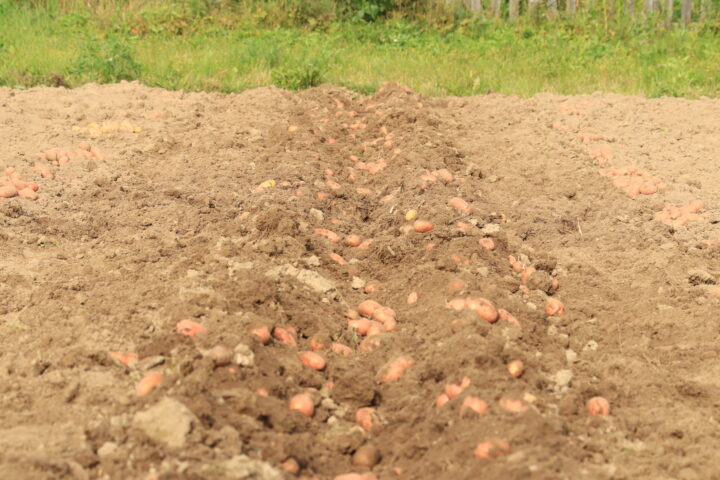
Record low potato harvest: Why is the Federal Council standing still?
The hot summer of 2026 caused the lowest potato harvest in Switzerland since records began a century ago. To secure domestic supply and build climate resilience, the agricultural sector is calling for swift access to new breeding technologies, which are already being authorized in the European Union. However, the Federal Council has delayed the corresponding draft legislation until 2027.