

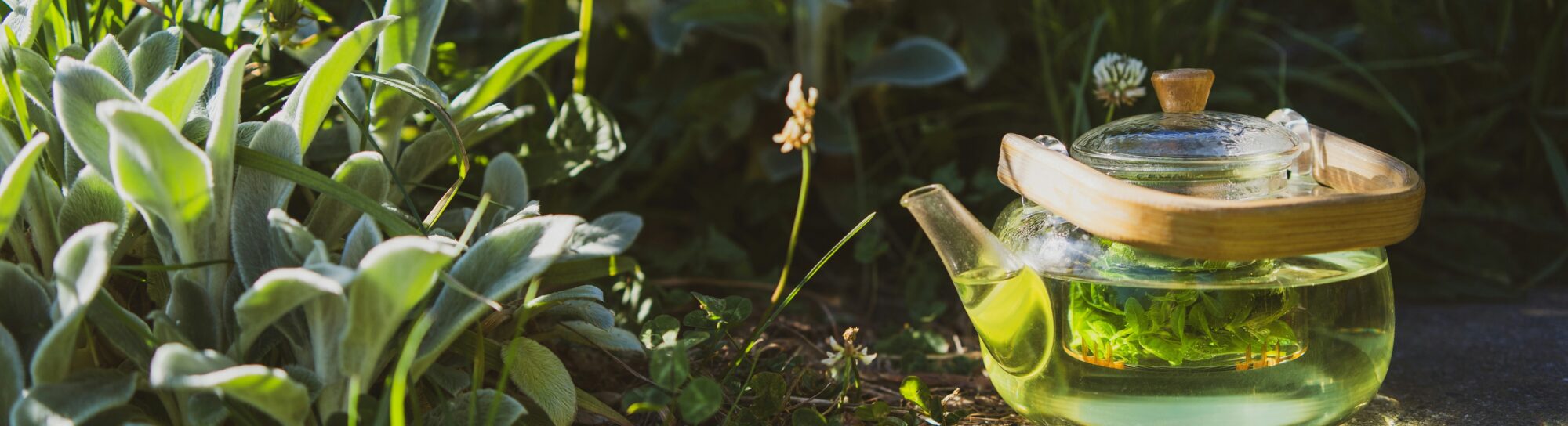
Herbal Teas: Making You Sick Instead of Slim
Plant protection products are frequently the focus of public criticism. Far less attention is paid to the fact that natural ingredients in teas and dietary supplements are also biologically active and can pose health risks.
Published: 05.02.2026, 16:09
At regular intervals, the media fuel fears about plant protection products. Residues are said to be detectable everywhere, and above all it is claimed that people overlook the fact that fruit and vegetables supposedly carry “not just one pesticide, but many – and that these mixture effects are hardly assessed.”
Detectability, however, means nothing in itself. Thanks to modern analytical methods, it is now possible to detect the proverbial pea in a freight train full of beans that has travelled halfway around the equator. As always, the decisive factor is the dose. One fly agaric in a mushroom stew is not a problem, eight will be noticeable. This brings us to the issue of maximum residue limits. Since compliance with these limits is regularly monitored, statistics are available. In 2024, the German Federal Office of Consumer Protection and Food Safety (BVL) analysed 16,423 food samples for the presence of pesticide residues. Around half of these samples showed no quantifiable residues at all. Compared to 2023, this represents a clear positive trend: the proportion of samples without measurable pesticide residues increased by around ten percent. Only about 1 percent of samples from Germany and the EU exceeded the maximum levels, while for imports from non-EU countries the share was 8.5 percent.
This is usually followed by the familiar argument about the pesticide “toxic cocktail.” Nobody knows how residues interact with each other in the human body, critics claim. Even amounts below the legal limits could therefore be dangerous because risks might add up or even multiply. There is hardly any research supporting this thesis, but that is the beauty of arguments that begin with “Nobody can rule out that …”. Science cannot rule out anything – not even that aliens have built an underground base on the moon.
Fear of the wrong things
As so often, we are afraid of the wrong things – more precisely, of the wrong pesticides. Decades ago, toxicologist Bruce Ames demonstrated in the United States that more than 99 percent of all plant protection substances we ingest with food are of natural origin. Why is that?
Plants do not want to be eaten, but they cannot flee. They therefore protect themselves from predators in other ways: with thorns and spines, by storing sharp-edged crystals, with stinging hairs, or by producing chemical weapons – bitter compounds as well as toxins. Potatoes contain the insecticide solanine, to which only the Colorado potato beetle is immune. Rosemary, lavender and onions produce essential oils against insects; sunflowers produce sesquiterpene lactones and phenolic acids; primroses produce saponins; greater celandine produces more than 20 alkaloids as well as organic acids and flavonoids, and so on. Many plants also produce fungicides and antibiotics, or – like walnut or fennel – herbicides that inhibit the growth of other plants.
All these substances occur in concentrations of sometimes several milligrams per kilogram. By contrast, residues of synthetic plant protection products from agriculture are measured in nano- or picograms. To illustrate this: if we imagine a picogram as a grain of sand, a milligram would correspond to a truckload of sand.
All these substances have an effect on human metabolism – otherwise we would not drink them for insomnia, fatigue, constipation, throat and stomach pain, coughs, good mood, or simply for their taste. Many teas that were used in folk medicine as remedies for acute ailments are now supermarket products and are consumed daily. Average per-capita consumption of herbal and fruit teas in Germany amounted to no less than 40.5 litres in 2023. Added to this are dietary supplements in the form of capsules containing frankincense, Hildegard and other medicinal herb extracts, as well as root ingredients of turmeric, ginger and maca, which are marketed as superfoods, for “detoxification,” for preventing colds, memory and sleep disorders, and so on.
Liver damage caused by “natural” products
Anyone who routinely consumes all of this ingests several milligrams of pesticides per day. And doctors are now clearly seeing the effects. Herbal preparations, dietary supplements and plant extracts that are mostly marketed as “natural” are increasingly being linked to liver damage. The damage ranges from mild enzyme elevations to acute liver failure requiring transplantation. According to the DILIN register (DILIN = Drug-Induced Liver Injury Network), a database originally created to record drug-induced liver damage, 20 percent of all acute liver injuries are now caused by such over-the-counter products. In 80 percent of cases, patients fortunately recover after discontinuing teas and capsules without lasting liver damage; however, the mortality rate among the remaining 20 percent is higher than among patients harmed by conventional medicines.
Hardly regulated
The reason lies in the fact that teas, herbal preparations and dietary supplements are regulated far less strictly in the United States as well as in Europe than medicines or plant protection products. As a result, contamination, overdosing or poisoning by unknown ingredients repeatedly occur.
A recent example is the contamination of herbal teas with danthron, which already appeared in 2025, for example in the “delicious alternative with apricots to stay in shape.” Danthron is carcinogenic and is produced by some plants, including many aloe species, rhubarb and senna plants, which belong to the legume family. According to the Swiss Federal Food Safety and Veterinary Office (FSVO), danthron is genotoxic and carcinogenic, and there is no safe daily intake. Because of its harmful properties, this substance is prohibited in food. Nevertheless, it repeatedly leads to product recalls, for example of slimming teas. Poisonings caused by the extremely liver-toxic pyrrolizidine alkaloids also occur repeatedly, for example in St John’s wort tea, organic nettle tea or organic anise–fennel–caraway tea (“extremely soothing”). This toxin is found in all parts of ragwort (also known as groundsel, St James’s wort or Jacobaea vulgaris), but also in many other plants. Confusion or unintended contamination repeatedly occurs during the collection of wild plants or the harvesting of herbs.
However, even the desired, pharmacologically active ingredients of many plants can have harmful effects, especially in mixtures. These include turmeric, constituents of green tea, snake root or lady’s root, ashwagandha, kudzu roots, earth chestnut, honeysuckle, Chinese knotweed and many other exotic plants that are now commonly recommended as teas or capsules for menstrual and menopausal symptoms, weight-loss products and so on. Added to this are interactions with medicines.
These are, in fact, real “toxic cocktails” that can cause genuine chronic and even acute health damage. But this is not a topic for environmental NGOs. Warnings about “natural” products collide with the narrative that health risks mainly stem from artificially produced chemicals, and they cannot be monetised. Added to this is the fact that many NGOs are dependent on companies that earn money from these products. It is therefore easier to warn about theoretical dangers associated with swallowing a grain of sand, while ignoring that a whole wagonload of sand can very easily be fatal.
Author of the article: Ludger Weß, PhD in biochemistry and science journalist. As a profound expert in agricultural science research, he is committed to a fact-based debate on our nutrition, agricultural production, and new breeding technologies.
Kindly note:
We, a non-native editorial team value clear and faultless communication. At times we have to prioritize speed over perfection, utilizing tools, that are still learning.
We are deepL sorry for any observed stylistic or spelling errors.
Related articles
A Contribution Spanning Generations
Food security begins long before the harvest. It begins with varieties that deliver yields, resist diseases and perform reliably under changing environmental conditions.

A Hint to Politicians, Delivered by Test Tube
Switzerland's top science prize goes to a researcher who helped develop the "gene scissors", a technology that has decisively advanced agriculture. While science has long since opened up new possibilities and the EU is moving ahead on regulation, Switzerland continues to dawdle.

Full Shelves – Of course! How Secure Is Our Supply Really?
Security of supply sounds like a shared goal. However, as soon as it comes to the path to get there, conflicts arise: between market and state, ecology and production, as well as self-sufficiency and international connectivity. The Agricultural Policy Podcast and swiss-food.ch explore the key dependencies and areas of tension surrounding supply security in a five-part series. The highlight will be a live podcast in front of an audience on November 5, 2026, at the Äusserer Stand (Hofcafé) in Bern.
Is Organic More Sustainable?
Organic food is considered a prime example of sustainability – but in reality, it often ends up in the waste bin faster than conventional products. The omission of artificial preservatives and modern plant protection drastically shortens shelf life and leads to more food waste.