


Neither Left nor Right: Forward!
In climate, energy, and agricultural policy, beliefs often take precedence over facts. The American think tank The Breakthrough Institute demonstrates a different approach: embracing disagreement, evaluating technologies with an open mind, and viewing productivity as an ally of environmental protection.
Published: 08.06.2026, 18:03
Anyone who still believes that political debate naturally leads to the best possible solution through reasoned discussion may fairly be called an idealist. Not because debate itself is naïve, but because among ideologues, genuine debate often never takes place. And anyone who believes that their own political camp is free from ideological constraints is probably an ideologue as well. A glance at the political landscape shows that virtually every political movement has its sacred truths that must not be disturbed by empirical evidence. If the facts do not fit the ideology, then so much the worse for the facts.
The Power of Ideological Beliefs
This is especially true in the two policy areas that have dominated public discussion in recent years: climate policy and the closely related field of energy policy. Beliefs and entrenched enemy images continue to shape the debate. Yet much could be gained if ideological blinders were set aside and these issues approached with greater openness. The American think tank The Breakthrough Institute provides a compelling example of how this can be done.
The Swiss newspaper Neue Zürcher Zeitung recently profiled the organization. What emerged was almost unusual: an environmental organization committed to climate protection that simultaneously supports nuclear energy, genetic engineering, and intensive agriculture. Even its hiring process is telling: applicants are asked to explain a time in their lives when they changed their minds—and why. As a result, the staff includes everyone from left-wing socialists to right-wing libertarians.
Why Disagreement Matters
“Achieving disagreement” is the institute’s motto. Differences of opinion are not smoothed over; they are deliberately encouraged. The reasoning is simple: only by understanding the true nature of disagreement can durable solutions be found.
The result is a consistent commitment to technological openness. Rather than engaging in ideological battles between solar power and nuclear energy, the institute argues for advancing both, recognizing that no single technology will meet the world’s energy needs on its own. And instead of making fossil fuels more expensive, it seeks to make clean energy so affordable that it becomes the obvious choice. Unsurprisingly, this approach attracts criticism from both the political left and right. When all camps are equally uncomfortable with your ideas, you may well be doing something right.
Technological Openness Instead of Ideological Warfare
For the Swiss agricultural debate, the institute’s core philosophy is particularly relevant: productivity is not the enemy of environmental protection—it is a prerequisite for it. Alex Trembath, the institute’s deputy director, put it succinctly in the NZZ: “Technology is not necessarily opposed to nature. High-tech solutions can actually be very beneficial to nature. An industrialized, highly productive agricultural system can produce more food on less land, leaving more space for birds, bees, and trees.”
By contrast, abandoning modern breeding techniques, effective crop protection, and efficient production methods means requiring more land to achieve the same output. That land must come from somewhere—either from natural habitats at home or from agricultural expansion abroad. Domestic extensification then becomes little more than the outsourcing of environmental impacts.
What Switzerland Can Learn
The lesson for Switzerland is both simple and demanding: define clear objectives—climate protection, biodiversity, food security—and then assess, with an open mind, which solutions deliver the greatest results. Whether a solution sounds left-wing or right-wing, high-tech or traditional, is secondary. What matters is its impact. Neither left nor right: forward!
Sources
Kindly note:
We, a non-native editorial team value clear and faultless communication. At times we have to prioritize speed over perfection, utilizing tools, that are still learning.
We are deepL sorry for any observed stylistic or spelling errors.
Related articles
New Breeding Methods at a Crossroads
It will soon become clear whether plants developed through modern genomic breeding techniques will be allowed to be cultivated in European fields in the future. Switzerland in particular would be well advised to at least keep an eye on decisions made in Brussels in order not to fall behind.
Stagnation instead of progress: Switzerland risks falling behind in new breeding techniques
An overview article in Schweizer Bauer shows how much the new breeding methods are preoccupying farming circles. Once the consultation process on the federal law has been completed, a bill is expected – then it will become clear whether there is actually the political will to approve it.
Climate protection must not jeopardise food security
Agriculture is increasingly under pressure to become climate-neutral. But how can this be achieved without jeopardising food security? In the agricultural policy podcast, Hannah von Ballmoos-Hofer, head of the energy division at the Swiss Farmers' Union, emphasises that climate protection is important, but must not come at the expense of food security.

Anti-Food Waste Banana
British biotech company Tropic has developed a banana using CRISPR/Cas gene editing that no longer turns brown. In the US, it is already on the market, while in England, it has passed the decisive regulatory hurdle. The same technology could also help save the world's most popular banana from extinction.
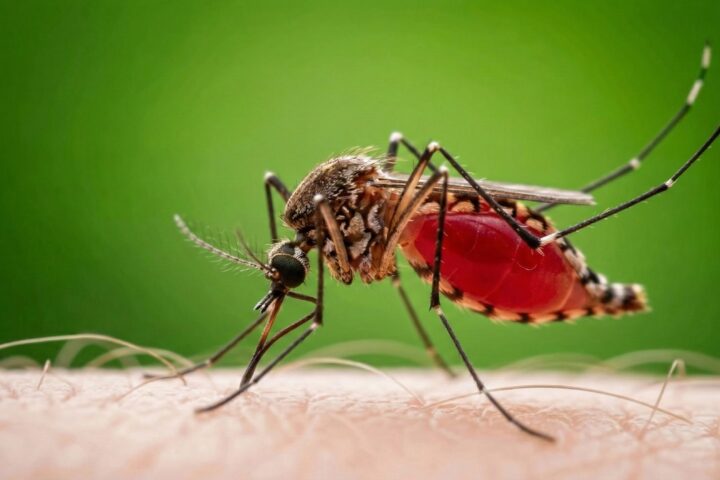
Asian Tiger Mosquito: Federal Government Implements Action Plan – But Insecticides Remain Taboo
Invasive species such as the Asian tiger mosquito are increasingly spreading across Switzerland. The federal government is sounding the alarm and wants to put a stop to the mosquito with a national action plan. However, the most effective measure is being left out: insecticides.

Record Heat 2026: Why Agriculture Needs Resilient Crop Varieties
Heat, drought, and hail took a heavy toll on Swiss farmers in 2026. In an interview with the NZZ, Adrian Aebi, head of Switzerland's largest crop insurer, warns: "If we carry on like this, agriculture will bleed dry." Looking to the future, there is an urgent need for resilient crop varieties that can withstand heat and dry conditions.
Record low potato harvest: Why is the Federal Council standing still?
The hot summer of 2026 caused the lowest potato harvest in Switzerland since records began a century ago. To secure domestic supply and build climate resilience, the agricultural sector is calling for swift access to new breeding technologies, which are already being authorized in the European Union. However, the Federal Council has delayed the corresponding draft legislation until 2027.