


New Breeding Methods at a Crossroads
It will soon become clear whether plants developed through modern genomic breeding techniques will be allowed to be cultivated in European fields in the future. Switzerland in particular would be well advised to at least keep an eye on decisions made in Brussels in order not to fall behind.
Published: 20.02.2026, 13:14
The Federal Council is expected to soon submit its message to Parliament regarding the special law on “New Breeding Techniques.” It remains to be seen which direction the proposal will take. Two key questions are at the center of the debate: Will the Federal Council align itself with the EU’s approach, which is on the verge of adopting significant deregulation of new breeding techniques? And above all: Will it deviate from its original draft submitted for consultation, which was considerably more restrictive than what is currently being discussed in the EU?
It would be surprising if the message did not follow the EU’s lead. In Brussels, the Council and the Parliament have agreed on a common direction. The Parliament’s Environment Committee has also endorsed this approach. In principle, the EU intends to distinguish between two categories of plants: those considered equivalent to conventionally bred plants (Category 1), and those involving more extensive modifications to the genome (Category 2). The latter will continue to fall under GMO legislation.
As reported by BauernZeitung, the key issue concerning Category 1 plants is which plants will fall under this classification. The EU relies on expert reports and its scientific advisory board. According to these assessments, a plant is deemed “natural enough” to qualify as Category 1 if no more than a specified number of genetic modifications have been made.
There will be no labeling requirement for Category 1 plants and their products — but there will be one for seeds. As BauernZeitung further reports, the organization “Sorten für Morgen” also supports such a labeling requirement in Switzerland. It also welcomes the requirement that breeders must provide information on all related patents when submitting potential Category 1 plants. This information is to be recorded in a public database.
Above all, it is important that the Swiss solution, which will soon be presented in the form of the Federal Council’s message, is internationally compatible. Technical trade barriers would discriminate against domestic producers. In other words, Switzerland should follow the scientific evidence, as Jürg Niklaus, President of “Sorten für Morgen,” stated in an interview with BauernZeitung: “Classical, non-targeted mutagenesis has been legally and safely used in Switzerland for decades. We consume it every day.” The new breeding technologies are no different, he argues. “Many countries therefore believe they should be regulated more like conventional varieties.” One can only hope that this insight will prevail equally in Brussels and Bern.
Sources
Kindly note:
We, a non-native editorial team value clear and faultless communication. At times we have to prioritize speed over perfection, utilizing tools, that are still learning.
We are deepL sorry for any observed stylistic or spelling errors.
Related articles

Genetic engineering? Yes, of course.
As a consumer, you often don't know: products advertised as GMO-free have long contained genetic engineering. This is a thorn in the side of opponents of genetic engineering. But it is easier to keep quiet about the ‘scandal’ – because something we have been eating for a long time no longer scares us.
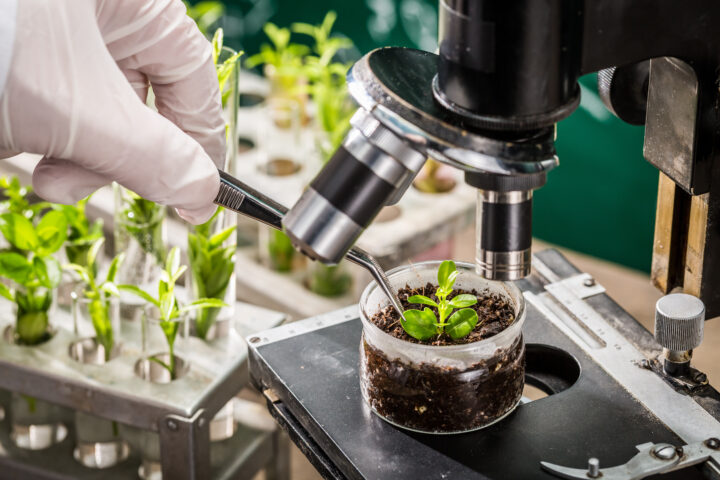
The opponents of green genetic engineering lack facts. Their anti-attitude is a dangerous ideology
Switzerland and the EU will decide on the cultivation of plants modified using new breeding technologies in 2025. Authorisation is sensible – and long overdue. After all, genetic engineering is already widespread.

Anti-Food Waste Banana
British biotech company Tropic has developed a banana using CRISPR/Cas gene editing that no longer turns brown. In the US, it is already on the market, while in England, it has passed the decisive regulatory hurdle. The same technology could also help save the world's most popular banana from extinction.
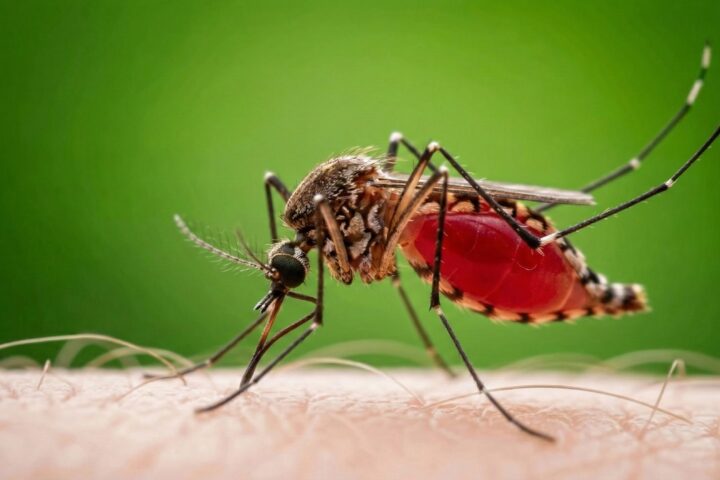
Asian Tiger Mosquito: Federal Government Implements Action Plan – But Insecticides Remain Taboo
Invasive species such as the Asian tiger mosquito are increasingly spreading across Switzerland. The federal government is sounding the alarm and wants to put a stop to the mosquito with a national action plan. However, the most effective measure is being left out: insecticides.

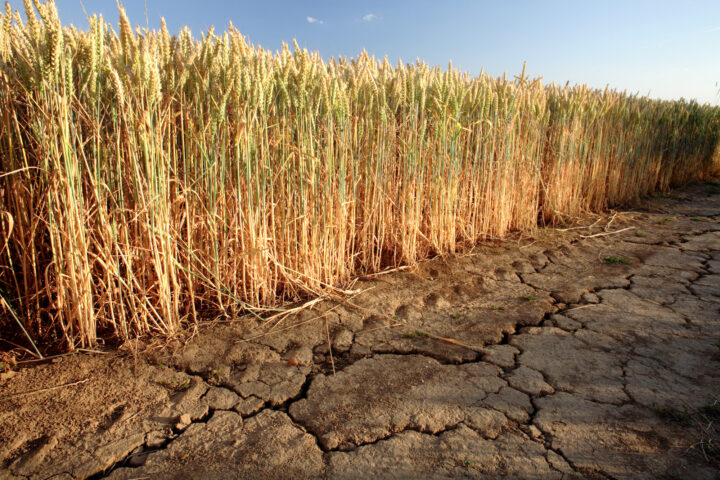
Record Heat 2026: Why Agriculture Needs Resilient Crop Varieties
Heat, drought, and hail took a heavy toll on Swiss farmers in 2026. In an interview with the NZZ, Adrian Aebi, head of Switzerland's largest crop insurer, warns: "If we carry on like this, agriculture will bleed dry." Looking to the future, there is an urgent need for resilient crop varieties that can withstand heat and dry conditions.
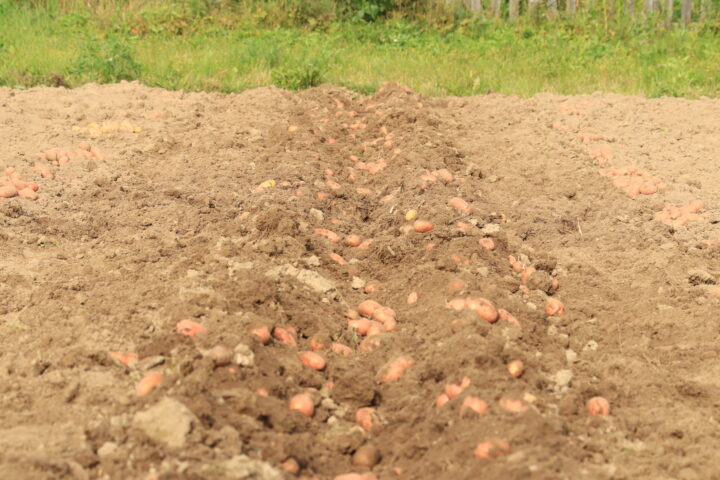
Record low potato harvest: Why is the Federal Council standing still?
The hot summer of 2026 caused the lowest potato harvest in Switzerland since records began a century ago. To secure domestic supply and build climate resilience, the agricultural sector is calling for swift access to new breeding technologies, which are already being authorized in the European Union. However, the Federal Council has delayed the corresponding draft legislation until 2027.