

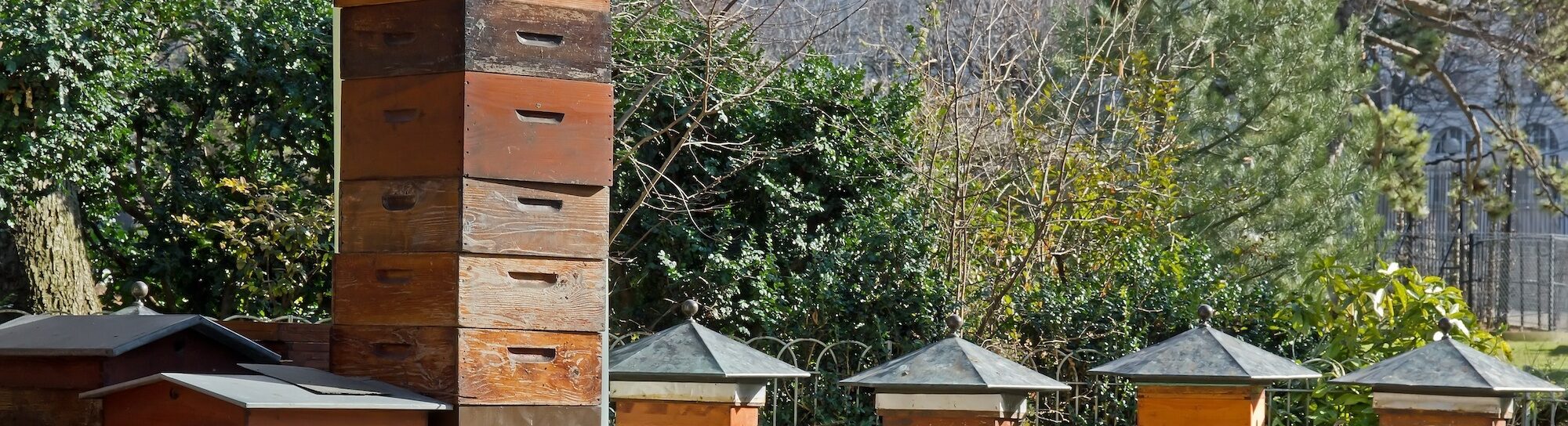
Urban beekeeping is endangering biodiversity
Beekeeping is booming in Swiss cities. Urban residents want to make a contribution to the conservation of the honeybee. However, a study by the WSL research institute shows that the amateur beekeeping is not sustainable. It endangers biodiversity in cities, as honey bees increasingly displace wild insects.
Monday, March 7, 2022
As the "Tages-Anzeiger" writes, wild insects such as butterflies or wild bees find almost no food anymore in urban areas due to the high bee population density. In many cities, green spaces are not enough to provide honey bees with enough food. This is the result of a study by the Swiss Federal Institute for Forest, Snow and landscape Research (WSL). Between 2012 and 2018, according to the authors, the number of urban hives has increased from 3139 to 9370 – that is a tripling in just six years. Study author Joan Casanelles Abella says in a media release from the WSL: "The key message of our results is that the green areas cannot keep up with the existing density of the hives."
Better regulation required
The authors of the study see the findings as proof of a need for regulation of beekeeping in urban areas. A sustainable strategy is needed. This includes, for example, regulating the number of beekeeping sites and the density of hives. Such rules are currently completely lacking. However, an improvement of the food supply for insects in cities – for example, a better range of flowers or upgraded habitats for pollinators – is also needed. In the end, according to the study authors, people also need to be better informed. Honey bees are farm animals. The beekeeping is an agricultural activity: "People often perceive honeybees as wild animals because they live freely and move freely. In reality, however, they are kept and bred in the same way as other farm animals. As for the latter, humans must also provide a sufficient supply of food for honey bees," says Casanelles Abella.
Blindspot article
Honey bee not threatened
Because the honeybee is a farm animal and is mostly kept by humans, it is not threatened by extinction, contrary to many representations in the media. Too many honey bees can, as described, even become a threat to wild bees. In contrast to honeybee, many species of wild bees and other pollinators are at risk of extinction. According to "bienen.ch", 40 percent of Swiss wild bees are currently at risk of extinction. The most important reason for this is the progressive loss of suitable habitats. To help the wild bees, there are more sensible measures for urban bee-lovers than breeding honey bees. For example, planting native plant species or creating suitable nesting sites.
Sources
Related articles

Residue is not the same as residue
Painkillers like Voltaren are a blessing for us – yet in our rivers they can harm fish. If these were crop protection products, calls for bans would be immediate. It becomes clear that we are applying double standards.

ARTE documentary: Genetic engineering in organic farming?
The ARTE documentary “Genetic engineering in organic farming?” examines key controversial questions of modern agriculture: Is the general exclusion of new breeding technologies still up to date? Can the resistance of organic farming be justified scientifically?
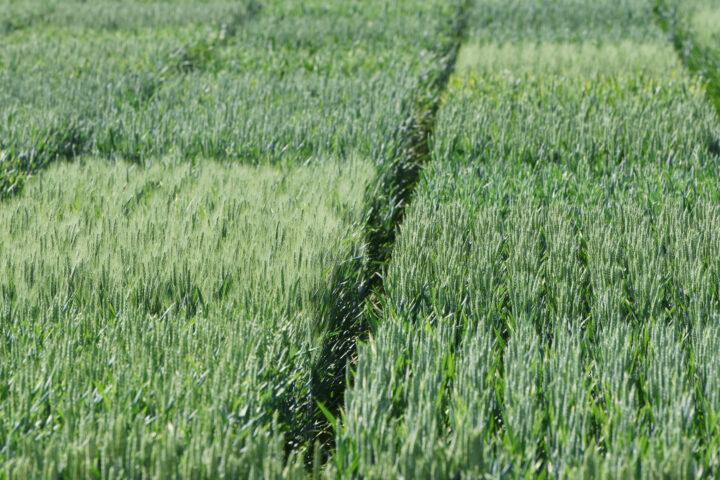
The Great Suffering of Farmers
Fire blight, Japanese beetles, or grapevine yellows – farmers in Valais, too, are increasingly feeling helpless in the face of the threats posed by nature. More and more often, they lack the means to effectively protect their crops. This makes it all the more important for the Federal Council to place a pragmatic balancing of interests at the forefront when setting threshold values.
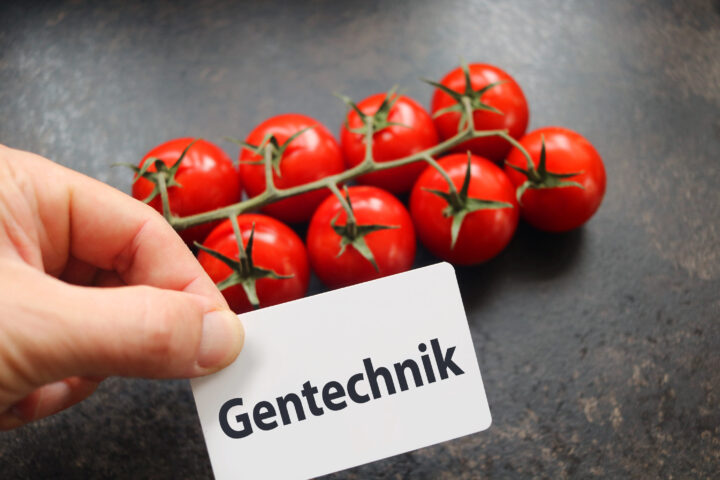
'Tomatoes on your eyes'
The submitted “Food Protection Initiative” calls for “GMO-free food.” Leaving aside this illusory demand, its adoption would mean more bureaucracy, more trade barriers, and less innovation. The Swiss Farmers’ Union describes the proposal as “unnecessary” and warns of a setback to the goal of achieving an even more sustainable agriculture.