


Why domestic cats threaten biodiversity
A ban on keeping domestic cats is currently being discussed in Scotland. The reason: driven by their hunting instinct, they are able to wipe out entire species of animals. The cat problem is also on the agenda in Switzerland.
Saturday, March 15, 2025
They look innocent, but the damage they can do is enormous. We are talking about domestic cats. As reported in the NZZ, they pose a serious threat to biodiversity. Driven by their natural hunting instinct, they are capable of endangering or even wiping out entire species. They adapt their eating habits flexibly to their environment, which is why they target not only specific species but also anything that crawls or flies.
In Scotland, a ban on keeping domestic cats is already being discussed to curb the harmful impact. The debate is not new in Switzerland either. Last year, the association Climate Protection Switzerland proposed a cat moratorium to ban the breeding and import of cats and thus stop the population from growing. This would enable the regulation of an invasive species spread by humans.
It is clear that cats are not just the lovable pets they are often thought to be. A study in the journal Nature Communications shows that feral cats, in particular, are responsible for the majority of birds killed by human influence. Worldwide, cats hunt more than 2,000 different species, with almost 350 of them considered threatened, according to a recent metastudy also published in Nature Communications.
Cats kill 30 million birds a year
In Switzerland, the Federal Office for the Environment estimates that cats kill around 30 million birds and half a million reptiles and amphibians every year. These figures are controversial because they are based on extrapolations, but one thing is clear: cats pose a serious ecological problem and are responsible for the extinction of at least 33 species worldwide.
There are various approaches to reducing the negative impact of cats on wildlife. One measure that has proved promising is to wear collars in eye-catching colours with bells that warn prey before the cats strike. One study showed that cats with such identification caught 37 per cent fewer birds.
Another option is to satisfy the hunting instinct with a high-protein diet and daily play sessions. Research suggests that such approaches can reduce the number of wild animals killed by up to a third.
One thing is clear: cats' hunting instinct must be curbed. Fortunately, their ecological footprint can be reduced without drastic measures such as house arrest or bans. Such measures would probably have little chance anyway – after all, the cat lobby should not be underestimated: according to the Tagesanzeiger, around 30 per cent of all Swiss households have at least one cat at home. Unsurprisingly, no politician wants to touch this hot potato.
Kindly note:
We, a non-native editorial team value clear and faultless communication. At times we have to prioritize speed over perfection, utilizing tools, that are still learning.
We are deepL sorry for any observed stylistic or spelling errors.
Related articles
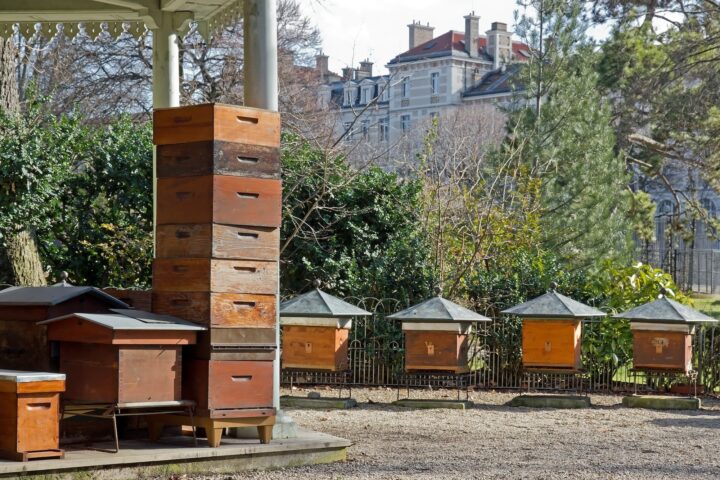
Urban beekeeping is endangering biodiversity
Beekeeping is booming in Swiss cities. Urban residents want to make a contribution to the conservation of the honeybee. However, a study by the WSL research institute shows that the amateur beekeeping is not sustainable. It endangers biodiversity in cities, as honey bees increasingly displace wild insects.

How can biodiversity be protected effectively?
Biodiversity is essential to life. And it is currently a very topical issue. The obligation to set aside areas of Swiss farmland for biodiversity promotion has clearly not achieved the desired objectives. Recently published studies indicate that species diversity remains under pressure. This is what prompted swiss-food, in the latest of its series of talks with three established experts, to focus on the tensions between biodiversity and agriculture and to shed some light on the reasons for these.
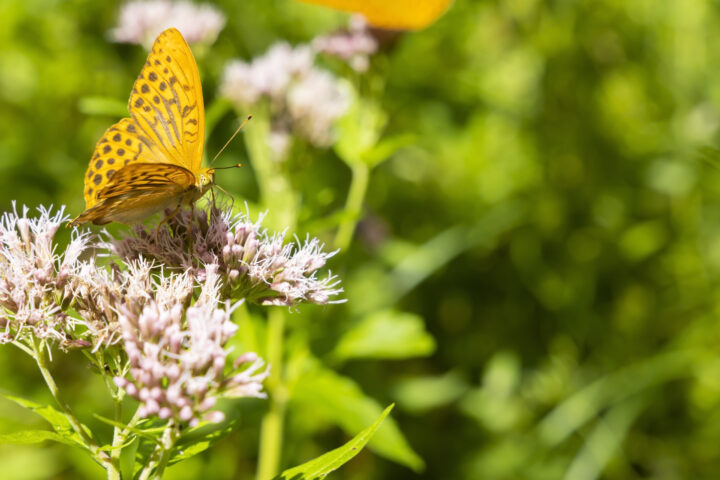
More organic does not mean more biodiversity
According to a team of researchers at the University of Göttingen, the key to more biodiversity lies in a landscape mosaic of natural habitats and small and diverse areas of cultivation.

Residue is not the same as residue
Painkillers like Voltaren are a blessing for us – yet in our rivers they can harm fish. If these were crop protection products, calls for bans would be immediate. It becomes clear that we are applying double standards.

ARTE documentary: Genetic engineering in organic farming?
The ARTE documentary “Genetic engineering in organic farming?” examines key controversial questions of modern agriculture: Is the general exclusion of new breeding technologies still up to date? Can the resistance of organic farming be justified scientifically?

The Great Suffering of Farmers
Fire blight, Japanese beetles, or grapevine yellows – farmers in Valais, too, are increasingly feeling helpless in the face of the threats posed by nature. More and more often, they lack the means to effectively protect their crops. This makes it all the more important for the Federal Council to place a pragmatic balancing of interests at the forefront when setting threshold values.
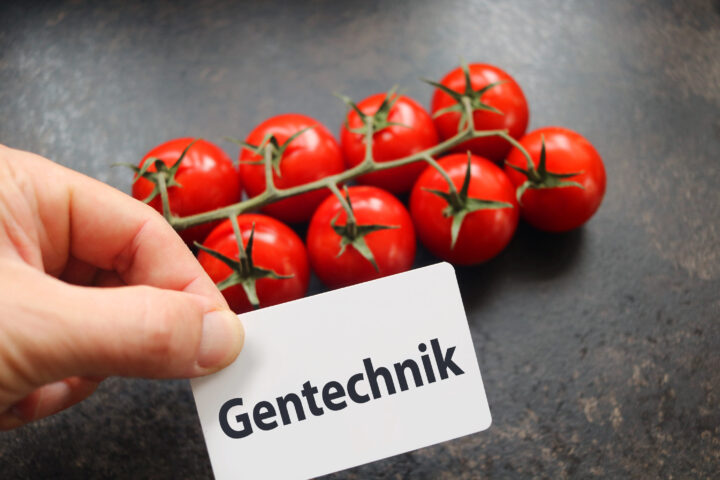
'Tomatoes on your eyes'
The submitted “Food Protection Initiative” calls for “GMO-free food.” Leaving aside this illusory demand, its adoption would mean more bureaucracy, more trade barriers, and less innovation. The Swiss Farmers’ Union describes the proposal as “unnecessary” and warns of a setback to the goal of achieving an even more sustainable agriculture.