

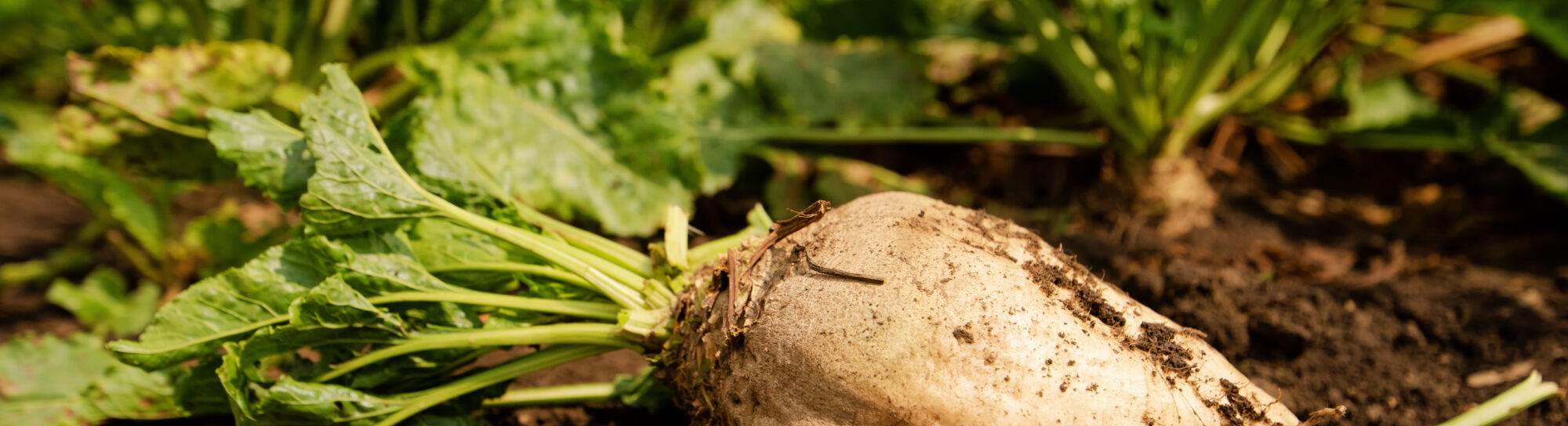
Costly Disincentives in the Beet Field
When the federal government and industry pursue conflicting goals, it gets expensive: while the Swiss Confederation pays beet farmers not to spray crop protection products, the sugar industry pays a special premium for spraying when needed. Processors, taxpayers, and consumers bear the costs.
Published: 05.11.2026, 10:06
In brief
- The federal government and the sugar industry provide opposing financial incentives regarding crop protection in sugar beet cultivation.
- Due to the lower sugar content of untreated beets, processing and energy requirements in factories increase by 15%.
- A substantial share of pesticide-free sugar cannot be marketed at a premium and ends up being sold as standard sugar.
- The drop in self-sufficiency below 50% puts the Swissness compliance rules for food manufacturers at risk.
The sugar beet is yet another example of how diverging and sometimes contradictory agricultural objectives produce absurd results. This is largely driven by public funding and subsidies: as reported by «Schweizer Bauer», the federal government rewards farmers for not spraying their beet fields. The sugar industry does the exact opposite: it pays a dedicated premium for spraying
The Federal Subsidy Scheme: 800 Francs per Hectare for Forgoing Crop Protection
To understand how this situation arose, one must examine the federal direct payment system. A growing share of public funds is directed away from efficient food production toward purely ecological cultivation goals. The federal government pays beet growers 800 francs per hectare if they refrain entirely from using crop protection products. While beneficial for participating farmers, this policy compromises yields, quality, processing plants, taxpayers, and consumers alike.
Diluted IP Sugar: 15% Higher Energy Consumption and Declining Swissness
Beets grown without crop protection yield a lower sugar content. To extract the same amount of refined sugar, processing factories must handle a substantially higher volume of raw beets. Consequently, energy consumption per unit of recovered sugar increases by roughly 15%, according to the report in «Schweizer Bauer». Transport and processing workloads increase accordingly. Taxpayers fund a restriction whose value often dissolves on the market: only about half of the sugar produced without crop protection is sold at added value as IP-Suisse sugar, while the remainder is sold as conventional sugar. Concurrently, consumers lose part of domestic Swissness: the self-sufficiency rate for sugar has dropped below 50%. It is only above this benchmark that Swissness legislation mandates that manufacturers use higher proportions of domestic sugar to qualify their products as Swiss-made.
Industry Countermeasures: Special Premium for Targeted Crop Protection
To counteract this development, the sugar sector will pay a special premium of 5 francs per tonne in 2027—in addition to the base price of 43 francs—to all growers who maintain standard production and spray when necessary. The government and the private sector are effectively financing two competing premiums that cancel each other out. Kirsten Müller, Managing Director of the Association of Agricultural Contractors Switzerland, sums up the fundamental problem: «We are losing productivity due to misguided direct payments.» Yet the Swiss Federal Constitution explicitly mandates resource-efficient food production. Lukas Aebi, Head of Beet Management at Schweizer Zucker AG, underlines this point in the «Schweizer Bauer» article with regard to the increased energy demand: «This aspect must be included in a comprehensive sustainability assessment.»
Subsidising Avoidable Crop Losses Promotes Food Waste in the Field
Subsidising avoidable crop losses actively drives food waste directly in the field. The current direct payment framework contradicts the goal Switzerland should strive for: comprehensive agricultural sustainability—which means using available acreage with high resource efficiency while deploying other resources such as water, fertiliser, crop protection products, energy, labour, and financial capital as efficiently as possible. Federal policy must align with this benchmark. The current situation in sugar beet cultivation completely contradicts this objective.
Keywords: Sugar beets · Direct payments · Crop protection · Schweizer Zucker AG · Disincentives · Swissness · IP-Suisse · Agricultural policy
About swiss-food.ch
swiss-food.ch is an information platform run by the research-based food and agricultural technology sector, bundling fact-based content on nutrition, agriculture, crop protection, and biotechnology. The articles are editorially prepared, and the sources used are linked within the text. The platform is supported by Syngenta and Bayer.
Sources
Why does the federal government pay farmers to avoid crop protection?
The federal government directs an increasing share of agricultural direct payments to ecological cultivation methods, paying beet farmers 800 francs per hectare for abstaining entirely from plant protection products.
Why does unsprayed beet cultivation increase energy consumption in factories?
Beets grown without crop protection contain lower sugar concentrations. Extracting identical volumes of sugar requires processing significantly more beet biomass, driving energy demand per tonne of sugar up by approximately 15%.
What financial counter-incentive has the sugar industry introduced?
From 2027, the sugar industry will pay an additional premium of 5 francs per tonne above the base price of 43 francs to all farmers who maintain standard farming practices and spray crops when necessary.
How does this dynamic affect commercial sales of Swiss sugar?
Only about half of the sugar produced without crop protection can be sold with added value under the IP-Suisse label. The remaining half is sold as standard sugar, leaving the public subsidy with no market return.
How does the trend influence Swissness legal criteria?
The domestic self-sufficiency rate for sugar has fallen below 50%. Food manufacturers are legally required to use a higher threshold of domestic sugar to qualify their products as Swiss only when domestic supply exceeds 50%.
Why do agricultural experts criticise the current subsidy structure?
Industry leaders argue that subsidising avoidable yield losses diminishes agricultural productivity and generates food waste in the field, contradicting constitutional requirements for resource efficiency.
Related articles

From molecule to crop protection product
On average, five crop protection products are approved for the market each year worldwide. Developing new products is challenging, time-consuming and expensive. It takes more than 12 years from the start of the search for a suitable substance to the approval of the market-ready product. The costs amount to more than 300 million US dollars. Every new crop protection product must meet strict requirements. The approval procedures for crop protection products are comparable to those for new drugs.

Faster Approval of Crop Protection Products Long Overdue
Switzerland diligently bans active substances that have also been withdrawn from the market in the EU. Conversely, it is dragging its feet: modern products that are approved in neighboring countries remain blocked. With the adoption of the amendment to the Agriculture Act, the National Council has now taken an important step toward faster approval of plant protection products.

Thresholds, approvals, responsibility – how plant protection products are really assessed
Threshold values are often at the centre of public debate – yet in reality they are only a small part of a much broader risk assessment system. Dr Michael Beer, Head of the Food and Nutrition Division at the Federal Food Safety Office, provides clarity.

Anti-Food Waste Banana
British biotech company Tropic has developed a banana using CRISPR/Cas gene editing that no longer turns brown. In the US, it is already on the market, while in England, it has passed the decisive regulatory hurdle. The same technology could also help save the world's most popular banana from extinction.
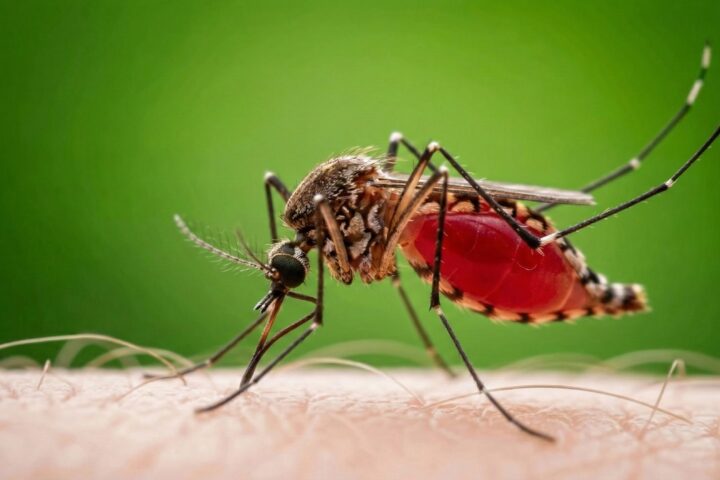
Asian Tiger Mosquito: Federal Government Implements Action Plan – But Insecticides Remain Taboo
Invasive species such as the Asian tiger mosquito are increasingly spreading across Switzerland. The federal government is sounding the alarm and wants to put a stop to the mosquito with a national action plan. However, the most effective measure is being left out: insecticides.

Record Heat 2026: Why Agriculture Needs Resilient Crop Varieties
Heat, drought, and hail took a heavy toll on Swiss farmers in 2026. In an interview with the NZZ, Adrian Aebi, head of Switzerland's largest crop insurer, warns: "If we carry on like this, agriculture will bleed dry." Looking to the future, there is an urgent need for resilient crop varieties that can withstand heat and dry conditions.
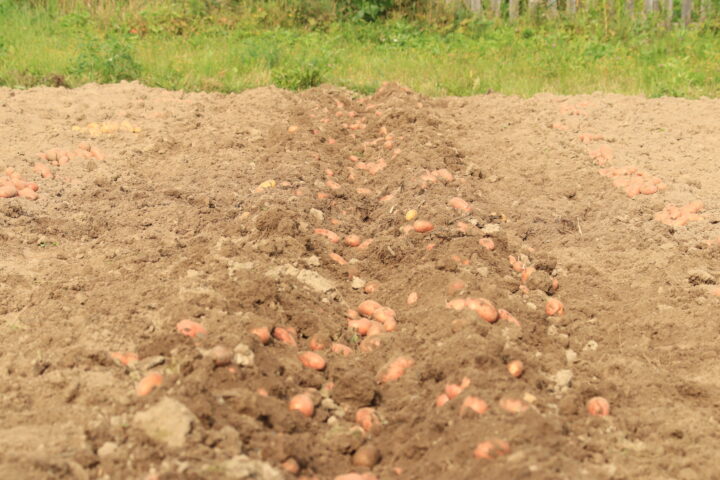
Record low potato harvest: Why is the Federal Council standing still?
The hot summer of 2026 caused the lowest potato harvest in Switzerland since records began a century ago. To secure domestic supply and build climate resilience, the agricultural sector is calling for swift access to new breeding technologies, which are already being authorized in the European Union. However, the Federal Council has delayed the corresponding draft legislation until 2027.