

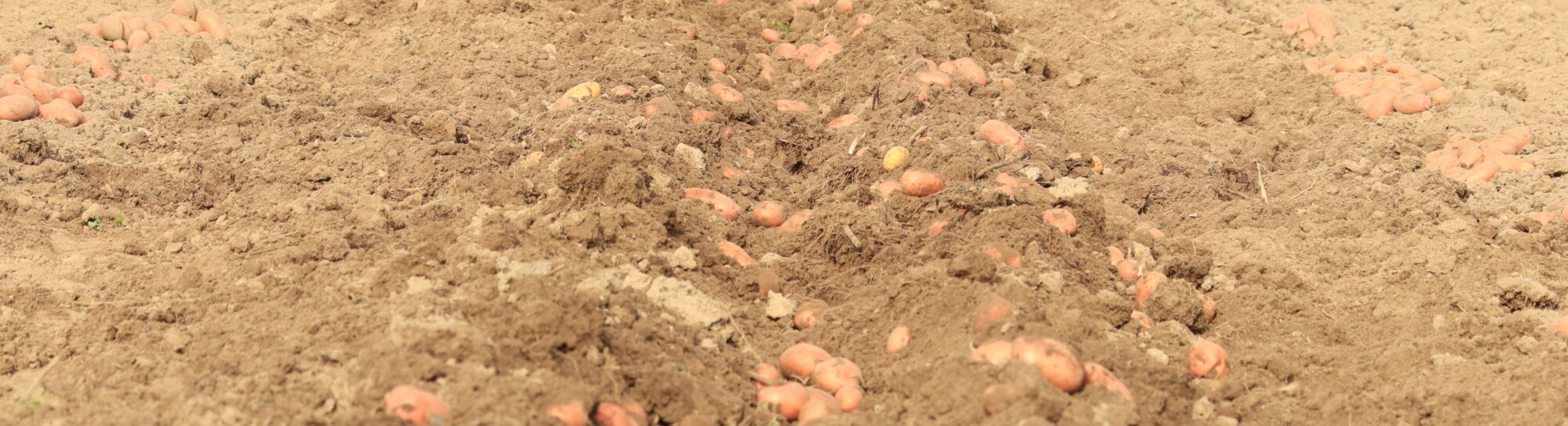
Record low potato harvest: Why is the Federal Council standing still?
The hot summer of 2026 caused the lowest potato harvest in Switzerland since records began a century ago. To secure domestic supply and build climate resilience, the agricultural sector is calling for swift access to new breeding technologies, which are already being authorized in the European Union. However, the Federal Council has delayed the corresponding draft legislation until 2027.
Published: 15.09.2026, 11:03
Darum geht es
- Historisches Erntetief: Der Hitzesommer 2026 führte bei Schweizer Kartoffeln zu einem Ertragsrückgang von rund 20 Prozent pro Hektare – die tiefste Ernte seit Beginn der Aufzeichnungen vor hundert Jahren.
- Einbruch beim Selbstversorgungsgrad: Um die Ertragslücken zu schliessen, müssen laut Branchenverband Swisspatat rund 130'000 Tonnen Kartoffeln importiert werden. Der Selbstversorgungsgrad fiel von üblicherweise 85 Prozent auf knapp über 70 Prozent.
- Forderung nach resilienten Sorten: Aufgrund von Wassermangel und Hitze benötigt die Landwirtschaft rasch widerstandsfähigere Kartoffelsorten. Die Branche strebt bis 2040 einen Anteil von 80 Prozent resilienter Sorten an.
- Zielkonflikt bei Züchtungstechnologien: Da traditionelle Züchtungen bis zu 15 Jahre dauern, fordert die Branche den Zugang zu neuen Züchtungsmethoden. Während die EU den Anbau genomeditierter Pflanzen schrittweise legalisiert, hat der Bundesrat eine Gesetzesvorlage auf 2027 verschoben.
Holding an information event on the impact of the 2026 summer on potato farming at Zurich's Wasserkirche in early September carries historical irony. Lack of water severely impacted potato crops during this hot summer, while over a century ago, during World War I, the church served as a temporary potato store.
Yield losses and imports: What are the consequences of the 2026 harvest?
The 2026 harvest figures present significant operational challenges. Farmers recorded yields per hectare approximately 20% below initial spring forecasts, reaching a low not seen since 1965. According to reports in the NZZ, total harvested volume fell to its lowest point since record-keeping began a century ago. Due to severe drought conditions, industry association Swisspatat reported that approximately 130,000 tons of potatoes will need to be imported. Consequently, Switzerland's self-sufficiency rate for potatoes dropped from its standard 85% to slightly above 70%. Christian Bucher, Managing Director of Swisspatat, stated to SRF that overall supply security remains established. The reduced harvest is primarily visible in crop sizing: due to smaller tuber dimensions, processed products like french fries and potato chips may be shorter this season. Overall crop quality remains high.
Crop resilience: Why is breeding drought-resistant potatoes becoming urgent?
Future agricultural production requires crop varieties adapted to changing environmental conditions. Data from summer 2026 indicates that irrigated potato fields yielded approximately double the output of non-irrigated fields. Access to water is increasingly critical, yet water availability is constrained.
Developing resilient potato varieties capable of enduring heat and drought is a priority for the sector. In 2024, the industry established a target agreement with the federal government to raise the share of resilient varieties in commercial cultivation from 20% to 80% by 2040.
Legislative timeline: Why has the Federal Council delayed new breeding methods?
Conventional breeding methods require up to 15 years to produce market-ready robust varieties. Consequently, Swisspatat advocates for authorizing crops developed via modern genomic techniques within Switzerland. In 2024, the Swiss Parliament instructed the Federal Council to prepare a legislative framework for new genomic techniques. However, the government postponed the publication of this bill to 2027 (Parliamentary Business 20263751). Meanwhile, the European Union is progressing with steps to legalize the cultivation and sale of gene-edited plants. Swisspatat Director Christian Bucher emphasized in the NZZ that alignment with EU regulatory frameworks is necessary to maintain long-term supply stability for Swiss potatoes.
New breeding technologies: What are the implications for Swiss imports?
Switzerland will import approximately a quarter of its potato requirement this year, primarily from EU member states. As neighboring countries begin harvesting gene-edited varieties that are visually and chemically indistinguishable from conventionally bred crops, restricting these imports will present technical challenges for importers, especially given the absence of mandatory labeling requirements in the EU.
Achieving higher self-sufficiency or maintaining import capability requires addressing the regulatory status of modern breeding technologies in Switzerland. Research institutes such as Agroscope continue trial evaluations under strict regulatory containment protocols pending legislative decisions.
About swiss-food.ch
swiss-food.ch is an information platform run by the research-based food and agricultural technology sector, bundling fact-based content on nutrition, agriculture, crop protection, and biotechnology. The articles are editorially prepared, and the sources used are linked within the text. The platform is supported by Syngenta and Bayer.
Keywords: Potato harvest · Drought 2026 · Self-sufficiency rate · Swisspatat · Resilient varieties · New breeding technologies · Gene editing · Federal Council
How severe was the Swiss potato harvest in 2026?
Yields were around 20 percent below spring estimates. According to NZZ, in absolute numbers, there have never been fewer potatoes harvested in Switzerland since records began a hundred years ago.
Why is the self-sufficiency rate for potatoes falling?
Due to the extreme heatwave in the summer of 2026 and the drought, around 130,000 tonnes of potatoes have to be imported. As a result, the self-sufficiency rate drops from the usual 85 percent to just over 70 percent.
What breeding goals is Swiss agriculture pursuing for potatoes?
In a target agreement with the federal government, the sector aims to increase the share of climate-resilient potato varieties from 20 percent today to 80 percent by the year 2040.
Why is the industry association Swisspatat demanding new breeding methods?
Traditional breeding methods take up to 15 years. In order to quickly cultivate varieties that withstand heat and drought, the industry demands legal access to new breeding techniques.
What is the Federal Council's timetable for new breeding technologies?
Although Parliament instructed the Federal Council to draft a bill by 2024, the Federal Council now plans to submit a draft only in 2027. This leads to delays compared to the EU, which is gradually permitting gene-edited plants. Switzerland's lag is even greater compared to Great Britain, which allowed the cultivation of gene-edited crops as early as 2023.
What are the consequences of EU regulation for Swiss imports?
Since gene-edited varieties will be allowed to be cultivated in the EU in the future without mandatory labelling, imports from the EU will no longer be distinguishable from conventional potatoes.
Kindly note:
We, a non-native editorial team value clear and faultless communication. At times we have to prioritize speed over perfection, utilizing tools, that are still learning.
We are deepL sorry for any observed stylistic or spelling errors.
Related articles
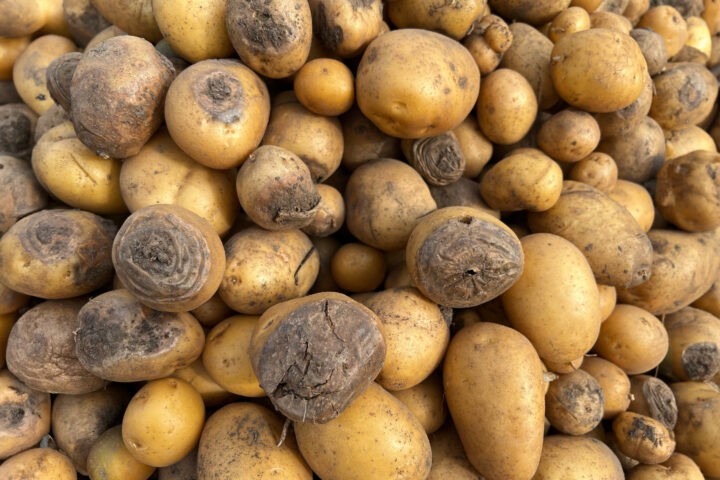
SRF Einstein on the potato crisis – more Steiner school than Einstein
The Swiss television channel SRF recently aired a one-sided report on the potato crisis in ‘Einstein’. The programme only mentioned climate change as a cause of the precarious situation and presented conventionally bred robust varieties as the only solution. Modern breeding technologies and crop protection were ignored.

«The protection of cultures is no longer guaranteed»
Swiss agriculture is in a tight spot when it comes to crop protection. At the Swiss-Food Talk on July 1, 2025, three producer representatives described how bans, the lack of alternatives, and lengthy approval procedures are putting pressure on their crops.

Genetic scissors for the future – soon in Switzerland too?
Genome editing is seen as a promising way to make agriculture more sustainable and climate-resilient. But Switzerland is hesitant to approve it. A popular initiative even wants to ban it. But what can CRISPR really do?
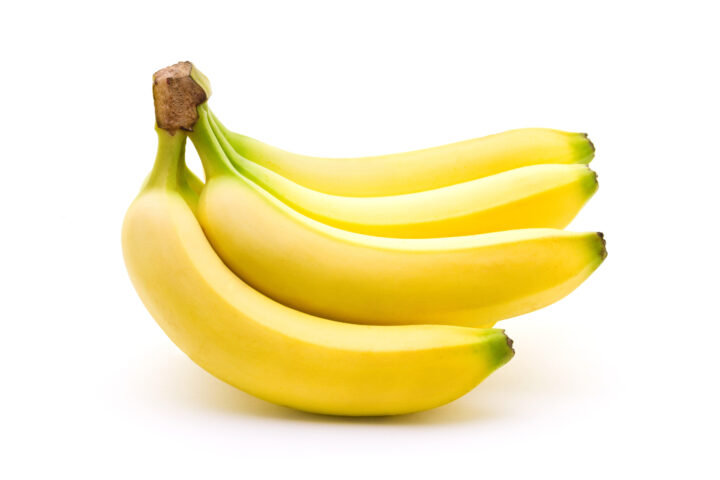
Anti-Food Waste Banana
British biotech company Tropic has developed a banana using CRISPR/Cas gene editing that no longer turns brown. In the US, it is already on the market, while in England, it has passed the decisive regulatory hurdle. The same technology could also help save the world's most popular banana from extinction.
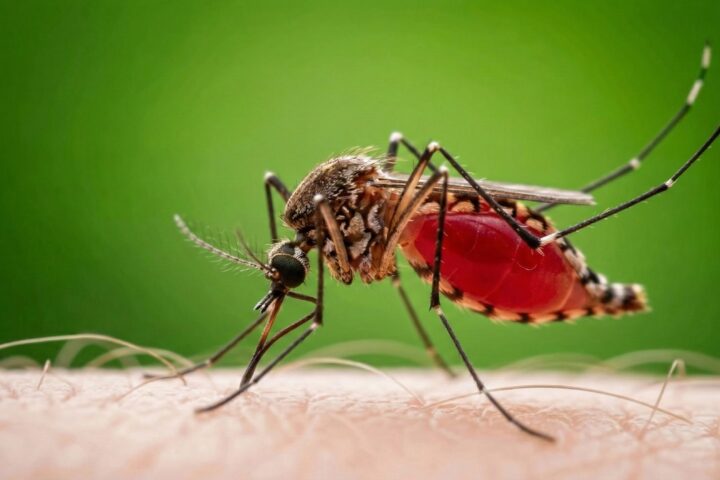
Asian Tiger Mosquito: Federal Government Implements Action Plan – But Insecticides Remain Taboo
Invasive species such as the Asian tiger mosquito are increasingly spreading across Switzerland. The federal government is sounding the alarm and wants to put a stop to the mosquito with a national action plan. However, the most effective measure is being left out: insecticides.

Record Heat 2026: Why Agriculture Needs Resilient Crop Varieties
Heat, drought, and hail took a heavy toll on Swiss farmers in 2026. In an interview with the NZZ, Adrian Aebi, head of Switzerland's largest crop insurer, warns: "If we carry on like this, agriculture will bleed dry." Looking to the future, there is an urgent need for resilient crop varieties that can withstand heat and dry conditions.

Legionella, Japanese beetles, and market turbulences: What are the consequences of the dry heatwave summer 2026?
How do persistent heat and drought in the summer of 2026 impact health, agriculture, and the economy? The summer of 2026 exemplifies how heat and dry conditions are becoming a threat across various areas: from cooling systems and livestock housing to crops and consumer wallets.