


Record Heat 2026: Why Agriculture Needs Resilient Crop Varieties
Heat, drought, and hail took a heavy toll on Swiss farmers in 2026. In an interview with the NZZ, Adrian Aebi, head of Switzerland's largest crop insurer, warns: "If we carry on like this, agriculture will bleed dry." Looking to the future, there is an urgent need for resilient crop varieties that can withstand heat and dry conditions.
Published: 30.09.2026, 11:07
What this is about
- Heat, drought, and hail caused severe yield losses for Swiss farmers in 2026.
- Adrian Aebi, CEO of Switzerland's largest crop insurer (Swiss Hail), warns in an NZZ interview about the consequences of drought and calls for heat-resistant and drought-tolerant varieties for the future.
- For spring crops such as sugar beets, potatoes, and corn, losses reached up to 30 percent in some cases.
- The European Commission's Joint Research Centre (JRC) has significantly revised its yield forecasts downwards for all summer crops across the EU – in some cases up to 14 percent below the five-year average.
- Because Switzerland increases import quotas during crop failures, retail prices remain low despite higher production costs, while grain shortages will only impact checkout prices in the following year.
"Then in June, the first heatwave hit, and it simply never stopped," says Adrian Aebi, CEO of the Swiss Hail Insurance Company (SH Group), in an interview with the NZZ. The heat was a massive burden on farmers – resulting in severe yield losses.
Spring-sown crops were hit particularly hard, including sugar beets, potatoes, and corn. "For these crops, yield losses reached up to 30 percent in some cases. That is extremely high," Aebi notes. At the end of August, a severe hail storm caused further widespread damage.
Pressure across Europe: EU revises yield forecasts downward
Switzerland is not alone in facing these challenges. Recent figures from the EU show that the situation worsened significantly this summer. The European Commission's Joint Research Centre (JRC) has sharply lowered its yield forecasts for all summer crops across the EU. Depending on the crop, expected yields are now up to 14 percent below the five-year average.
Farmers are facing higher costs alongside lower yields. Aebi is therefore calling for higher prices for agricultural produce. However, prices do not rise on their own. When a product becomes scarce, Switzerland increases import volumes – keeping retail prices low. As a result, consumers hardly notice the impact of the drought at the store.
On top of this, there is a time lag. "What determines prices this year are last year's events," explains economist Tomas Dvorak from Oxford Economics to SRF. This year's European grain harvest, which is around ten percent smaller, is therefore only likely to be felt at the checkout in 2027.
For Aebi, this represents a fundamental issue: if producers continue to bear rising costs and risks without seeing any reflection in market prices, the system will fail in the long run. "If we carry on like this, agriculture will bleed dry." Relying solely on state aid is the wrong approach, according to Aebi. Instead, retailers and ultimately consumers must step up. All stakeholders need to gather around the table to find joint solutions.
Drought-tolerant varieties essential
Israel demonstrates that agriculture is possible even with minimal rainfall – albeit with significant effort. Adaptations are needed in Switzerland as well: more drought-tolerant crop varieties, healthier soils, and more consistent soil cover. In addition, irrigation infrastructure needs to be expanded and made more efficient, using retention basins and water-saving technologies.
This makes plants capable of enduring heat and water scarcity all the more crucial. Stressed plants are also more vulnerable to diseases and pests – a growing concern as fewer crop protection tools remain available.
What is needed are resilient crop varieties that better withstand heat, drought, diseases, and invasive pests. To ensure plant breeding keeps pace with climate change, innovative approaches such as precision breeding via genome editing offer promising solutions. They are more targeted and faster than conventional breeding methods.
Fair pricing and smart water management are vital. But without resilient, heat- and drought-resistant crop varieties, agriculture will sooner or later hit a wall. Today’s challenges cannot be solved with yesterday’s methods. Sustainable agriculture depends on innovative breeding techniques – and these should not be unnecessarily delayed.
Innovation against heat stress
Agricultural research companies are actively developing solutions to tackle heat and drought. Key examples include:
- Biostimulant Megafol: Designed to help crops cushion stress caused by sun, heat, and drought.
- Artesian corn variety: Uses water more efficiently to deliver stable yields during dry spells.
- Active ingredient Anisiflupurin: Protects rice pollen development under heat stress, according to field trials.
- Genome-edited varieties: Aimed at achieving long-term, inherent resistance to heat and drought.
However, Switzerland is hesitant when it comes to approving new tools: the TEgenesis® method developed by startup Epibreed was classified as genetic engineering – even though it only temporarily activates a natural adaptation mechanism within the plant.
Keywords: Drought · Agriculture · Yield losses · Crop insurance · Summer crops · Import volumes · Climate change
Sources
What does Adrian Aebi demand for agriculture in the NZZ interview?
Adrian Aebi, CEO of Swiss Hail, demands higher prices for agricultural products in view of enormous yield losses, as well as bringing all stakeholders (retailers, consumers) to the table to jointly find solutions for the heat-resistant varieties needed in the future.
Why is agriculture suffering from yield losses in 2026?
Heat, drought, and severe hailstorms in late August severely impacted Swiss farmers as well as farmers across Europe.
Which crops are particularly affected?
Spring-sown crops such as sugar beets, potatoes, and corn are hit hardest, with yield losses reaching up to 30 percent in some cases.
Why do consumer prices barely rise despite the drought?
As soon as Swiss products become scarce, import volumes are increased to keep prices low, meaning consumers hardly notice the production losses at the store.
When do harvest losses become noticeable at checkouts?
Due to market delays, harvest losses only affect prices in the following year; a smaller grain harvest in 2026 is expected to show at the checkout only in 2027.
What long-term adjustments are necessary?
Alongside joint market solutions, agriculture will above all need drought-tolerant and more robust varieties in the future to withstand extreme weather conditions.
Kindly note:
We, a non-native editorial team value clear and faultless communication. At times we have to prioritize speed over perfection, utilizing tools, that are still learning.
We are deepL sorry for any observed stylistic or spelling errors.
Related articles

Cool thanks to Caribbean genes: the heat-defying calf!
Cows are also suffering from global warming. Hot temperatures have a negative effect on their metabolism. Now, the first solutions are emerging: for example, Strickhof in Lindau is home to one of the first Slick gene cows in the world. These are more heat tolerant than conventional cows and can therefore withstand global warming.
Legionella, Japanese beetles, and market turbulences: What are the consequences of the dry heatwave summer 2026?
How do persistent heat and drought in the summer of 2026 impact health, agriculture, and the economy? The summer of 2026 exemplifies how heat and dry conditions are becoming a threat across various areas: from cooling systems and livestock housing to crops and consumer wallets.
Global facts on world food and agriculture
Only thanks to technological progress and modern crop protection will we be able in the future to conserve our resources while feeding a growing population in a healthy and affordable way.
Anti-Food Waste Banana
British biotech company Tropic has developed a banana using CRISPR/Cas gene editing that no longer turns brown. In the US, it is already on the market, while in England, it has passed the decisive regulatory hurdle. The same technology could also help save the world's most popular banana from extinction.
Asian Tiger Mosquito: Federal Government Implements Action Plan – But Insecticides Remain Taboo
Invasive species such as the Asian tiger mosquito are increasingly spreading across Switzerland. The federal government is sounding the alarm and wants to put a stop to the mosquito with a national action plan. However, the most effective measure is being left out: insecticides.
Record low potato harvest: Why is the Federal Council standing still?
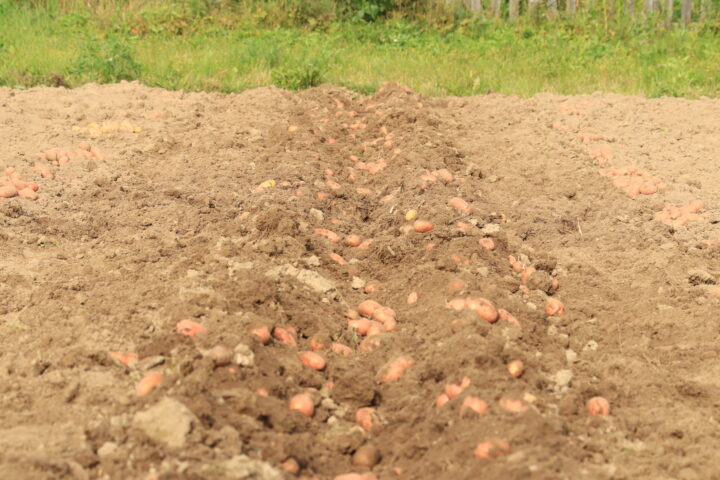
The hot summer of 2026 caused the lowest potato harvest in Switzerland since records began a century ago. To secure domestic supply and build climate resilience, the agricultural sector is calling for swift access to new breeding technologies, which are already being authorized in the European Union. However, the Federal Council has delayed the corresponding draft legislation until 2027.
Legionella, Japanese beetles, and market turbulences: What are the consequences of the dry heatwave summer 2026?
How do persistent heat and drought in the summer of 2026 impact health, agriculture, and the economy? The summer of 2026 exemplifies how heat and dry conditions are becoming a threat across various areas: from cooling systems and livestock housing to crops and consumer wallets.