

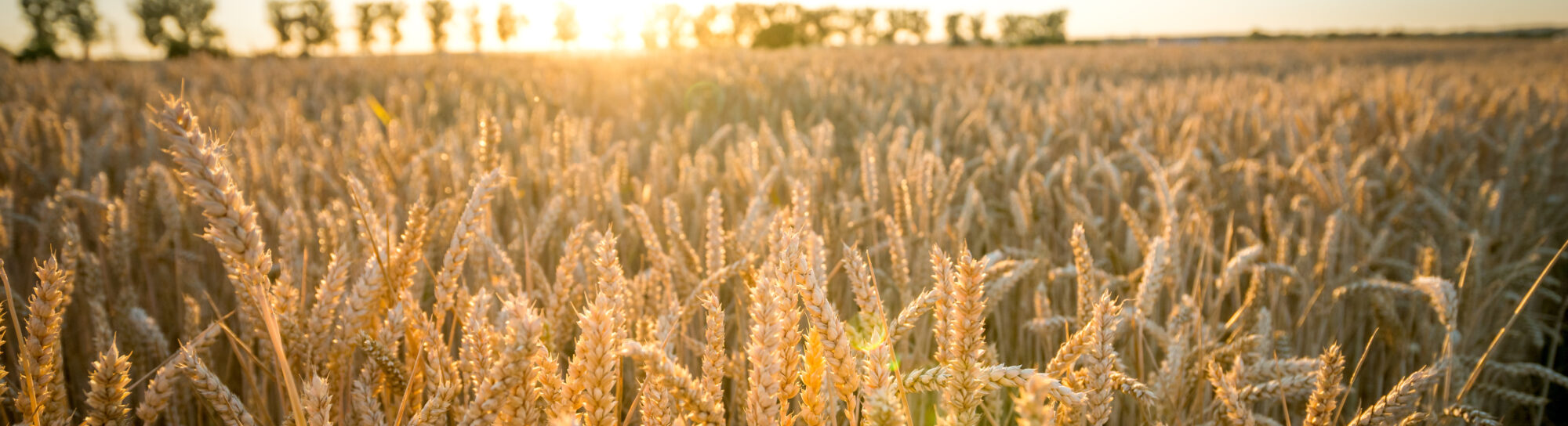
Public funds for avoidable crop failures: neither sustainable nor resource-efficient
The reduced use of plant protection products is causing much smaller wheat and rapeseed harvests. A study carried out by Swiss Agricultural Research reveals that such crop failures can only be offset by state subsidies. This is neither sustainable nor resource-efficient.
Wednesday, November 8, 2023
Within the PestiRed project, Swiss cropping farms are attempting to cut down on using plant protection products (PPP). To this end, they are focusing on the consistent application of the principles of integrated pest management (IPM). It would also be interesting to investigate whether all farming methods – i.e. conventional agriculture and organic farming in addition to IPM – could get by using smaller volumes of (or even no) plant protection products and whether this would be sustainable and resource-efficient.
Based on the data collected in the first two crop years of 2020 and 2021, researchers from Agroscope have carried out their first project evaluation, investigating whether the cultivation of wheat and rapeseed can be cost-efficient despite not using PPP, and have published the results on the Swiss Agricultural Research platform.
Their findings: In the years under investigation of 2020 and 2021, farms that grew rapeseed without using synthetic chemical plant protection products recorded huge losses. More specifically, the study authors reported that the economic returns generated by parcels of land on which pesticide use had been reduced were on average "34% lower than those of the control parcels." For producers, this would result in losses in income that could "not be offset by either cost reductions nor by a greater market performance or direct payments."
The interim findings of the study did, however, show that wheat cultivation enjoyed better results. Here, the smaller harvests and higher productions costs would be offset by "higher premiums on the market" and "direct payments from the government and public authorities," which would mean that "cost-efficiency could be maintained or even improved slightly."
"Cost-efficiency?" I hear you all wondering. Although direct payments will help to preserve farmers’ income, it is extremely strange to bring up the argument of cost-efficiency in the context of lower yields per hectare and the scaling up of state subsidies. Cost-efficiency is one of the three pillars of holistic sustainability. However, farming can only be sustainable if it is also holistically resource-efficient: It would need to use the land made available to it in a resource-efficient manner and also utilize resources such as water, fertilizer, plant protection products, energy, labor and finances as efficiently as possible. Consequently, Art. 104a the Federal Constitution of the Swiss Confederation calls for food production that is adapted to local conditions and which uses natural resources efficiently.
In plain language, this means: If farmers do not generate satisfactory income and (avoidable) crop failures have to be compensated for by government funds, this is neither sustainable nor resource-efficient. Holistically resource-efficient and sustainable agriculture can therefore also be productive and thus also generate satisfactory income.
Government-sponsored food waste?
Swiss-produced rapeseed oil is in high demand, serving as a vital local alternative to imported palm oil for the country’s food manufacturers. Yet, the future of rapeseed farming in Switzerland is increasingly uncertain due to a scarcity of approved plant protection products, forcing a reliance on imports. This is not in the consumers’ interest.
Plant protection products are a huge help for farmers in the production of food. They help them to achieve good harvests, thus increasing agricultural income. Farmers see a future in the use of plant protection products and this profession remains an attractive proposition for young, motivated farmers. This is because they can make a genuine contribution to the successful production of high-quality Swiss food. Without plant protection products, food quality suffers and there is a massive decline in food security and farmers’ income. If genuinely avoidable crop failures are compensated for simply by direct payments, this is not a resource-efficient use of federal funds – and ultimately also impacts taxpayers. No-one can be interested in government-sponsored food waste. The fight against food waste and for resource efficiency and sustainability begins in the field. [article only available in German]
Related articles
Is Organic More Sustainable?
Organic food is considered a prime example of sustainability – but in reality, it often ends up in the waste bin faster than conventional products. The omission of artificial preservatives and modern plant protection drastically shortens shelf life and leads to more food waste.
"Natural is healthy, chemicals are toxic."
Everything that occurs in nature is healthy and synthetically produced substances, i.e. "chemical" substances, are toxic. This myth is fundamentally wrong: There are many highly toxic substances in nature, and at the same time there are many synthetic substances that are absolutely harmless.

Future Foods: Sustainable, but also economically viable?
In the face of climate change, increasing pest pressure and a growing global population, agriculture is confronted with enormous challenges. To ensure long-term food security, new crops are gaining attention. A recent study highlights the potential of 30 “Future Foods” for Switzerland. However, success requires more than good intentions.
Myths about food production
Having the “right” diet is playing an increasingly more important role in the lives of a great many people. A healthy lifestyle has become a status symbol. Healthy foods and sustainable production methods have been the subject of many extremely emotional debates. A wide range of outdated ideas and myths have taken root in the minds of a large number of consumers. Below, we will take a look at some myths and their deconstruction.