

Podcast

Full Shelves – Of course! How Secure Is Our Supply Really?
Security of supply sounds like a shared goal. However, as soon as it comes to the path to get there, conflicts arise: between market and state, ecology and production, as well as self-sufficiency and international connectivity. The Agricultural Policy Podcast and swiss-food.ch explore the key dependencies and areas of tension surrounding supply security in a five-part series. The highlight will be a live podcast in front of an audience on November 5, 2026, at the Äusserer Stand (Hofcafé) in Bern.
Residues, thresholds, trust – looking calmly behind the headlines
In this conversation with toxicologist Lothar Aicher, the discussion focuses on how residues enter the body, how their potential harm is assessed, and what role modern analytical methods play.

Hazard is not the same as risk: how we understand – and should understand – threshold values
In this episode of the podcast, risk researcher Angela Bearth discusses residues and threshold values in food – a topic often debated emotionally. In public discussions, threshold values tend to dominate, while the complex challenges of agriculture are rarely considered. Studies show, however, that once these relationships are explained and solutions are addressed, people respond in a more differentiated way.

PFAS, trade-offs and responsibility – how politics and agriculture find solutions
In this episode of the joint series by Agrarpolitik – der Podcast and swiss-food.ch, National Councillor Christine Badertscher discusses how residues and threshold values are debated in Parliament.

Thresholds, approvals, responsibility – how plant protection products are really assessed
Threshold values are often at the centre of public debate – yet in reality they are only a small part of a much broader risk assessment system. Dr Michael Beer, Head of the Food and Nutrition Division at the Federal Food Safety Office, provides clarity.

The Poison and the Dose
The debate about threshold values for chemical residues in water and food is often shaped by misunderstandings and emotions. Few topics show as clearly how far perception and science can drift apart. But what do limit values really mean? In autumn 2025, the Agricultural Policy Podcast and swiss-food.ch will explore our relationship with limits and risk in a five-part series. The highlight was a live podcast recording on November 5 at Bogen F in Zurich.

Sustainable food from the bioreactor
Feed more people and waste less raw materials – we are achieving this goal thanks to "sustainability from the laboratory," Tilo Hühn is convinced. Together with a team of 80 at the Zurich University of Applied Sciences (ZHAW), the food architect is researching sustainable nutrition solutions.
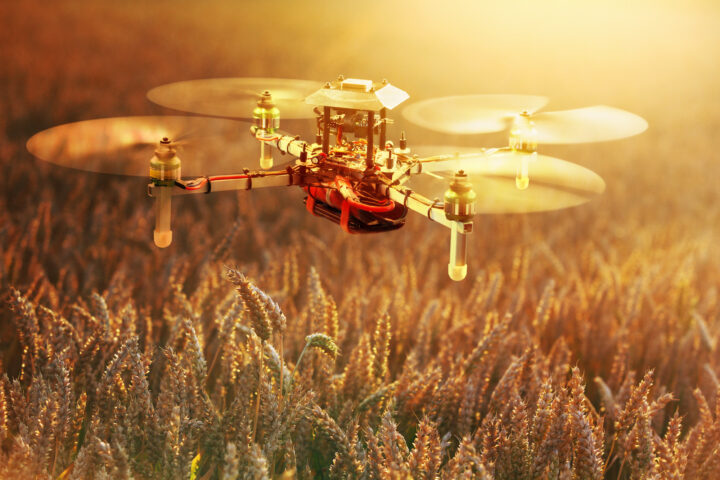
The Future of Agriculture and Climate Change
All around the world, we see and feel the effects of climate change on our lives. While it impacts everyone, agriculture is one of the sectors that is at the forefront of climate change – contributing to greenhouse gas emissions and at the same time coping with growing our food under increasingly challenging conditions. So, how can we address climate change and take action that makes an impact?
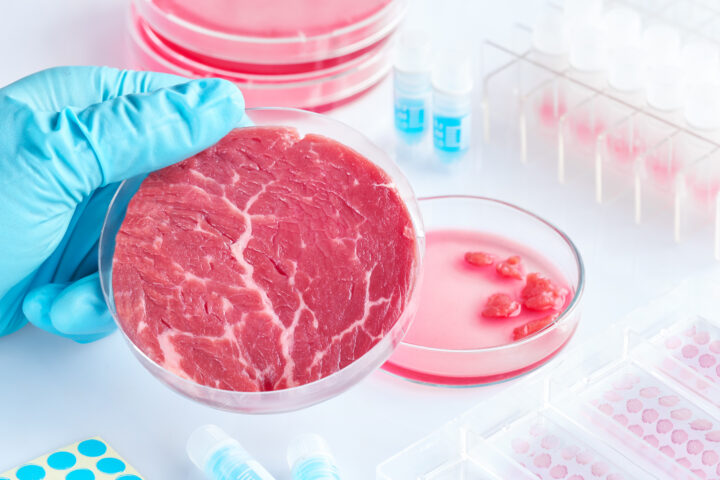
From stem cell to steak
Meat production consumes a lot of resources. And for a wide variety of reasons, people are eating less meat or even giving it up entirely. A growing number of companies are therefore looking into alternative methods of producing meat – for example, in a lab.
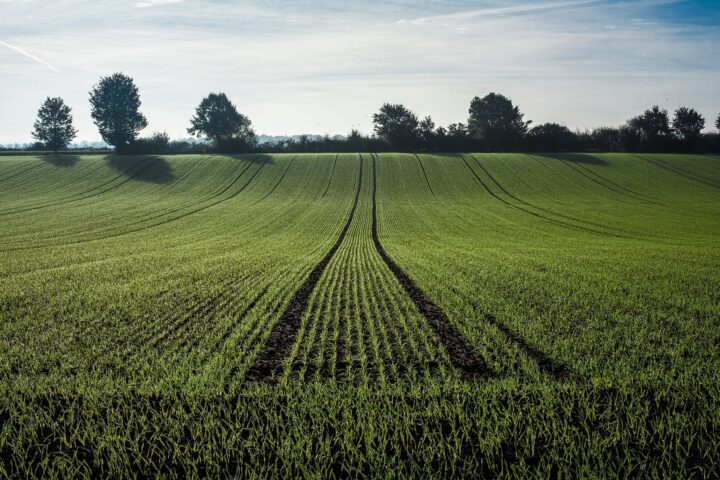
CO2 reduction with alternative artificial fertiliser
The two agrochemical producers Bayer and Syngenta are investing in an American start-up whose technology can massively reduce the use of nitrogen fertiliser.
Content in German

«People don't know what chemistry is»
People often discuss pesticides and biocides. «Pesticides are chemistry and chemistry is poison», is often said. According to Dominique Werner of scienceindustries, the negative attitude often has to do with ignorance.
Content in German
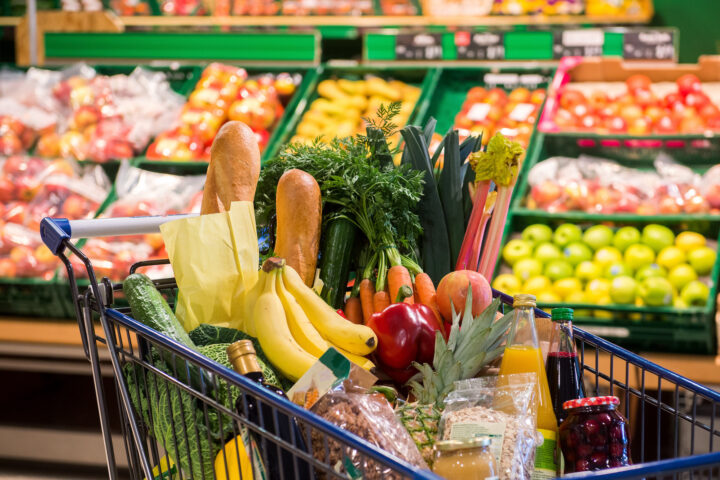
«Food is safer than ever»
The eating habits of the population have changed greatly in recent years. There is a trend towards healthy and sustainable nutrition. But at the same time, many consumers are also unsettled.
Content in German
«Synthetic equals toxic? Wrong!»
When shopping for food on a daily basis, we often rely on our gut feeling. This can be very useful and save us a lot of thinking. But when it comes to assessing risks, our gut feeling can also be deceptive. Angela Bearth, a behavioural psychologist at ETH Zurich, explains why this is the case in the swiss-food podcast.
«You cannot vote on science»
Resistance to new technologies is currently booming. In the case of green genetic engineering, politicians are also finding it difficult to deal with new technologies in a forward-looking way. But where does this fear of new things come from? Ludger Wess, science journalist and molecular biologist, talks about this in the Swiss-Food Podcast.
Content in German