


Moratoria also damage research careers
Researchers are losing access to Horizon Europe. Restoring it is a top priority. But Switzerland also has it in its own hands to enable attractive new fields of research instead of blocking them.
Published: 15.09.2021, 11:53
Content in German
Numerous researchers in Switzerland will no longer be considered for EU funding in future. As reported by the Tages-Anzeiger newspaper, this will have a massive impact on careers and projects in some cases. One example is Domenico Giardini from ETH Zurich. The professor of seismology is regarded as Europe's «seismologist networker». His initiatives have significantly improved the measurement and warning systems for earthquakes. Giardini became known above all because he was responsible for a project in which NASA brought a seismograph to Mars in 2019, which is now used to record every earthquake there. Thanks to Giardini's work, ETH has had a significant influence on the direction of European earthquake research. In university rankings, ETH Zurich's Geophysics department takes first place - ahead of the top Anglo-Saxon universities.
Discontinuation threatens research centre
However, the cancellation of «Horizon Europe» could lead to the gradual decline of entire fields of research. According to Giardini, he could somehow find the money for his projects: «But we are now losing the capacity to steer where our field is heading. If you can steer, the best professors, the best doctoral students, the best students will come.» Not only professors are affected. Many doctoral and post-doctoral students are also no longer able to apply for prestigious scholarships, which are very important for research careers. ETH physicist Stefano Maffei, for example, can no longer apply for the Marie Curie Fellowship from Switzerland. According to Maffei, Switzerland must find its way back to «Horizon» as quickly as possible. If Europe does not work together in research, it risks being relegated to a mere holiday destination between China and the USA.
Utilising new opportunities
For the researchers, the situation resembles a «lost opportunity». Despite all the understandable anger, however, it must be recognised that Switzerland certainly has the potential to occupy important research fields in international research and attract top international researchers and top students. This is particularly the case in the field of green genetic engineering and biotechnology. The genetic engineering moratorium that has been in place for years is also a «lost opportunity». It is a massive impediment to applied research in particular and impairs research careers. And this at a time when biotechnology is attracting students: As the business programme Trend has reported, biotech enthusiasm among students is high. An important driver of this is the success in the provision of new coronavirus vaccines.
The distance to the EU could be an opportunity for Switzerland to take on a leading role in Europe in the field of green genetic engineering. However, this would require the restrictive genetic engineering legislation to be adapted and promising technologies such as genome editing to finally be authorised. If this happens before the EU revises its own strict rules, there will be opportunities for Switzerland to create new, attractive research environments. After all, it is not dependent on «Horizon» to play a leading role in genome editing.
Sources
Related articles

“Different Rules for Genome Editing Are Welcome”
The Swiss Federal Council and the National Council of Switzerland want to put new cultivation methods under the existing GMO moratorium. A majority of the SECC-S decided on Tuesday that the cultivation of genome-edited plants is to be permitted subject to requirements. We discussed this decision with Jan Lucht, an expert on biotechnology from scienceindustries.

Seven years of cutting-edge research – with the handbrake on
In its February 5 issue, the “BauernZeitung” newspaper looked at the only facility in Europe where field research involving genetically modified plants can be carried out.

Parliament decides on a change of course in green genetic engineering
According to the National Council, the Council of States has also spoken out in favor of a loosening of the Gene-Tech Moratorium. The Federal Assembly takes the arguments from the scientific community into account with the decision. The opportunities presented by new breeding technologies are greater than the risks. The Federal Council is now called upon to initiate the approval of new breeding methods.

Anti-Food Waste Banana
British biotech company Tropic has developed a banana using CRISPR/Cas gene editing that no longer turns brown. In the US, it is already on the market, while in England, it has passed the decisive regulatory hurdle. The same technology could also help save the world's most popular banana from extinction.
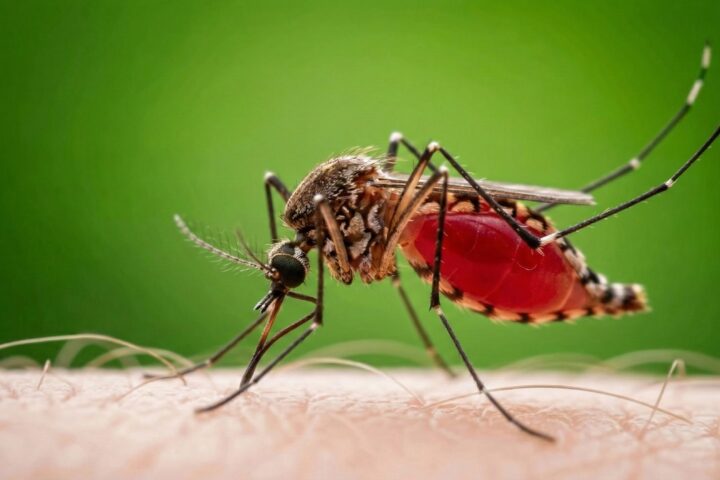
Asian Tiger Mosquito: Federal Government Implements Action Plan – But Insecticides Remain Taboo
Invasive species such as the Asian tiger mosquito are increasingly spreading across Switzerland. The federal government is sounding the alarm and wants to put a stop to the mosquito with a national action plan. However, the most effective measure is being left out: insecticides.

Record Heat 2026: Why Agriculture Needs Resilient Crop Varieties
Heat, drought, and hail took a heavy toll on Swiss farmers in 2026. In an interview with the NZZ, Adrian Aebi, head of Switzerland's largest crop insurer, warns: "If we carry on like this, agriculture will bleed dry." Looking to the future, there is an urgent need for resilient crop varieties that can withstand heat and dry conditions.
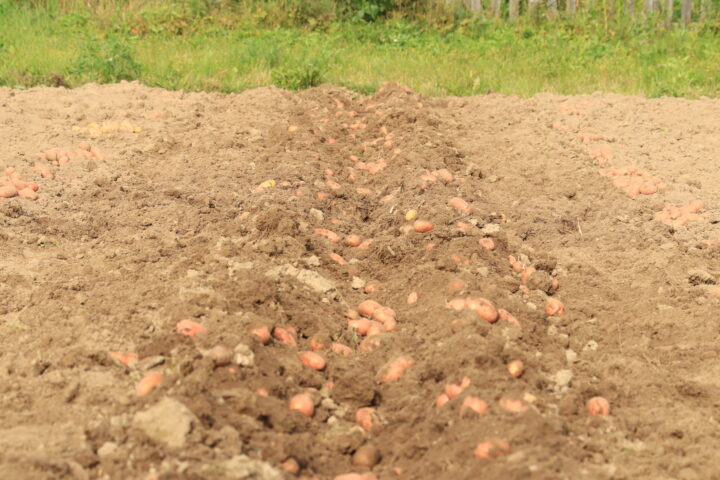
Record low potato harvest: Why is the Federal Council standing still?
The hot summer of 2026 caused the lowest potato harvest in Switzerland since records began a century ago. To secure domestic supply and build climate resilience, the agricultural sector is calling for swift access to new breeding technologies, which are already being authorized in the European Union. However, the Federal Council has delayed the corresponding draft legislation until 2027.