

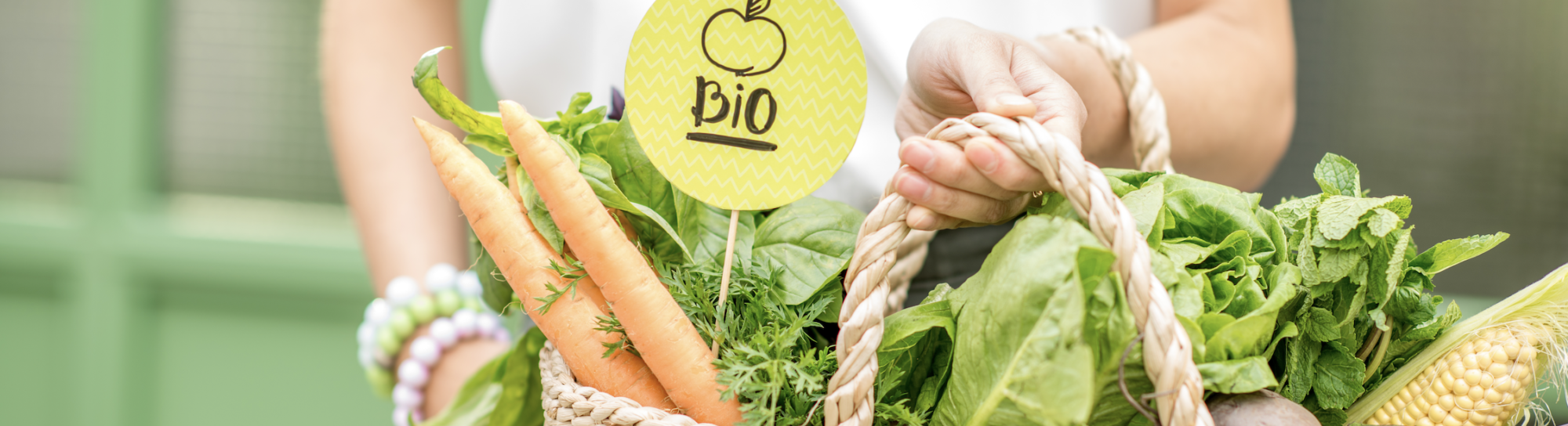
Old Stories Die Hard – when (organic) marketing blinds us to reality
An ORF documentary highlights what many organic enthusiasts don’t want to hear: mutagenesis is genetic engineering – and has been present in countless crop varieties for decades. Yet organic retailers like REWE and dm demand labelling requirements for new breeding techniques. Scientifically, this makes no sense.
Published: 02.12.2025, 18:23
Alphons Piatti has been an organic farmer for 40 years, served for many years as chairman of Bio Austria, and rejects all forms of genetic engineering. All the more astonishing, then, that he speaks openly in an ORF documentary about the fundamental self-deception of his own profession: 'If you tell them: you always thought everything in organic farming was produced without mutagenesis – well, they will probably be surprised.» He raises the question: «How do we deal with that?'
This question is addressed in the ORF documentary: 'Perhaps by serving consumers some facts: mutagenesis is genetic engineering!' This is true from a scientific as well as from a legal perspective: 'According to a ruling of the European Court of Justice (ECJ, July 2018), organisms produced through this traditional, undirected mutation breeding are ‘genetically modified organisms’ (GMOs). These, however, are exempt from all provisions of GMO legislation and are therefore not subject to any approval or labelling requirements.'
But marketing blinds the (organic) retail sector to this reality. At the end of November 2025, the companies REWE, dm, Alnatura, dennree and Rapunzel issued an open letter calling on Members of the European Parliament to extend the full labelling requirement for foods derived from plants bred using classical genetic engineering also to the new breeding methods. This was in view of the 'trilogue' meetings taking place in early December in Brussels between the Council of Ministers, the European Parliament and the European Commission.
According to the proposals of the European Commission and the Council, plants to which no foreign DNA has been added should not require labelling because, legally, they are regarded as conventional plants. The reason: these plants arise through targeted mutagenesis, for example using gene-editing tools, and cannot be distinguished from plants produced conventionally or through classical – i.e. random – mutagenesis.
On 3 December, the negotiators of the 27 EU member states and the European Parliament adopted this proposal. Food produced using the new breeding techniques will be allowed to be sold without special labelling. If the European Parliament and the EU states follow the recommendation of their negotiators, this would mark a historic breakthrough.
REWE, dm and other organic retailers nevertheless insist on mandatory labelling and thus continue to rely on ideology rather than facts. Unfortunately, this mindset also dominates in Switzerland. The Federal Council’s current proposal for how the new breeding techniques could be authorised reflects exactly this mentality. The draft is so restrictive that commercial application would be virtually impossible.
If we continue along this path in Switzerland, the paradox will remain: two plants could carry exactly the same mutation. One – without a label – would have been produced through classical, undirected mutagenesis and would contain numerous additional random mutations in its genome. The other would have been produced using new, precise mutagenesis techniques and would have to be labelled – even though it cannot be distinguished from the first.
One may therefore rightly ask: how should we deal with this? A sensible approach would certainly be to follow the science and abandon the labelling requirement for both. This is exactly what the EU has now initiated. Prefer not to? Then, from a scientific point of view, the only remaining option would be mandatory labelling for all plants produced through mutagenesis – that is, through genetic engineering. And that would be a lot of them, as Professor Kai Purnhagen of the University of Bayreuth notes: 'If mutagenesis had not been exempted from GMO legislation, an estimated 80–90% of cereal products on the European market would have to be labelled as GMOs.'
Many consumers – whether organic or not – would therefore discover with some surprise that they have eaten quite a lot of genetic engineering in recent years. This also applies to Switzerland, where opponents of genetic engineering have launched an initiative whose text states: 'Anyone placing genetically modified organisms on the market must […] label them as such.' Adoption of this initiative would therefore unleash a veritable avalanche of declarations. But such transparency is presumably not in the interest of the initiators.
Old habits die hard, as the saying goes. And the current debate on labelling requirements for the new breeding techniques shows: this also applies to the marketing narratives of certain organic advocates.
Sources
Eco Spezial: Genetic Engineering? Yes, of course. from 07.08.2025 – ORF ON
https://swiss-food.ch/artikel/gentechnik-schon-lange-auf-schweizer-tellern
https://swiss-food.ch/artikel/landwirtschaft-zwischen-wissenschaft-und-marketing
https://swiss-food.ch/glossar/genom-editierung
Keeping GMO labelling: Companies send urgent letter to Members of the European Parliament
Organic farming will never be truly sustainable until it embraces gene editing
Kindly note:
We, a non-native editorial team value clear and faultless communication. At times we have to prioritize speed over perfection, utilizing tools, that are still learning.
We are deepL sorry for any observed stylistic or spelling errors.
Related articles
«Biologicals» – biologically active substances from research
Modern crop protection products must be safe, targeted and short-lived – i.e. degraded shortly after reaching their target – without leaving behind biologically active degradation products.
Content in German

«Organic in this country, banned in the Philippines»
In the Philippines, Greenpeace has obtained a ban on Bt aubergines and golden rice. Incredibly, the same bacteria that the environmental organisation defames as dangerous there is being praised as organic in Switzerland.
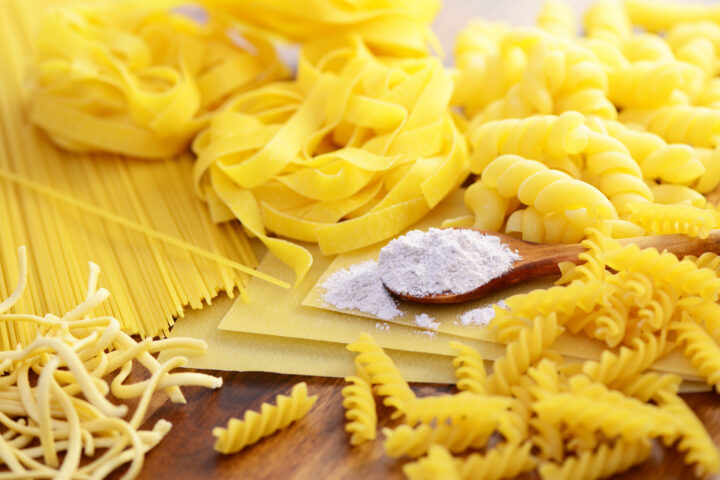
Even the pasta from the organic speciality shop cannot be produced without genetic engineering
The EU is currently debating the regulation of new plant breeding methods. The discussion is also underway in Germany. The knowledge magazine Terra X has taken this discussion as an opportunity to look at the topic in more detail.
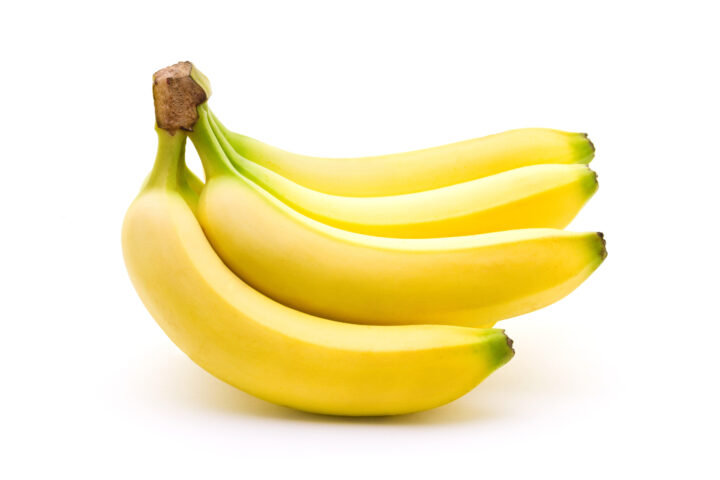
Anti-Food Waste Banana
British biotech company Tropic has developed a banana using CRISPR/Cas gene editing that no longer turns brown. In the US, it is already on the market, while in England, it has passed the decisive regulatory hurdle. The same technology could also help save the world's most popular banana from extinction.
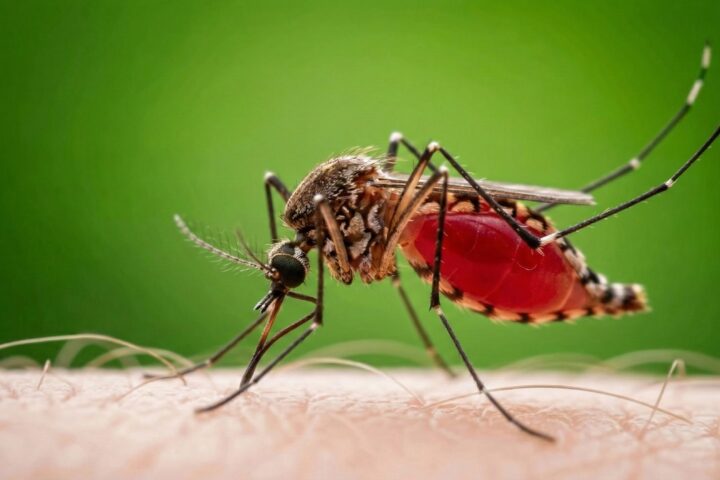
Asian Tiger Mosquito: Federal Government Implements Action Plan – But Insecticides Remain Taboo
Invasive species such as the Asian tiger mosquito are increasingly spreading across Switzerland. The federal government is sounding the alarm and wants to put a stop to the mosquito with a national action plan. However, the most effective measure is being left out: insecticides.

Record Heat 2026: Why Agriculture Needs Resilient Crop Varieties
Heat, drought, and hail took a heavy toll on Swiss farmers in 2026. In an interview with the NZZ, Adrian Aebi, head of Switzerland's largest crop insurer, warns: "If we carry on like this, agriculture will bleed dry." Looking to the future, there is an urgent need for resilient crop varieties that can withstand heat and dry conditions.
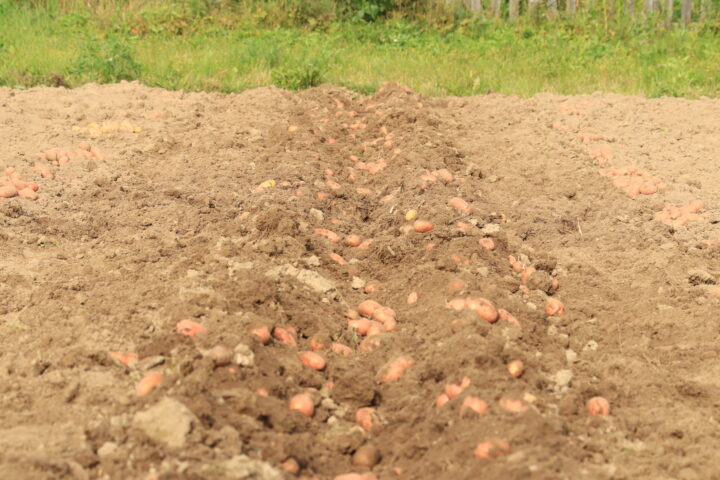
Record low potato harvest: Why is the Federal Council standing still?
The hot summer of 2026 caused the lowest potato harvest in Switzerland since records began a century ago. To secure domestic supply and build climate resilience, the agricultural sector is calling for swift access to new breeding technologies, which are already being authorized in the European Union. However, the Federal Council has delayed the corresponding draft legislation until 2027.