


How our daily lives end up in the water
When residues in our waters are discussed, agriculture is often portrayed as the main culprit. Yet a closer look shows that the sources are diverse and often much closer to everyday life than assumed.
Published: 20.02.2026, 13:59 | Updated: 20.02.2026, 15:15
A recent example comes from K-Tipp in the debate surrounding tick and flea treatments for dogs and cats. Many of these products contain the active ingredient fipronil. While this insecticide has been banned in agriculture for more than ten years, it continues to be used for pets – and is in some cases available over the counter in pharmacies and drugstores.
Measurements by the Swiss Wastewater and Water Protection Association show the consequences: fipronil is detected in Swiss waters more frequently than any other insecticide. The residues enter the water via wastewater, for example when active substances are washed off during bathing, showering, or washing. The measured concentrations can be problematic for aquatic organisms. This example shows that simply blaming agriculture for residues in water is far too simplistic.
Residues arise in everyday life
Veterinary medicines are not the only source. Many ordinary daily activities also leave traces. During the annual spring cleaning, residues from cleaning products enter wastewater – whether from washing windows, descaling bathrooms and kitchens, or cleaning terraces. Even detergents are under scrutiny: studies last year showed that glyphosate can form as a breakdown product of certain detergents. Careless pollution also plays a role, such as cigarette butts thrown into storm drains. Around 75% of cigarettes are not disposed of properly and release toxic substances into the environment, including ammonia, arsenic, lead, cadmium, ethylphenol, formaldehyde, and nickel. Through our product choices, dosage, and proper disposal, we all influence what ultimately ends up in the water.
Analytics and transparency
The fact that we can now detect such tiny amounts at trace or nano levels is thanks to modern analytical methods. This creates transparency and safety but also leads to differing interpretations of measurement results. The line between honest information and alarmism is thin. In addition, we tend to perceive risks as lower when we see a personal benefit.
It is crucial to distinguish between the mere presence of a measurable substance and an actual risk. Not every detectable substance automatically represents a concrete danger. A factual, science-based assessment is essential.
Research companies have therefore intensified efforts to address trade-offs between benefits and unwanted side effects. At the same time, technological advances – particularly in biological crop protection, plant breeding, digitalization, and robotics – help reduce negative environmental impacts in agriculture. Over the years, legal and regulatory measures in chemicals legislation have also been continuously tightened to identify undesirable substances early and minimize risks.
Zero risk is an illusion
Despite all progress, the use of technical tools – whether in agriculture or everyday life – always involves a residual risk. Absolute zero risk is utopian in a developed society. Instead, we must distinguish, based on science, between potential hazards and actual risk. Hazards can be managed and made acceptable through targeted measures. Weighing benefits and risks is a central part of societal debate and requires an objective discussion of facts and trade-offs. A society that seeks to eliminate every risk will hinder innovation and ultimately stand still.
Pesticides in Water – The Sources Are Diverse and Closer Than We Think
As part of the “National Surface Water Quality Monitoring Programme” (NAWA spez 2023), the Swiss Federal Institute of Aquatic Science and Technology (Eawag), together with partner institutions, systematically investigated how pesticides enter Swiss rivers and streams. The results, published in October 2025, show that only part of the contamination stems from diffuse inputs from crop production.
A significant share reaches water bodies via wastewater treatment plants. Insecticides such as fipronil and imidacloprid are regularly detected. They originate, among other sources, from biocides in flea and tick treatments for pets, from cleaning and disinfecting agents, and from wood preservatives.
Residues may adhere to animal hair, hands, or textiles and enter wastewater during washing. The study shows that protecting water bodies does not begin only in the field, but also in everyday life – in bathrooms, laundry rooms, and households.
Sources
Kindly note:
We, a non-native editorial team value clear and faultless communication. At times we have to prioritize speed over perfection, utilizing tools, that are still learning.
We are deepL sorry for any observed stylistic or spelling errors.
Related articles
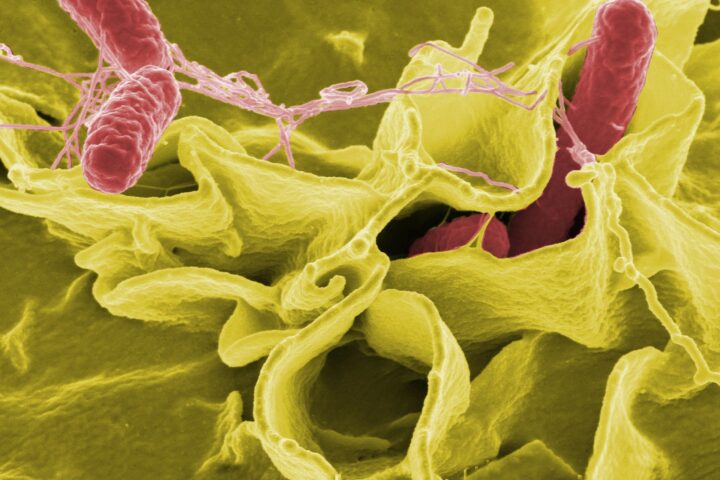
No food safety without pesticides
Measured residues of pesticides are often sensationalised in the media. The fact that these residues are well below the levels that could affect our health is usually not mentioned.

Safe Use of Highly Effective Pesticides
If Highly Hazardous Pesticides (HHP), as they are known, are handled and used correctly, they are safe. In many countries, indeed, they are the only solution for saving lives,

Pesticides in Green Smoothies
After countless recipes for Christmas cookies, festive roasts and cocktails, the advice on losing weight, detoxing and beautifying oneself now takes centre stage. Most of it is sheer nonsense.
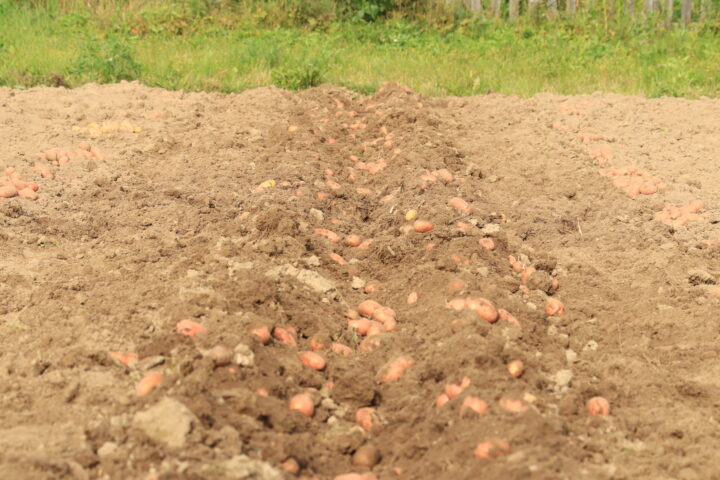
Record low potato harvest: Why is the Federal Council standing still?
The hot summer of 2026 caused the lowest potato harvest in Switzerland since records began a century ago. To secure domestic supply and build climate resilience, the agricultural sector is calling for swift access to new breeding technologies, which are already being authorized in the European Union. However, the Federal Council has delayed the corresponding draft legislation until 2027.

Legionella, Japanese beetles, and market turbulences: What are the consequences of the dry heatwave summer 2026?
How do persistent heat and drought in the summer of 2026 impact health, agriculture, and the economy? The summer of 2026 exemplifies how heat and dry conditions are becoming a threat across various areas: from cooling systems and livestock housing to crops and consumer wallets.
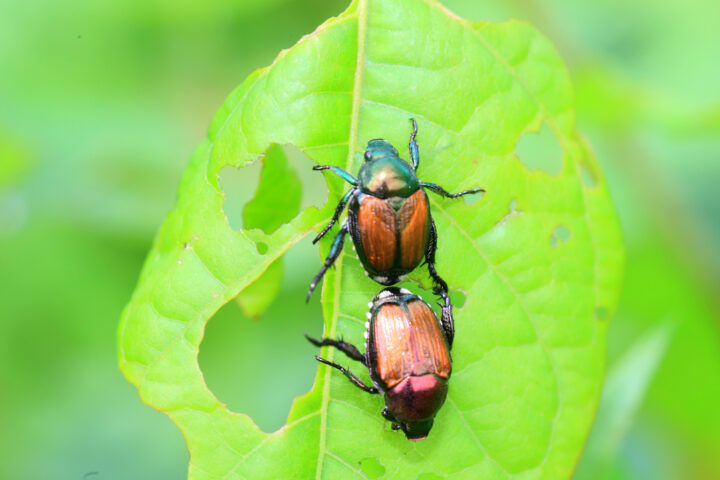
Unwanted Invaders: Why Pesticides Are Essential in the Fight Against Invasive Species
They are small, highly mobile and extremely persistent: invasive species are spreading increasingly across Switzerland. Whether it is the Japanese beetle, the Asian hornet or newly discovered ant species, these unwelcome guests threaten not only native ecosystems, but also agriculture and residential areas. There is an urgent need for pesticides – including biocides and plant protection products – to combat these pests effectively.

What can the CRISPR gene scissors do – and what not (yet)?
Since 2012, CRISPR/Cas has made it possible to alter plant DNA precisely, purposefully, and relatively cheaply. Applications ready for use today primarily include disease resistance, improved quality such as taste and nutritional value, and accelerated breeding. In contrast, complex traits like drought tolerance remain difficult because many genes are involved.