

Posts found for your search:
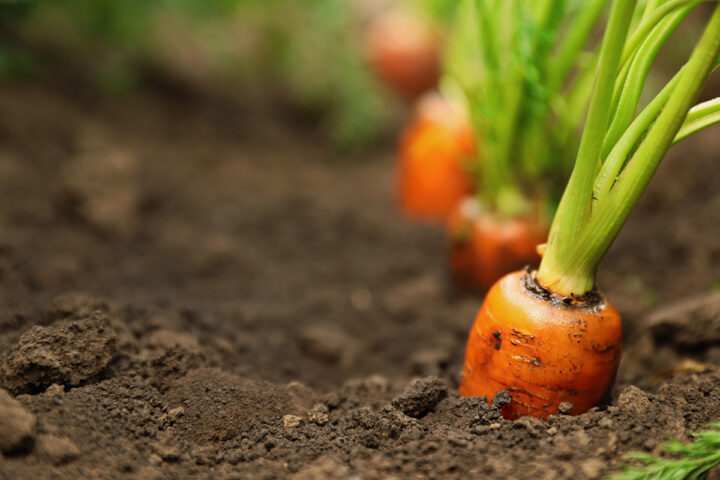
"Natural is healthy, chemicals are toxic."
Everything that occurs in nature is healthy and synthetically produced substances, i.e. "chemical" substances, are toxic. This myth is fundamentally wrong: There are many highly toxic substances in nature, and at the same time there are many synthetic substances that are absolutely harmless.
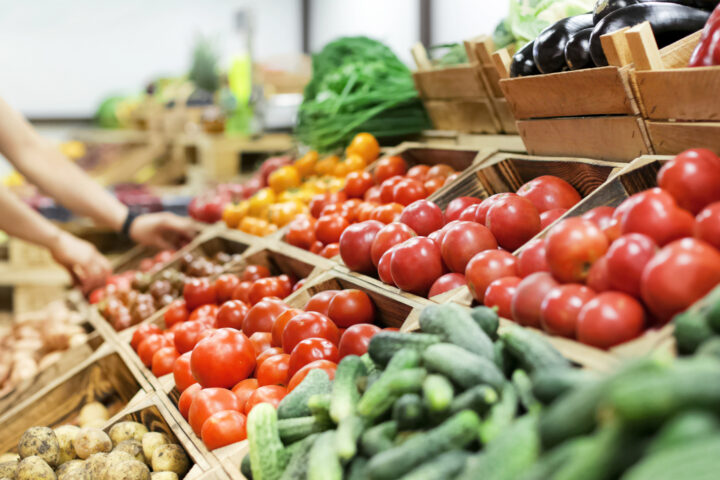
Key answers at a glance
Plant protection products and biocides have proven their worth. They not only enable regional food production, but also limit food loss and food waste. Here are ten questions and answers on pesticides and plant protection products.
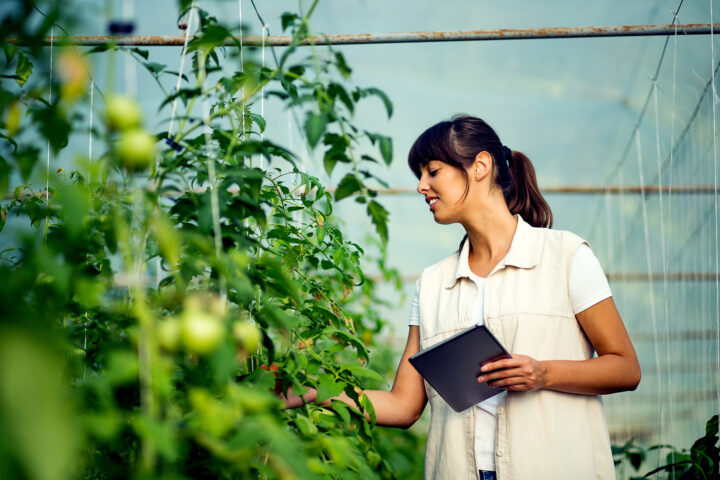
«Biologicals» – biologically active substances from research
Modern crop protection products must be safe, targeted and short-lived – i.e. degraded shortly after reaching their target – without leaving behind biologically active degradation products.
Content in German
Synthetic has many benefits
Synthetic pesticides are often automatically viewed as problematic compared with natural pesticides. But this is a misconception. It is not possible to make any general statements about toxicity based on the production method alone.
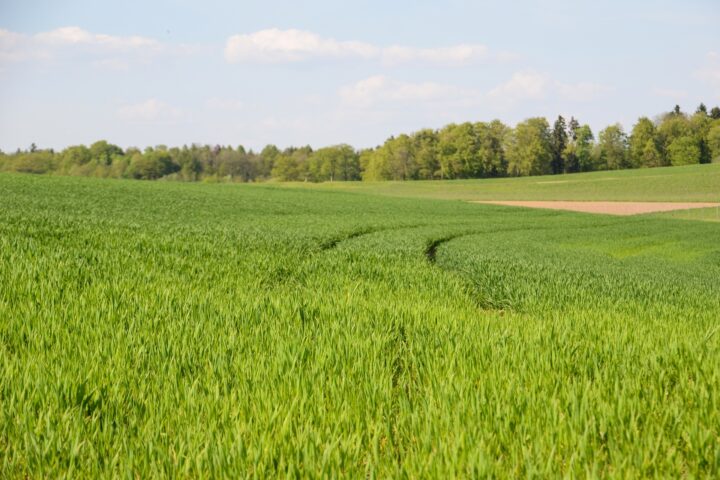
Challenges and opportunities of sustainable agriculture
Tomorrow's agriculture must produce more efficiently. And at the same time protect the climate and biodiversity. At the Swiss-Food Talk, three renowned, independent experts spoke about the challenges and opportunities of tomorrow's sustainable agriculture.
Content in German
«Overcoming the urban-rural divide with constructive agricultural policy»
Yes, there is indeed an urban-rural divide in Switzerland: Three quarters of the Swiss live in the 49 agglomerations and their core cities. For the most part, they have lost contact with the rural population - and even more so with agriculture.
Content in German
«The «Greta» generation will rigorously dispel paradigms.»
Plant breeding aims to make crops genetically fit for our needs of tomorrow. The focus here is on securing food for a growing world population without taking up more land and at the same time reducing emissions from agriculture.
Content in German
«Lay people completely disregard the dose»
Yes, it is. But the readers' comments do not come from toxicologists, but from lay people. The latter completely disregard the dose. There is a strong one or zero mentality. The idea that something can be contaminated and harmless at the same time goes against the grain of laypeople.
Content in German
«What plant breeding brings us»
In times of organic boom and romanticised nature, plant breeding has a hard time. It is forgotten that humans owe their most important food suppliers to it. Almost none of what we eat today used to occur naturally in the world.
Content in German
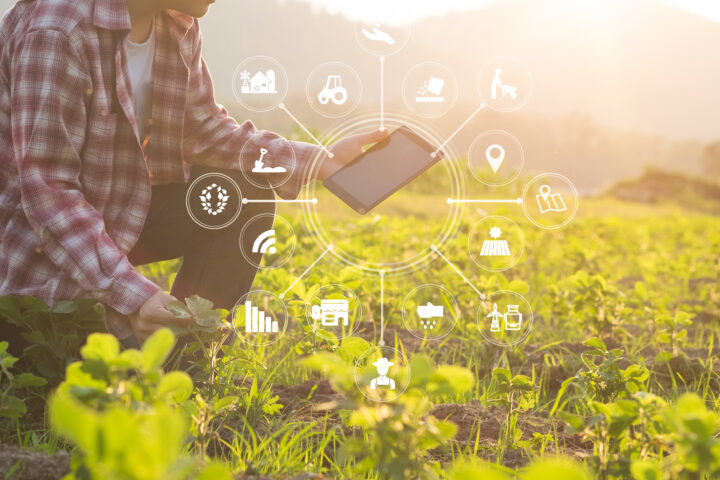
Revolution on the farm
The CRISPR/Cas method will revolutionise parts of plant breeding. The technology is urgently needed to address the challenges facing agriculture in this century and threatening our security of supply.
Content in German
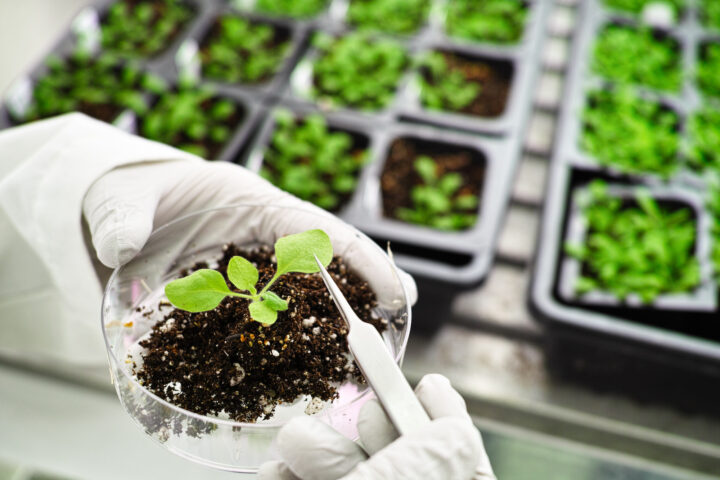
Nobelpreisträgerin Nüsslein-Volhard: «Gentechnik bietet grosse Chancen für den Naturschutz»
Gentechnisch veränderte Pflanzen werden in Europa nicht angebaut. Christiane Nüsslein-Volhard kritisiert das als wissenschaftsfeindlich und ideologiegetrieben.

Kulturgut aus dem Labor – Umdenken nötig?
Würden Sie Labor-Kaffee trinken? Ein Getränk, das mit der Kaffeebohne eigentlich nichts mehr zu tun hat. Vielleicht einmal probieren? Oder würden Sie komplett umsteigen? Diese Fragen könnten Sie bald schon umtreiben.
Le Covid-19 menace la sécurité alimentaire
Die Corona-Pandemie hat die Ernährungssysteme vieler Länder geschwächt. Besonders in Entwicklungsländern ist die Situation prekär. Der Druck auf natürliche Ressourcen und landwirtschaftliche Flächen ist hoch und wird durch den Klimawandel noch verschärft.
Défis et chances d’une agriculture durable
L'agriculture de demain doit produire plus efficacement. Tout en protégeant le climat et la biodiversité. Lors du Swiss-Food Talk, trois experts indépendants reconnus se sont exprimés sur les défis et les opportunités d'une agriculture durable de demain.
Content in German
«Mieux comprendre les mécanismes d'action de la nature»
L'agriculture intensive et l'agriculture biologique sont toutes deux tributaires de la protection des plantes. Si l'on veut utiliser moins d'agents chimiques à l'avenir, il faut encore mieux comprendre l'agroécosystème. Il convient également d'être ouvert à de nouvelles approches, telles que les techniques de génie génétique.
Content in German