


Security Risk on the Plate: "We Are Extremely Vulnerable"
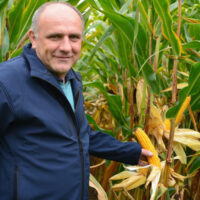
Hans Jörg Rüegsegger (SVP) has been a member of the National Council representing the Canton of Bern since 2023. A certified master farmer and agricultural technician (Agro-Techniker HF), he manages a farm in the Emmental valley specialising in dairy farming and arable crop production. As the former President of the Bernese Farmers' Association, he has first-hand knowledge of the entire value chain in Swiss agriculture.
Published: 10.06.2026, 12:41
You are calling for food security to be treated more strongly as a component of national security. Which developments in recent years make this step necessary from your point of view?
National Councillor Hans Jörg Rüegsegger: During the spring session, our agenda included the National Economic Supply Act, which addresses strategic stockpiling and compulsory reserves, alongside various insights gained from reports and parliamentary inquiries regarding the Covid-19 pandemic. In several areas, food production and processing are planned and described merely in terms of maintaining "good trade relations." In my view, Switzerland is poorly prepared and highly vulnerable at the processing, distribution, and retail levels—for instance, regarding energy supply or transport routes. We are in a fragile position. Furthermore, the Swiss Security Policy Strategy 2026 deals comprehensively with security in a dedicated report, serving as a guideline and umbrella strategy for the authorities. Various topics are examined, strategic directions are mapped out, goals are outlined, and potential measures are sketched.
According to the 2025 Agricultural Report, Switzerland's net self-sufficiency rate currently stands at around 42 percent. Do you see a need for a fundamental realignment of domestic production?
No, I am not looking for a fundamental realignment of domestic production. We know from past popular votes that Swiss voters value freedom of choice on their plates. Moreover, as consumers, we are spoiled: with three well-known and proven labels—Bio Suisse, IP-Suisse, and production adhering to established ecological standards—as well as cheaper imported foods, consumers enjoy a wide selection at the store counter and in most restaurants. My focus is on the willingness of farming families to continue production, on expertise, regional processing enterprises, jobs, apprenticeships, value creation for SMEs, short transport routes, and the environment.
In your opinion, where should the net self-sufficiency rate ideally lie in the future?
That is a complex question, which is why this metric is not my primary focus. Depending on the method of calculation, the balance looks entirely different for bananas than it does for potatoes, grain, milk, or meat. In fact, real-world practice shows the opposite: the rising demand for poultry and high imports of prime cuts of red meat prove that consumers in Switzerland do not want to abandon their established dietary habits.
You emphasize the importance of regional processing structures. Where do you currently see the greatest risks due to market concentration? What would be the concrete consequences if individual large companies were to fail?
Allow me to name two companies as examples: the Bell processing plant in Oensingen or the milk processor Emmi. If these facilities face disruptions to their supply routes due to an energy shortage, vital supply channels within the value chain would be disrupted or completely severed—potentially for months. This is a concentration risk ("Klumpenrisiko") that has received far too little attention in recent years
Food security encompasses more than just primary production. What role do factors like farming expertise, stockpiling, and production inputs (e.g., antibiotics or animal feed) play from your perspective?
This is a crucial point. During the pandemic, we suddenly faced supply shortages for livestock antibiotics, which dragged on into 2024. What are the consequences of that? Another example is stockpiling. Following the pandemic, stockpiling was made a priority in tandem with an updated National Economic Supply framework, because it was recognized that Switzerland had neglected this area. Regarding the willingness to farm, let me just say this: if we want to have farming families in Switzerland in the future who are willing to advance several thousands or even tens of thousands of francs per hectare—in the mere hope of covering their costs and earning a fair wage a year later—we can count ourselves very fortunate. The same applies to stockpiling: it is not free. However, much like a good healthcare system, it is an investment in our security that should be worth something to us as taxpayers.
Agricultural cultivation also relies on effective crop protection. In your opinion, is Switzerland well-positioned regarding the availability of crop protection products?
Yes and no. In Switzerland, we grow crops such as leeks, onions, potatoes, rapeseed, and sugar beets for which certain active substances are banned and therefore no longer available. If we stop growing these crops in Switzerland due to a lack of protection, we will end up importing these foods from Europe or the Americas, where those exact same chemicals are still in use. That has nothing to do with food security, reducing food waste, effective environmental protection, let alone common sense.
How can Switzerland make its food systems more resilient without compromising innovation, efficiency, and the competitiveness of the food sector?
That is a comprehensive question that is difficult to answer in just a few sentences. If resilient food systems are the core objective, then the solution must be thought through from that perspective, weighing the pros and cons. Innovation thrives where a niche product finds a market, such as the "Saanenkalb" (Saanen calf). In Switzerland, efficiency in the agricultural and food sector cannot be measured solely by automation and new technologies. It will likely continue to rely on volume and economies of scale in the future—unfortunately. As a result, we run the risk of logging even more road kilometres per kilogram of food, while regional and local processing plants suffer a competitive disadvantage against large-scale operations. The question therefore is: are we as Swiss consumers prepared to spend more than 6.5 percent of our household budget on domestic food? Doing so would strengthen the agricultural and food sector as a whole, as well as circular thinking. In short: value creation remains in the region, and jobs are preserved.
Kindly note:
We, a non-native editorial team value clear and faultless communication. At times we have to prioritize speed over perfection, utilizing tools, that are still learning.
We are deepL sorry for any observed stylistic or spelling errors.
Bruno Studer: When will drought-tolerant CRISPR crops arrive on Swiss fields?

Bruno Studer
Professor for Molecular Plant Breeding, ETH Zurich
Brexit has given British farmers more ways to adapt to climate change
Jonathan Brown
Head of Europe at agricultural technology business Syngenta
Security Risk on the Plate: "We Are Extremely Vulnerable"
Hans Jörg Rüegsegger
National Councillor and Farmer

The Federal Council is carelessly squandering Switzerland’s competitive advantages

Ruedi Noser
Former member of the Council of States for the Canton of Zurich (FDP)
When it comes to chemicals in medicine and agriculture, ‘natural’ is often less safe than synthetic
Simon Maechling
Science communicator and PhD in organic chemistry
Why has organic and sustainable farming veered so far away from the scientific evidence?

Henry I. Miller
Physician and molecular biologist

Reason Over Ideology: The International Union for Conservation of Nature (IUCN) Rejects a Blanket Ban on Genetically Modified Organisms – A Victory for Science

Stephanie Lahrtz
Science Editor, NZZ
Gene editing is also revolutionizing biological plant protection

Urs Niggli
Agricultural scientist and president of Agroecology Science
Content in German
New genomic techniques in plant breeding: sustainability needs innovation

Philipp Aerni
Professor of Economics & Expert in Corporate Responsibility and Sustainability
Carte Blanche: Excessive Anti-Alcohol Strategy

Philipp Schwander
Master of Wine, wine expert and entrepreneur
Agriculture needs a shared vision

Dr. Christian Stockmar
Chairman of the Austrian Crop Protection Association
'Pure hubris'

Patrick Dümmler
Head of Sustainability and Economic Policy at the Swiss Trade Association
We are bringing up the rear in Europe when it comes to plant protection

David Brugger
Head of Plant Production, Swiss Farmers’ Union


Politics seems resistant to facts

Beat Keller
Beat Keller ist Professor für Molekulare Pflanzenbiologie an der Universität Zürich
«Plant breeding calls for liberal rules»

Jürg Niklaus
Jürg Niklaus has a doctorate in law and is an advocate of plant breeding.
More pesticides, more genetic engineering: How we are overcoming hunger.
Markus Somm
Journalist, publicist, publisher and historian
«The fear of genetically modified plants is unwarranted»
Anke Fossgreen
Head of Knowledge Team Tamedia
«Politicians must avoid pushing prices up even more»

Babette Sigg Frank
President of the Swiss Consumer Forum (KF)
Seizing the opportunity of green biotechnology

Roman Mazzotta
Country President Syngenta Switzerland

«One-third organic farming does not solve the problem»
Olaf Deininger
Development Editor-in-Chief Agrar-Medien

«Most fears about pesticides are misplaced»

Michelle Miller
Columnist at Genetic Literacy Project and AGDaily

«Who is afraid of the evil GMOs?»

Jürg Vollmer
Editor-in-Chief of «die grüne» magazine
Content in German
«What plant breeding brings us»

Achim Walter
Professor of Crop Science, ETH Zurich
Content in German
«Research and work place needs impetus»
Jan Lucht
Head of Biotechnology at Scienceindustries
Content in German
«Agriculture plays a major role»

Jan Grenz
Lecturer in Sustainability, School of Agricultural, Forest and Food Sciences HAFL
«Understanding nature’s mechanisms better»
Urs Niggli
Agricultural scientist and president of Agroecology Science

«Lay people completely disregard the dose»

Michael Siegrist
Professor of Consumer Behaviour, ETH Zurich
Content in German
«Is organic really healthier?»

Anna Bozzi
Head of Nutrition and Agriculture at scienceindustries
Content in German
«Genetic engineering and environmental protection go hand in hand»
Dr. Teresa Koller
Researcher at the Institute of Plant and Microbiology at the University of Zurich
«The «Greta» generation will rigorously dispel paradigms.»
Bruno Studer
Professor for Molecular Plant Breeding, ETH Zurich
Content in German
«Overcoming the urban-rural divide with constructive agricultural policy»
Jürg Vollmer
Editor-in-Chief of «die grüne» magazine
Content in German
«We protect what we use»

Regina Ammann
Head of Sustainability & Public Affairs, Syngenta Switzerland
Related articles
A Contribution Spanning Generations
Food security begins long before the harvest. It begins with varieties that deliver yields, resist diseases and perform reliably under changing environmental conditions.
Agriculture and trade secure our food supply
The No to the Food Initiative is clear. It is an opportunity to free supply policy from wishful thinking. A sense of reality has returned to the political debate. Switzerland needs an agriculture sector that is able to produce food, and reliable trading partners for what it cannot produce itself.