


Plant breeding on the threshold of its next leap in innovation
Dr Carl-Stephan Schäfer is Managing Director of the German Plant Breeders' Association (BDP) and Vice Chairman of GEFA (German Export Association for Food and Agriproducts).
Published: 08.10.2026, 00:00
Plant breeding works ahead of the future. It often takes many years to get from the first cross to a finished variety. Decisions made in the breeding nursery today therefore determine which varieties will be available to agriculture in ten or 20 years' time.
At the same time, scientific progress and new technological possibilities are changing breeding itself. Genome research, new breeding methods and the intelligent linking of growing volumes of data are opening up new perspectives. But much of this is only just beginning. The next stage of innovation in plant breeding must be shaped now.
What this innovation needs to deliver becomes tangible in the breeding nursery. A new variety should secure yield and quality while being as robust as possible against diseases, pests and changing environmental conditions. On top of this come requirements for the efficient use of water and nutrients and for adaptation to heat and drought.
This makes breeding more demanding, because traits do not act independently of one another. An improvement in one area can have negative effects on other traits. What matters, therefore, is not the individual trait but its combination with many other characteristics in a variety that actually performs in agricultural production.
Diversity as the foundation
The starting point for all breeding is plant genetic diversity. Breeders draw on varieties, breeding lines, genebank material and related wild species to unlock new traits. Resistance to plant diseases and pests, improved quality characteristics and adaptation to specific environmental conditions have time and again been derived from existing diversity.
What has fundamentally changed, however, are the ways of tapping into this diversity. For a long time, breeders assessed plants mainly on what they could see: growth habit, maturity, yield, disease incidence or quality. Since the 1980s, molecular markers have provided an ever more precise view of the genome. This allows traits to be identified earlier and plants to be selected in a more targeted way. Technical analysis methods and digitalisation have made breeding faster and more precise. Now the next step in this development is emerging.
Breeding becomes more forward-looking
Plant breeding is facing a data-driven transformation. Large amounts of information are already being generated about a plant's genome, its measurable characteristics and the environment in which it grows. But much of this data still exists in isolation. Its real potential only emerges when it can be systematically linked and made permanently usable for breeding.
This is precisely where one of the major research and innovation tasks of the coming years lies. Genomic data must be combined with information from phenotyping as well as with environmental and management data. This requires powerful analytical methods and artificial intelligence, but equally suitable data infrastructures, common standards and datasets that remain available over the long term. So far, these prerequisites are only partly in place.
If this linking succeeds, it can fundamentally change the selection process in breeding. Data-based models can help to assess the potential of crosses earlier, select promising genotypes in a more targeted way and better predict how plants will respond under different environmental conditions. Artificial intelligence can detect relationships in large and complex datasets that are difficult to capture with conventional methods.
The decisive step, therefore, is not to generate ever more data. Data must be turned into knowledge that breeders can use. To achieve this, the interactions between genotype, environment and management must be better understood and modelled.
The prospect is a more forward-looking approach to breeding: rather than merely reacting to changing conditions, being able to estimate early on which genetic combinations promise stable performance under tomorrow's conditions. However, considerable research and development work is still needed before this potential can be fully exploited.
The field remains indispensable
Great as the potential of data-driven methods is, plant breeding will not become a purely digital process. Models are only as good as the data on which they are based. And much of this data is generated where a new variety ultimately has to prove itself – in the field.
Only under real conditions does it become clear how a plant's genome interacts with location, weather and crop management. Field trials across different locations and years therefore remain indispensable.
The future lies in combining the two: precisely collected field data improve models and predictions. These, in turn, can help to design trials in a more targeted way and to identify promising material earlier. Breeding experience, biological research and data science complement one another – they do not replace one another.
While the data-driven transformation primarily changes how breeders select plants and predict their performance, New Genomic Techniques open up additional ways of creating genetic variation in a targeted manner. Methods such as CRISPR/Cas allow changes to be made at specific sites in the genome, thereby expanding the plant breeder's toolbox.
Such methods are of interest, for example, for disease resistance, quality traits or characteristics that help plants cope better with environmental stress. They can make development processes more targeted and open up new ways of accessing desired traits for breeding.
Time as a factor in innovation
New tools are also gaining importance because the requirements placed on varieties are changing faster than the long development cycles of plant breeding would suggest. Climatic conditions are shifting, pathogens are evolving and existing resistances can lose their effectiveness.
New methods can help to identify promising material earlier, plan crosses in a more targeted way and make development pathways more efficient. Nevertheless, biological processes cannot be shortened at will: plants have to grow, and new varieties have to be tested under different conditions. What matters, therefore, is not just breeding faster, but making the right decisions earlier.
Dr Carl-Stephan Schäfer is Managing Director of the German Plant Breeders' Association (BDP). This article was first published in Agrarzeitung on 2 October 2026.
Plant breeding on the threshold of its next leap in innovation
Dr. Carl-Stephan Schäfer
Managing Director, German Plant Breeders' Association (BDP)
Bruno Studer: When will drought-tolerant CRISPR crops arrive on Swiss fields?

Bruno Studer
Professor for Molecular Plant Breeding, ETH Zurich
Brexit has given British farmers more ways to adapt to climate change

Jonathan Brown
Head of Europe at agricultural technology business Syngenta
Security Risk on the Plate: "We Are Extremely Vulnerable"

Hans Jörg Rüegsegger
National Councillor and Farmer

The Federal Council is carelessly squandering Switzerland’s competitive advantages

Ruedi Noser
Former member of the Council of States for the Canton of Zurich (FDP)
When it comes to chemicals in medicine and agriculture, ‘natural’ is often less safe than synthetic

Simon Maechling
Science communicator and PhD in organic chemistry
Why has organic and sustainable farming veered so far away from the scientific evidence?

Henry I. Miller
Physician and molecular biologist

Reason Over Ideology: The International Union for Conservation of Nature (IUCN) Rejects a Blanket Ban on Genetically Modified Organisms – A Victory for Science

Stephanie Lahrtz
Science Editor, NZZ
Gene editing is also revolutionizing biological plant protection

Urs Niggli
Agricultural scientist and president of Agroecology Science
Content in German
New genomic techniques in plant breeding: sustainability needs innovation

Philipp Aerni
Professor of Economics & Expert in Corporate Responsibility and Sustainability
Carte Blanche: Excessive Anti-Alcohol Strategy

Philipp Schwander
Master of Wine, wine expert and entrepreneur
Agriculture needs a shared vision

Dr. Christian Stockmar
Chairman of the Austrian Crop Protection Association
'Pure hubris'

Patrick Dümmler
Head of Sustainability and Economic Policy at the Swiss Trade Association
We are bringing up the rear in Europe when it comes to plant protection

David Brugger
Head of Plant Production, Swiss Farmers’ Union


Politics seems resistant to facts

Beat Keller
Beat Keller ist Professor für Molekulare Pflanzenbiologie an der Universität Zürich
«Plant breeding calls for liberal rules»

Jürg Niklaus
Jürg Niklaus has a doctorate in law and is an advocate of plant breeding.
More pesticides, more genetic engineering: How we are overcoming hunger.

Markus Somm
Journalist, publicist, publisher and historian
«The fear of genetically modified plants is unwarranted»

Anke Fossgreen
Head of Knowledge Team Tamedia
«Politicians must avoid pushing prices up even more»

Babette Sigg Frank
President of the Swiss Consumer Forum (KF)
Seizing the opportunity of green biotechnology

Roman Mazzotta
Country President Syngenta Switzerland

«One-third organic farming does not solve the problem»

Olaf Deininger
Development Editor-in-Chief Agrar-Medien

«Most fears about pesticides are misplaced»

Michelle Miller
Columnist at Genetic Literacy Project and AGDaily

«Who is afraid of the evil GMOs?»

Jürg Vollmer
Editor-in-Chief of «die grüne» magazine
Content in German
«What plant breeding brings us»

Achim Walter
Professor of Crop Science, ETH Zurich
Content in German
«Research and work place needs impetus»

Jan Lucht
Head of Biotechnology at Scienceindustries
Content in German
«Agriculture plays a major role»

Jan Grenz
Lecturer in Sustainability, School of Agricultural, Forest and Food Sciences HAFL
«Understanding nature’s mechanisms better»
Urs Niggli
Agricultural scientist and president of Agroecology Science

«Lay people completely disregard the dose»

Michael Siegrist
Professor of Consumer Behaviour, ETH Zurich
Content in German
«Is organic really healthier?»

Anna Bozzi
Head of Nutrition and Agriculture at scienceindustries
Content in German
«Genetic engineering and environmental protection go hand in hand»
Dr. Teresa Koller
Researcher at the Institute of Plant and Microbiology at the University of Zurich
«The «Greta» generation will rigorously dispel paradigms.»
Bruno Studer
Professor for Molecular Plant Breeding, ETH Zurich
Content in German
«Overcoming the urban-rural divide with constructive agricultural policy»
Jürg Vollmer
Editor-in-Chief of «die grüne» magazine
Content in German
«We protect what we use»

Regina Ammann
Head of Sustainability & Public Affairs, Syngenta Switzerland
Related articles
A Contribution Spanning Generations
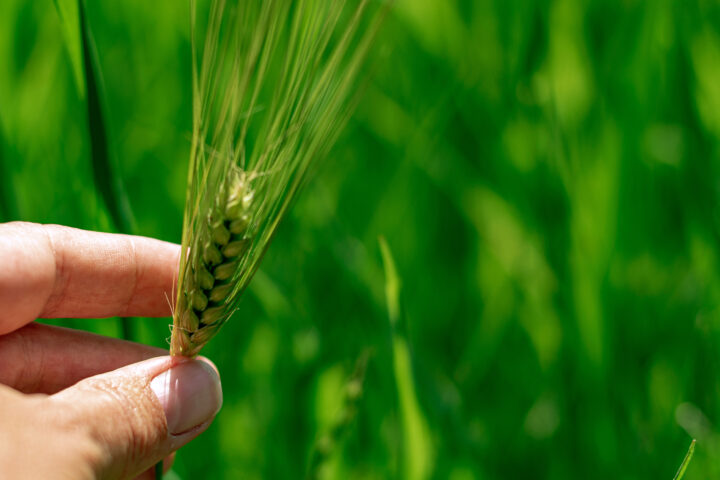
Food security begins long before the harvest. It begins with varieties that deliver yields, resist diseases and perform reliably under changing environmental conditions.
Agriculture and trade secure our food supply
The No to the Food Initiative is clear. It is an opportunity to free supply policy from wishful thinking. A sense of reality has returned to the political debate. Switzerland needs an agriculture sector that is able to produce food, and reliable trading partners for what it cannot produce itself.