


We are bringing up the rear in Europe when it comes to plant protection
Plant protection products that have been approved in the EU should also be authorised in Switzerland as quickly as possible, writes guest author David Brugger from the Swiss Farmers' Union.
Published: 23.01.2025, 08:53 | Updated: 12.08.2025, 10:48
They should be glowing yellow now – the rape fields. But instead of a rich yellow, there is a lot of green to be seen. The reason for this is the enormous infestation of the rape beetle. Despite two to three treatments with an insecticide, it can no longer be adequately controlled. To a large extent, the problem is homemade. In recent years, we in Switzerland have lost around a third of all active ingredients in plant protection products. Two-thirds of the insecticides used to control pests in oilseed rape have now been banned, without the authorities providing any effective alternatives. Seed dressing products have also been phased out.
The federal government realises that things can't go on like this.
One of the reasons for this is our completely gridlocked approval system for plant protection products. There are 770 products currently in the approval process, and the waiting time is also record-breaking. In some cases, it has been eight years already. After massive pressure, environmental organisations were granted a comprehensive right to a say in the matter a few years ago, the likes of which is not seen anywhere else in Europe. The consequences of this drastic remedy are now visible everywhere in the fields. There is a lack of solutions for combating wireworms, spotted wing drosophila and the cotton bollworm, which are destroying the harvests of entire cherry, bean and sweetcorn fields. But gaps in the use of herbicides are also causing problems. Problem grasses and weeds are continuing to spread. The federal government now realises that things cannot go on like this.
In an interim report on the implementation of the National Action Plan for Plant Protection, the Federal Office for Agriculture found that only two of the three main objectives were being achieved: protection of the environment and of humans. For the third objective, protection of crops, there was deterioration instead of improvement. The federal government is therefore proposing a revision of the Plant Protection Products Ordinance. However, the proposal does not in any way solve the urgent problems in practice. In principle, it only provides for an increase in the number of staff by 6 to 52 (!) full-time positions. The basic problem – the completely blocked and inefficient authorisation process – remains unsolved.
Damage to plant production in Switzerland
That is why we propose introducing the same procedure for plant protection as has been successfully practised for biocides for many years. In this area, Switzerland has always adopted the EU authorisation decisions – without anyone ever being upset about it or making unacceptable concessions to the environment. One third of all plant protection products are also authorised as biocides. If they are used as plant protection products, they are disadvantaged.
Until a few years ago, environmental organisations were full of praise for the EU authorisation process. Today, they want nothing more to do with it. Switzerland should ban everything immediately and without its own review if the EU does so. However, when new products come onto the market, they should continue to have to wait years for their authorisation in Switzerland. In the end, plant production in Switzerland will lose out – precisely the area that the authorities, parliament and environmental organisations would like to see promoted urgently.
David Brugger is head of plant production at the Swiss Farmers' Union. This article was first published in the «BauernZeitung» on 15 April 2024.
Kindly note:
We, a non-native editorial team value clear and faultless communication. At times we have to prioritize speed over perfection, utilizing tools, that are still learning.
We are deepL sorry for any observed stylistic or spelling errors.
Bruno Studer: When will drought-tolerant CRISPR crops arrive on Swiss fields?

Bruno Studer
Professor for Molecular Plant Breeding, ETH Zurich
Brexit has given British farmers more ways to adapt to climate change

Jonathan Brown
Head of Europe at agricultural technology business Syngenta
Security Risk on the Plate: "We Are Extremely Vulnerable"

Hans Jörg Rüegsegger
National Councillor and Farmer

The Federal Council is carelessly squandering Switzerland’s competitive advantages

Ruedi Noser
Former member of the Council of States for the Canton of Zurich (FDP)
When it comes to chemicals in medicine and agriculture, ‘natural’ is often less safe than synthetic
Simon Maechling
Science communicator and PhD in organic chemistry
Why has organic and sustainable farming veered so far away from the scientific evidence?

Henry I. Miller
Physician and molecular biologist

Reason Over Ideology: The International Union for Conservation of Nature (IUCN) Rejects a Blanket Ban on Genetically Modified Organisms – A Victory for Science

Stephanie Lahrtz
Science Editor, NZZ
Gene editing is also revolutionizing biological plant protection

Urs Niggli
Agricultural scientist and president of Agroecology Science
Content in German
New genomic techniques in plant breeding: sustainability needs innovation

Philipp Aerni
Professor of Economics & Expert in Corporate Responsibility and Sustainability
Carte Blanche: Excessive Anti-Alcohol Strategy

Philipp Schwander
Master of Wine, wine expert and entrepreneur
Agriculture needs a shared vision

Dr. Christian Stockmar
Chairman of the Austrian Crop Protection Association
'Pure hubris'

Patrick Dümmler
Head of Sustainability and Economic Policy at the Swiss Trade Association
We are bringing up the rear in Europe when it comes to plant protection
David Brugger
Head of Plant Production, Swiss Farmers’ Union


Politics seems resistant to facts

Beat Keller
Beat Keller ist Professor für Molekulare Pflanzenbiologie an der Universität Zürich
«Plant breeding calls for liberal rules»

Jürg Niklaus
Jürg Niklaus has a doctorate in law and is an advocate of plant breeding.
More pesticides, more genetic engineering: How we are overcoming hunger.

Markus Somm
Journalist, publicist, publisher and historian
«The fear of genetically modified plants is unwarranted»

Anke Fossgreen
Head of Knowledge Team Tamedia
«Politicians must avoid pushing prices up even more»

Babette Sigg Frank
President of the Swiss Consumer Forum (KF)
Seizing the opportunity of green biotechnology

Roman Mazzotta
Country President Syngenta Switzerland

«One-third organic farming does not solve the problem»
Olaf Deininger
Development Editor-in-Chief Agrar-Medien

«Most fears about pesticides are misplaced»

Michelle Miller
Columnist at Genetic Literacy Project and AGDaily

«Who is afraid of the evil GMOs?»

Jürg Vollmer
Editor-in-Chief of «die grüne» magazine
Content in German
«What plant breeding brings us»

Achim Walter
Professor of Crop Science, ETH Zurich
Content in German
«Research and work place needs impetus»

Jan Lucht
Head of Biotechnology at Scienceindustries
Content in German
«Agriculture plays a major role»

Jan Grenz
Lecturer in Sustainability, School of Agricultural, Forest and Food Sciences HAFL
«Understanding nature’s mechanisms better»
Urs Niggli
Agricultural scientist and president of Agroecology Science

«Lay people completely disregard the dose»

Michael Siegrist
Professor of Consumer Behaviour, ETH Zurich
Content in German
«Is organic really healthier?»

Anna Bozzi
Head of Nutrition and Agriculture at scienceindustries
Content in German
«Genetic engineering and environmental protection go hand in hand»

Dr. Teresa Koller
Researcher at the Institute of Plant and Microbiology at the University of Zurich
«The «Greta» generation will rigorously dispel paradigms.»
Bruno Studer
Professor for Molecular Plant Breeding, ETH Zurich
Content in German
«Overcoming the urban-rural divide with constructive agricultural policy»
Jürg Vollmer
Editor-in-Chief of «die grüne» magazine
Content in German
«We protect what we use»

Regina Ammann
Head of Sustainability & Public Affairs, Syngenta Switzerland
Related articles

Full Shelves – Of course! How Secure Is Our Supply Really?
Security of supply sounds like a shared goal. However, as soon as it comes to the path to get there, conflicts arise: between market and state, ecology and production, as well as self-sufficiency and international connectivity. The Agricultural Policy Podcast and swiss-food.ch explore the key dependencies and areas of tension surrounding supply security in a five-part series. The highlight will be a live podcast in front of an audience on November 5, 2026, at the Äusserer Stand (Hofcafé) in Bern.
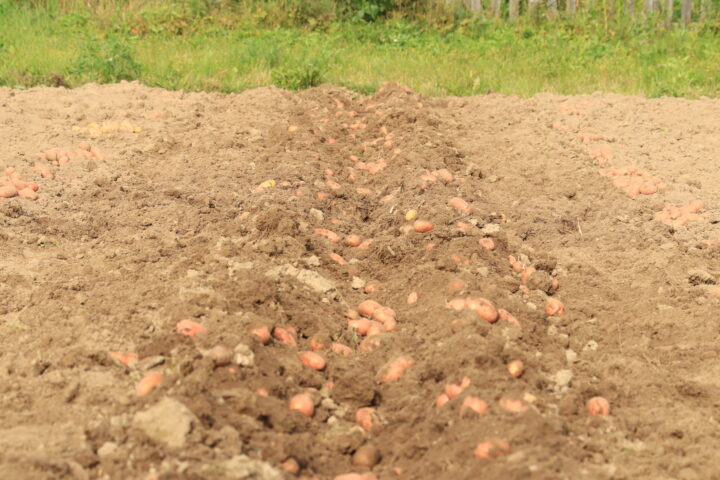
Record low potato harvest: Why is the Federal Council standing still?
The hot summer of 2026 caused the lowest potato harvest in Switzerland since records began a century ago. To secure domestic supply and build climate resilience, the agricultural sector is calling for swift access to new breeding technologies, which are already being authorized in the European Union. However, the Federal Council has delayed the corresponding draft legislation until 2027.
Food Security Initiative: Why Do the Goals Cancel Each Other Out?
The popular initiative "For a Secure Food Supply" calls for a self-sufficiency rate of 70 percent. At the same time, it demands drastic restrictions on crop protection and the promotion of open-pollinated seeds. The Federal Council also confirms that this balancing act does not work: a higher degree of self-sufficiency combined with severe restrictions on crop protection is not realistic.

Legionella, Japanese beetles, and market turbulences: What are the consequences of the dry heatwave summer 2026?
How do persistent heat and drought in the summer of 2026 impact health, agriculture, and the economy? The summer of 2026 exemplifies how heat and dry conditions are becoming a threat across various areas: from cooling systems and livestock housing to crops and consumer wallets.