
Posts found for your search:

It pays to take a closer look
Pesticides are to blame for an increase in brain tumours in children in the Zürcher Weinland and the Bernese Seeland, according to a study carried out three years ago. Experts commissioned by the federal government have now come to a different conclusion: the results could also have been accidental.

The Poison and the Dose
The debate about threshold values for chemical residues in water and food is often shaped by misunderstandings and emotions. Few topics show as clearly how far perception and science can drift apart. But what do limit values really mean? In autumn 2025, the Agricultural Policy Podcast and swiss-food.ch will explore our relationship with limits and risk in a five-part series. The highlight was a live podcast recording on November 5 at Bogen F in Zurich.

Thresholds, approvals, responsibility – how plant protection products are really assessed
Threshold values are often at the centre of public debate – yet in reality they are only a small part of a much broader risk assessment system. Dr Michael Beer, Head of the Food and Nutrition Division at the Federal Food Safety Office, provides clarity.

PFAS, trade-offs and responsibility – how politics and agriculture find solutions
In this episode of the joint series by Agrarpolitik – der Podcast and swiss-food.ch, National Councillor Christine Badertscher discusses how residues and threshold values are debated in Parliament.

Hazard is not the same as risk: how we understand – and should understand – threshold values
In this episode of the podcast, risk researcher Angela Bearth discusses residues and threshold values in food – a topic often debated emotionally. In public discussions, threshold values tend to dominate, while the complex challenges of agriculture are rarely considered. Studies show, however, that once these relationships are explained and solutions are addressed, people respond in a more differentiated way.
Residues, thresholds, trust – looking calmly behind the headlines
In this conversation with toxicologist Lothar Aicher, the discussion focuses on how residues enter the body, how their potential harm is assessed, and what role modern analytical methods play.
Residue is not the same as residue
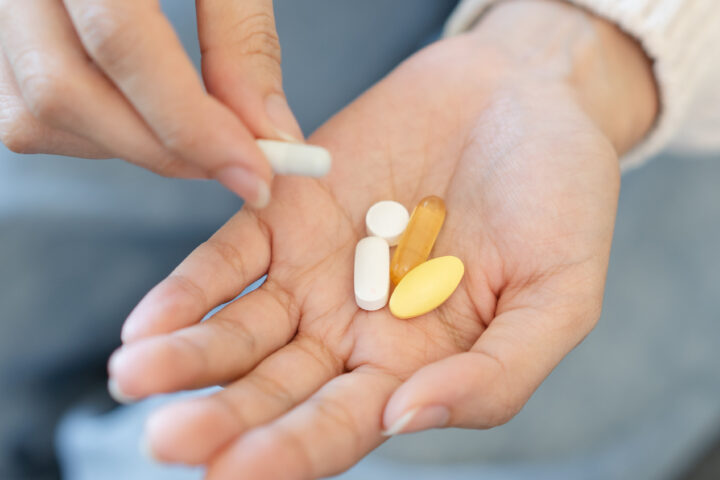
Painkillers like Voltaren are a blessing for us – yet in our rivers they can harm fish. If these were crop protection products, calls for bans would be immediate. It becomes clear that we are applying double standards.
Rückstände, Grenzwerte, Vertrauen – sachlich hinter die Schlagzeilen schauen
Im Gespräch mit dem Fachtoxikologen Lothar Aicher geht es darum, wie Rückstände vom Körper aufgenommen werden, wie deren Gefährlichkeit bewertet wird und welche Rolle moderne Analytik spielt.
Genauer hinschauen lohnt sich
Pestizide seien schuld an einer Häufung von Hirntumoren bei Kindern im Zürcher Weinland und dem Berner Seeland, sagte eine Studie von vor drei Jahren.
Das Gift und die Dosis – Grosse Panik um kleine Werte?
Die Diskussion um Grenzwerte für chemische Rückstände in Wasser und Nahrung ist oft von Missverständnissen und Emotionen geprägt. Kaum ein anderes Thema zeigt so deutlich, wie sehr Wahrnehmung und Wissenschaft auseinanderdriften. Doch was bedeuten Grenzwerte wirklich? Der Agrarpolitik-Podcast und swiss-food.ch beleuchten im Herbst 2025 in einer fünfteiligen Reihe unseren Umgang mit Grenzwerten. Den Höhepunkt bildete zum Abschluss ein Live-Podcast vor Publikum am 5. November im Bogen F in Zürich.
Grenzwerte, Zulassung, Verantwortung – wie Pflanzenschutzmittel wirklich beurteilt werden
Oft stehen Grenzwerte im Zentrum der öffentlichen Diskussion – doch in der Realität sind sie nur ein kleiner Teil eines viel umfassenderen Systems zur Risikobeurteilung. Michael Beer, Leiter der Abteilung Lebensmittel und Ernährung beim Bundesamt für Lebensmittelsicherheit, klärt auf.
PFAS, Zielkonflikte und Verantwortung – wie Politik und Landwirtschaft Lösungen finden
In dieser Episode der gemeinsamen Serie von Agrarpolitik – der Podcast und swiss-food.ch spricht Nationalrätin Christine Badertscher darüber, wie Rückstände und Grenzwerte im Parlament diskutiert werden.
Gefahr ist nicht gleich Risiko: Wie wir Grenzwerte verstehen – und verstehen sollten
In dieser Episode des Podcasts spricht Angela Bearth, Risikoforscherin, über Rückstände und Grenzwerte in Lebensmitteln – ein Thema, das oft emotional diskutiert wird.
Rückstand ist nicht gleich Rückstand
Schmerzmittel wie Voltaren sind für uns ein Segen – doch in unseren Flüssen können sie Fischen schaden. Würde es sich um Pflanzenschutzmittel handeln, käme sofort der Ruf nach Verboten. Es wird offensichtlich mit ungleichen Ellen gemessen.
Il vaut la peine d'y regarder de plus près
Les pesticides sont responsables d'une augmentation des tumeurs cérébrales chez les enfants dans le Weinland zurichois et le Seeland bernois, affirmait une étude réalisée il y a trois ans.
Le poison et la dose
Le débat sur les valeurs limites des résidus chimiques dans l’eau et les aliments est souvent marqué par des malentendus et des émotions. Peu de sujets illustrent aussi clairement le fossé entre perception et science. Mais que signifient vraiment les valeurs limites ? À l’automne 2025, le Podcast de la politique agricole et swiss-food.ch consacrent une série en cinq épisodes à notre rapport aux valeurs limites. Le point culminant sera un podcast en direct devant le public le 5 novembre au Bogen F à Zurich.
Valeurs limites, autorisations, responsabilité – comment les produits phytosanitaires sont réellement évalués
Les valeurs limites occupent souvent le premier plan dans le débat public – alors qu’en réalité, elles ne constituent qu’une petite partie d’un système d’évaluation des risques bien plus vaste. Le Dr Michael Beer, chef de la division Alimentation à l’Office fédéral de la sécurité alimentaire, apporte des éclaircissements.
PFAS, conflits d’objectifs et responsabilité – comment politique et agriculture trouvent des solutions
Dans cet épisode de la série commune d’Agrarpolitik – der Podcast et swiss-food.ch, la conseillère nationale Christine Badertscher explique comment les résidus et les valeurs limites sont débattus au Parlement.
Danger n’est pas synonyme de risque : comment nous comprenons – et devrions comprendre – les valeurs limites
Dans cet épisode du podcast, la chercheuse en risques Angela Bearth parle des résidus et des valeurs limites dans les denrées alimentaires – un sujet souvent débattu de manière émotionnelle.
Résidus, valeurs limites, confiance – regarder les faits derrière les gros titres
Dans cet entretien avec le toxicologue Lothar Aicher, il est question de la manière dont les résidus sont absorbés par l’organisme, de l’évaluation de leur dangerosité et du rôle que joue l’analytique moderne.
Un résidu n’est pas égal à un autre
Les antidouleurs comme le Voltaren sont une bénédiction pour nous – mais dans nos rivières, ils peuvent nuire aux poissons. S’il s’agissait de produits phytosanitaires, les appels à l’interdiction seraient immédiats. Il devient évident que l’on ne mesure pas avec les mêmes critères.